
General Information
The conference is free to attend and will be held in-person at The California Endowment – 1000 Alameda St, Los Angeles, CA 90012 on Thursday, February 5, 2026. Registration includes breakfast and lunch.
The goal of this conference is to support the next generation of HIV researchers, HIV prevention and treatment practitioners, and service providers dedicated to ending to the HIV/AIDS epidemic through networking and exchanging visions for future priorities.
We welcome participation from all Southern California, national and global stakeholders and partners working to advance HIV prevention and treatment programs, policies, education, and research. The intended audience are CBO, ASO, clinic and public health department staff, community, patient and client advocates, students and trainees, and early-stage to established investigators.
To register for the conference, click here (https://tinyurl.com/2ew5ywjd)
Conference Information
Conference Materials
CE Credits: Please note that we are unable to offer Continuing Education Credits via our CE provider for this conference. However, we will providing certificates of completion for all attendees. Please ensure to check in and out of the conference with the registration desk.
For questions or comments, please contact Damilola Jolayemi at ojolayemi@mednet.ucla.edu
———-
Conference Recap
Event Description
The 2026 CHIPTS HIV Next Generation Conference occurred on Thursday, February 5, 2026 from 8:00 AM – 3:30 PM PT. The conference was IN-PERSON at the California Endowment and FREE to attend.
The conference is organized to support the next generation of HIV researchers and service providers who are working towards an end to HIV/AIDS through networking and sharing visions for future priorities. The theme of this year’s conference was “Empowering the Next Generation of HIV Researchers and Building Sustainable Careers.” The conference featured oral and poster presentations by faculty, student and emerging researchers from various institutions.
Welcome/ Opening Plenary
Welcome and Opening Remarks:
Recording: N/A
- Raphael Landovitz, MD, MSc, CHIPTS Center Director
Conference Facilitator and Announcements:
- Jesse Clark, MD, MSc, CHIPTS Development Core Director
Opening Plenary:
Ashleigh Herrera, PhD, MSW
Presentation Title: Resilience and Resistance: Building Community, Connection, and Protection to Preserve the HIV Continuum of Care and Research
Presentation Summary: Drawing from a nontraditional pathway into biomedical HIV research grounded in clinical and community-based work, this presentation explores how mentorship, community-academic partnerships, and creative public, private, and nonprofit funding mechanisms can expand HIV prevention, testing, and care. I will highlight innovative delivery models, including health vending machines, alongside lessons learned from sustaining community-centered research during periods of uncertainty. The talk concludes by emphasizing the importance of multilevel social support—strategic guidance from senior mentors and collective care among early-career peers—in navigating challenges and sustaining momentum.
Plenary Discussions
Panel 1: Structural Access to HIV Care and Service Delivery
Panel Presentations:
1. Arianna Lister, BS
Presentation Title: Emergency Department HIV PrEP: A Review of Attitudes, Feasibility, and Implementation Barriers
Presentation Summary: This presentation reviews current evidence on patient and provider attitudes, feasibility, acceptability, and implementation barriers related to HIV pre-exposure prophylaxis (PrEP) delivery in emergency departments (EDs), which serve as key access points for populations at increased HIV risk, including unhoused people and people who use drugs (PWUD). The presentation highlights findings demonstrating that ED-based PrEP is feasible and acceptable when paired with patient-centered education, navigation, and care coordination, particularly through dedicated navigator or same-day initiation models. It concludes by discussing priorities for future research, including stigma reduction, low-barrier and equity-oriented strategies for implementation, and the impact of ED-initiated PrEP on adherence, retention, and HIV incidence.
2. Sona Oksuzyan, PhD, MD, MPH
Presentation Title: Medical Care Coordination Program in Los Angeles County: 10-year program evaluation, lessons learned, and future steps
Presentation Summary: This evaluation focuses on Medical Care Coordination (MCC) effectiveness in improving health outcomes, such as retention in care and viral suppression, using a quasi-experimental pre-and-post study design comparing health outcomes in 12 months before and after MCC enrollment from January 1, 2013, through December 31, 2022. Significant improvements
were observed in retention in care and viral suppression after 12 months of enrollment in MCC across all socio-demographic groups of MCC patients.
3. Beimnet Taye, MPH
Presentation Title: Transportation Vulnerability & HIV Care Engagement in Los Angeles County
Presentation Summary: Neighborhood-level factors such as crime and public transportation access could all affect a person living with HIV’s ability and willingness to seek HIV care by impacting their ability to safely commute to and from clinics and pharmacies. Linking place of residence with both publicly available crime and public transport data from 2018-2022, this project provides an opportunity to explore how these factors are associated with individual HIV care engagement among a cohort of men who are living with HIV.
4. Amanda Wahnich, MPH
Presentation Title: Expanding HIV Prevention through Community Pharmacy-based PrEP and PEP Initiation in Los Angeles County, 2024-2025
Presentation Summary: The Los Angeles County PharmPrEP program leveraged California SB 159 to enable community pharmacies to initiate PrEP and PEP and expand HIV prevention access beyond traditional clinics. Across eight pharmacies, the program successfully reached priority populations to initiate new PrEP starts, demonstrated high client and staff satisfaction, and achieved linkage to ongoing medical care. The findings support community pharmacies as acceptable, feasible, and effective settings for equitable HIV testing and prevention initiation.
Panel 2: Intersectionality
Panel Presentations:
1. Sungsub Choo, PhD
Presentation Title: Relationship between intimate partner violence victimization and HIV treatment adherence among black sexual minority men with HIV: mediation through depression
Presentation Summary: Syndemic framework has been widely used to note the co-occurrence of intimate partner violence (IPV), depression, and engagement in HIV care among sexual minority men (SMM). We find that depressive symptoms fully mediated the association between past-year IPV victimization and future ART nonadherence, after controlling for past ART nonadherence. Our findings highlight a need for a trauma-informed approach for IPV survivors who are young Black SMM living with HIV, with specific emphasis on addressing depression among them to ensure improved treatment adherence.
2. Alexandra Mendoza-Graf, PhD
Presentation Title: Comparison of Intersectional Stigma Assessment Strategies for Black and Latino Gay, Bisexual, and Other Men Who Have Sex with Men
Presentation Summary: This presentation introduces new insights into measuring how overlapping experiences of racial and sexual orientation–based discrimination shape health and medical trust among Black and Latino gay and bisexual men. By comparing multiple methods for measuring intersectional stigma, the study found that a concise, intersectional scale performs nearly as well as longer, identity-specific measures—offering a reliable and efficient tool for research and community health efforts. The findings offer flexible strategies for capturing complex experiences of stigma and advancing more inclusive public health research.
3. Carrie L. Nacht, MPH
Presentation Title: When Isolation Meets Intoxication: The Relationship between Loneliness, Substance Use, and HIV Risk
Presentation Summary: This analysis explores how loneliness and substance use are related to different HIV risk outcomes, including PrEP use, STI incidence, condomless anal intercourse, transactional sex, sex while using drugs or alcohol, and number of sex partners. This longitudinal analysis is explored among a cohort of partnered sexual minority men in the United States with high prevalences of intimate partner violence and racial/ethnic minorities.
4. Dafna Paltin, MSc
Presentation Title: Multiple Discrimination and Resilience Among Racial and Sexual Minority Individuals with HIV
Presentation Summary: This presentation applies latent profile analysis (LPA) to characterize heterogeneous patterns of discrimination related to race/ethnicity, sexual orientation, and HIV status among adults living with HIV. These intersectional discrimination profiles are examined in relation to substance use, HIV clinical indicators, psychosocial factors, and demographic characteristics. Profiles differed significantly in demographic composition and experiences of discrimination; however, individuals demonstrated comparable substance use and HIV-related outcomes across profiles, underscoring resilience among racially and sexually minoritized individuals living with HIV. The presentation conceptualizes resilience as a dynamic, contextually embedded process and introduces a qualitative component of the project that explores how resilience is developed, sustained, and enacted in the context of intersecting structural and interpersonal adversity.
Panel 3: Keeping It Local: HIV/STIs in Los Angeles
Panel Presentations:
1. Paolo Gutierrez, BA and Abrahán Monzón, MS
Presentation Title: Centering TGI Voices in HIV Research: Strengths and Challenges of Data Collection Amid Housing Insecurity
Presentation Summary: This presentation shares key lessons from the T.H3.E. Project on conducting community-driven HIV research with housing-insecure TGI women. Drawing from qualitative implementation data, it highlights strengths and challenges in data collection, including participant compensation, consent processes, community-rooted recruitment, and the impact of local political climates.
2. Bret Moulton, MPH and Daniel Yeung, PhD, MPH
Presentation Title: HIV acquisition Following Syphilis Diagnosis at HIV and STD Testing Sites in Los Angeles County, 2021-2024
Presentation Summary: HIV incidence among Los Angeles County (LAC) residents who accessed syphilis testing through the LAC Department of Public Health-supported HIV and STD testing programs was examined and compared to the timing of syphilis diagnoses. Cox proportional hazards models found that syphilis diagnosis was strongly associated with HIV acquisition after adjusting for demographic factors (adjusted hazard ratio [aHR] = 2.96; 95% CI: 2.42-3.62; p <0.0001). Individuals with syphilis had 196% higher risk of HIV acquisition compared to those without syphilis.
3. Martin Santillan, BA
Presentation Title: Community-informed development of a long-acting injectable PrEP awareness campaign for Latino men who have sex with men in LAC
Presentation Summary: Public health campaigns offer one strategy to increase awareness of HIV prevention options among at-risk populations. However, what is currently lacking in the literature is research on the development of a long-acting injectable PrEP campaign for disproportionately affected populations. Therefore, this study solicited community recommendations from LMSM for a campaign to raise awareness of LAI PrEP among this population in LAC.
4. Jose Segura-Bermudez, BS
Presentation Title: Recommendations from Black MSM for Developing a Public Health Campaign to Promote Awareness of Long-Acting Injectable PrEP within their Community
Presentation Summary: This presentation is about how to design a public health campaign to increase awareness of long-acting injectable PrEP among Black men who have sex with men (BMSM) in Los Angeles County through community-driven recommendations. We conducted focus groups, which highlighted ideas about clear, factual messaging, authentic representation, trusted messengers, and careful visual choices to address stigma and medical mistrust among the BMSM community.
Panel 4: Moving Research Forward
Panel Presentations:
1. Mary Cambou, MD, PhD, Ashleigh Herrera, PhD, MSW, and Yang Wang, PhD
Presentation Title: Moving Research Forward
Presentation Summary: This panel will provide practical strategies for building and sustaining a successful research career in HIV, mental health, and substance use, including maintaining productivity and adapting career paths as opportunities evolve. It will highlight ways to diversify funding sources, such as foundations, philanthropy, and private partnerships. Participants will gain tools, perspectives, and examples to foster resilience, innovation, and long-term career growth despite financial and structural challenges.
Poster Presentations
Poster Presentation #1
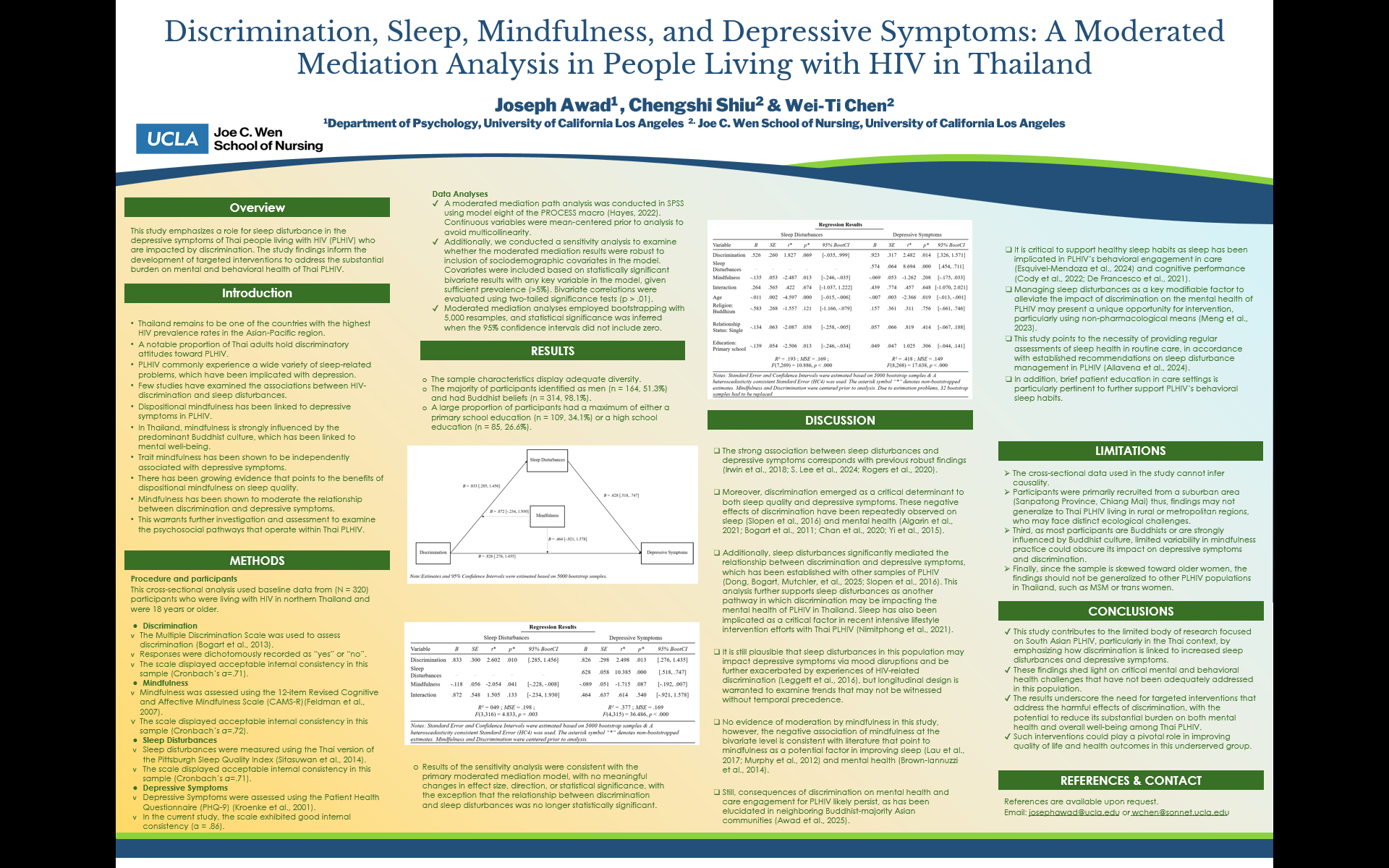
Title: Discrimination, Sleep, Mindfulness, and Depressive Symptoms: A Moderated Mediation Analysis in People Living with HIV in Thailand
Presenter(s): Joseph Awad, AA, BA
Summary: This study contributes to the limited body of research focused on South Asian PLHIV, particularly in the Thai context, by emphasizing how discrimination is linked to increased sleep disturbances and depressive symptoms. These findings shed light on critical mental and behavioral health challenges that have not been adequately addressed in this population.
 Click on image to expand poster
Poster Presentation #2
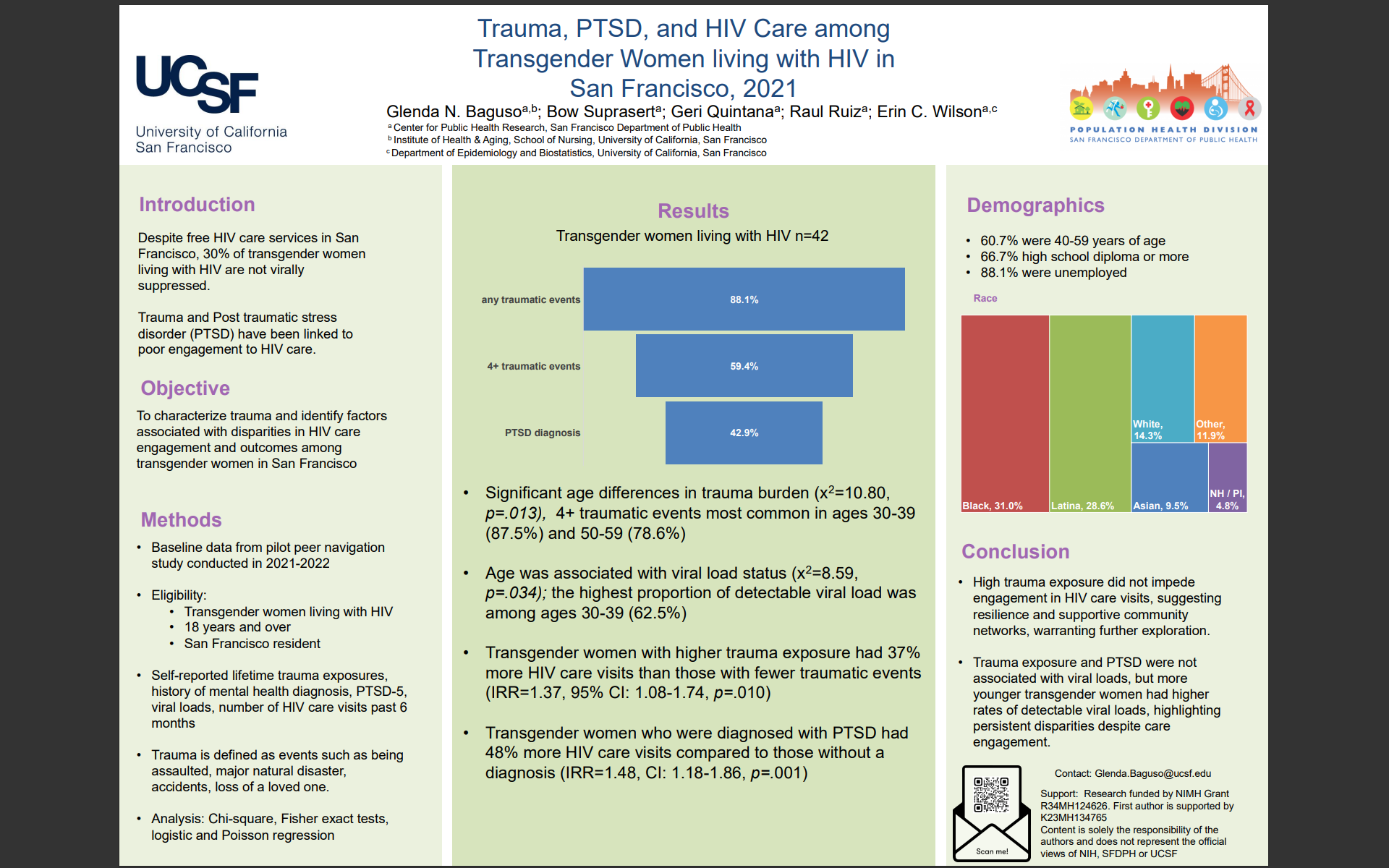
Title: Trauma, PTSD, and HIV Care among Transgender Women in San Francisco, 2021
Presenter(s): Glenda N. Baguso, RN, PhD, MPH, CNS
Summary: This pilot study found that trauma exposure was highly prevalent among transgender women living with HIV in San Francisco, particularly among younger women, with nearly half reporting PTSD or a high likelihood of PTSD symptoms. Despite high levels of trauma and PTSD, transgender women sustained strong engagement in HIV care.
 Click on image to expand poster
Poster Presentation #3
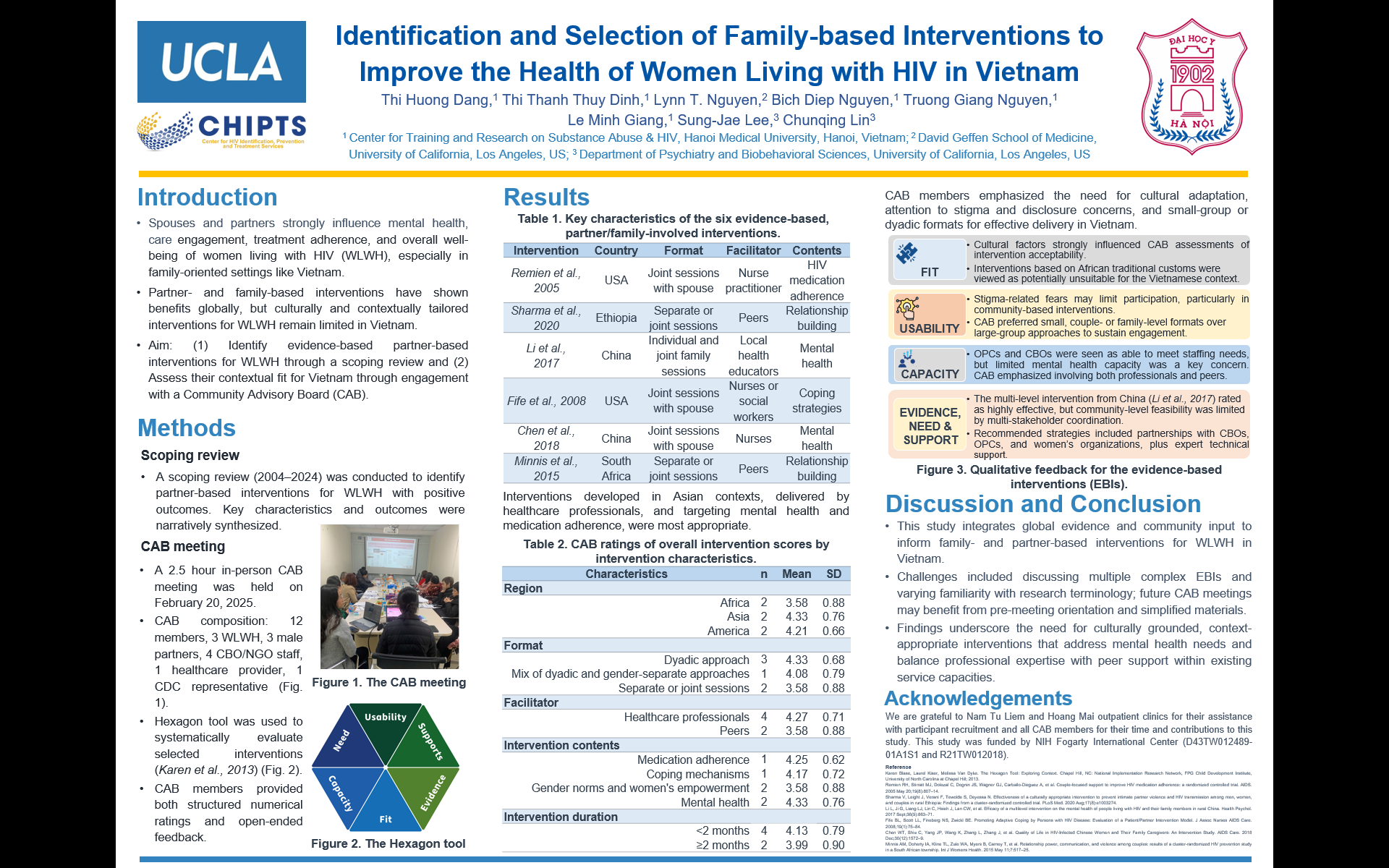
Title: Identification and Selection of Family-based Interventions to Improve the Health of Women Living with HIV in Vietnam
Presenter(s): Huong Dang, MD
Summary: This study identified evidence-based partner- and family-based interventions that improved health outcomes among women living with HIV through a scoping review of global literature. Using input from a Community Advisory Board in Vietnam, the study assessed the suitability and contextual fit of these interventions for local implementation. The findings highlighted the importance of culturally adapted, partner-inclusive approaches to support mental health, treatment adherence, and overall well-being of women living with HIV in Vietnam
 Click on image to expand poster
Poster Presentation #4
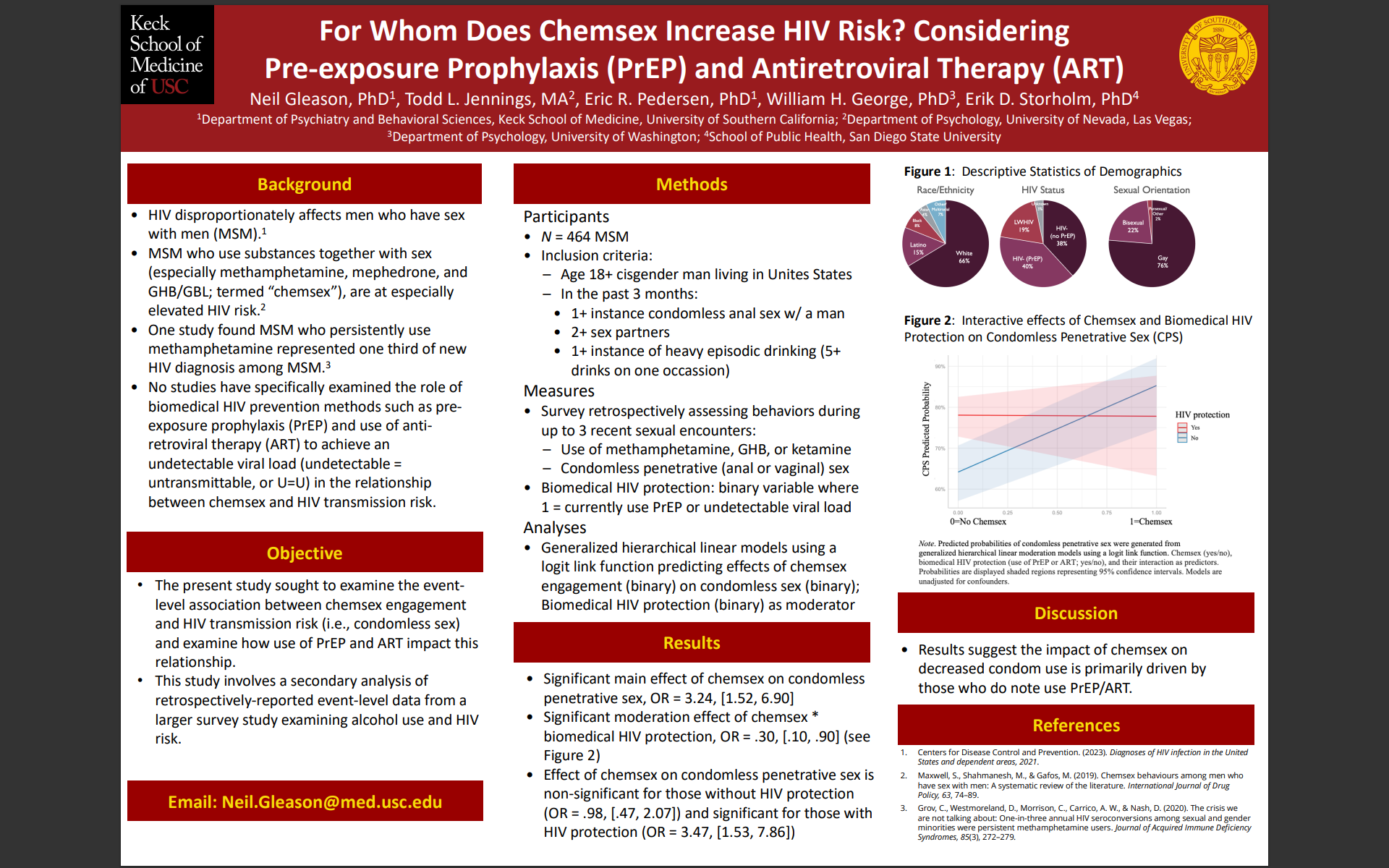
Title: For Whom Does Chemsex Increase HIV Risk? Considering Pre-exposure Prophylaxis (PrEP) and Antiretroviral Therapy (ART)
Presenter(s): Neil Gleason, PhD
Summary: Chemsex (i.e., the use of substances concurrently with sex, especially methamphetamine) is highly associated with sexual risk behavior and HIV transmission among men who have sex with men (MSM), but few studies have considered use of medications to reduce HIV risk, including pre-exposure prophylaxis (PrEP) and antiretroviral therapy (ART). The present study examined the event-level association between engagement in chemsex and engagement in condomless anal sex, accounting for PrEP and ART use, in a sample of N=464 MSM. Results indicated that chemsex engagement increases the likelihood of condomless anal sex and related HIV risk, but only among individuals who are not using PrEP or ART.
 Click on image to expand poster
Poster Presentation #5
Title: Housing as Healthcare: Thirty-Year Legacy of the San Francisco AIDS Foundation’s Rental Subsidy Program as a Structural HIV Intervention
Presenter(s): Andrew Gutierrez III, MEd
Summary: For more than 30 years, SFAF’s HIV Rental Subsidy Program has demonstrated that housing stability is foundational to HIV treatment success—improving medication adherence, preventing homelessness, and reducing health disparities for over 330 San Franciscans annually. Through deep partnerships with clinical, harm reduction, and legal service providers, the program operationalizes housing as a structural HIV intervention. This model offers a replicable pathway for cities facing rising housing insecurity and worsening economic pressures.
N/A
Poster Presentation #6
Title: Use of Comic Narratives to Revolutionize HIV Education and Advocacy
Presenter(s): Khoa Le
Summary: This presentation spotlights an educational graphic novel on HIV that features prominent historical figures in HIV advocacy, including Keith Haring, Marsha P. Johnson, and Hector Xtravaganza. By combining storytelling with accurate health information, this medium offers a culturally engaging way to reduce stigma and increase HIV awareness among younger populations.
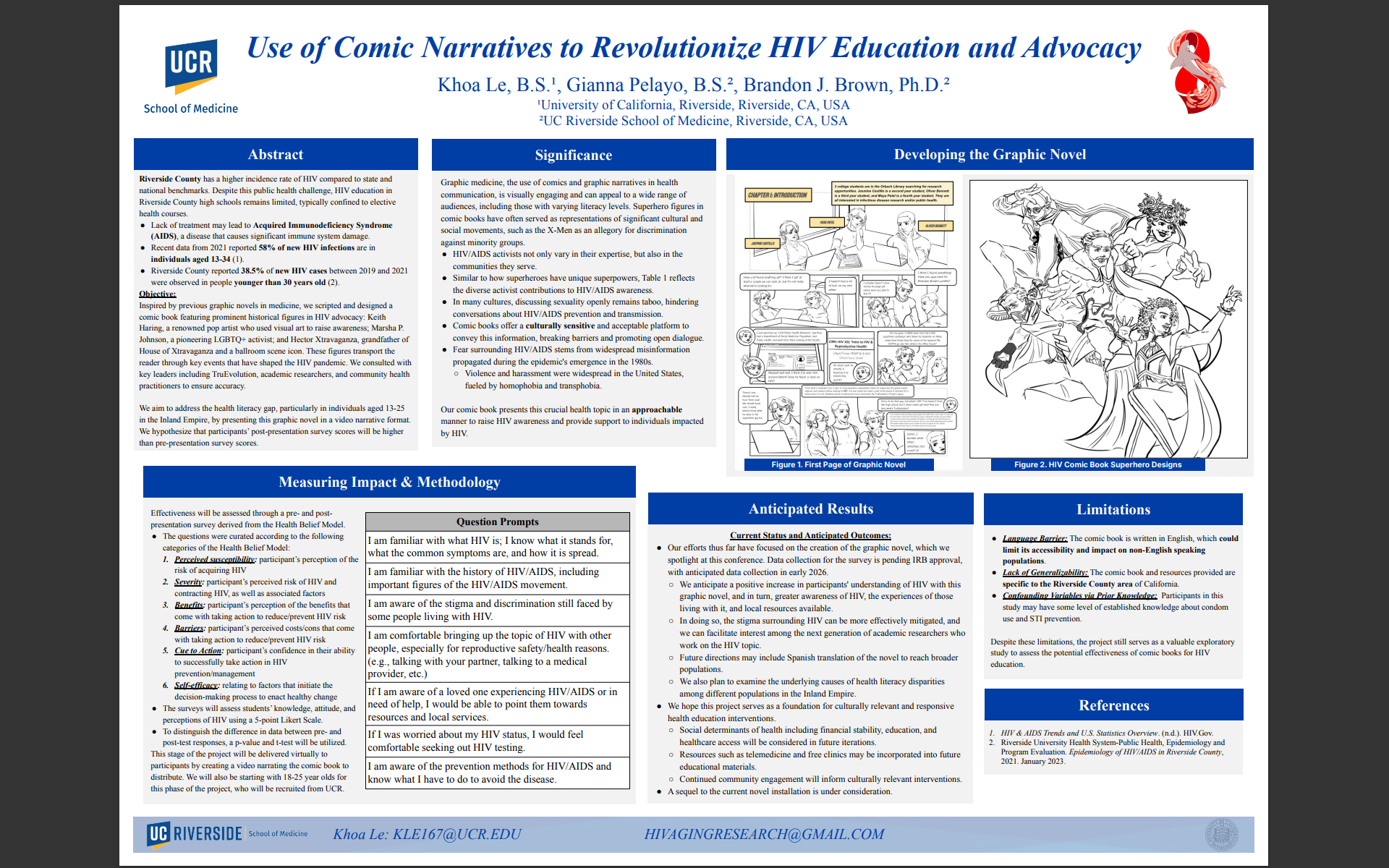 Click on image to expand poster
Poster Presentation #7
Title: Exploring the Association Between Cannabis Use and HIV Viral Non-suppression in a National Virtual Cohort
Presenter(s): Soo Yeon Lee, BS
Summary: This presentation examines whether cannabis use is associated with HIV viral non-suppression using data from a national digital cohort of people living with HIV. While cannabis use was not linked to viral outcomes, the study highlights racial and gender disparities that have been consistently documented across prior research and remain evident in this sample. The findings underscore the importance of addressing structural and social drivers of HIV outcomes beyond individual substance use.
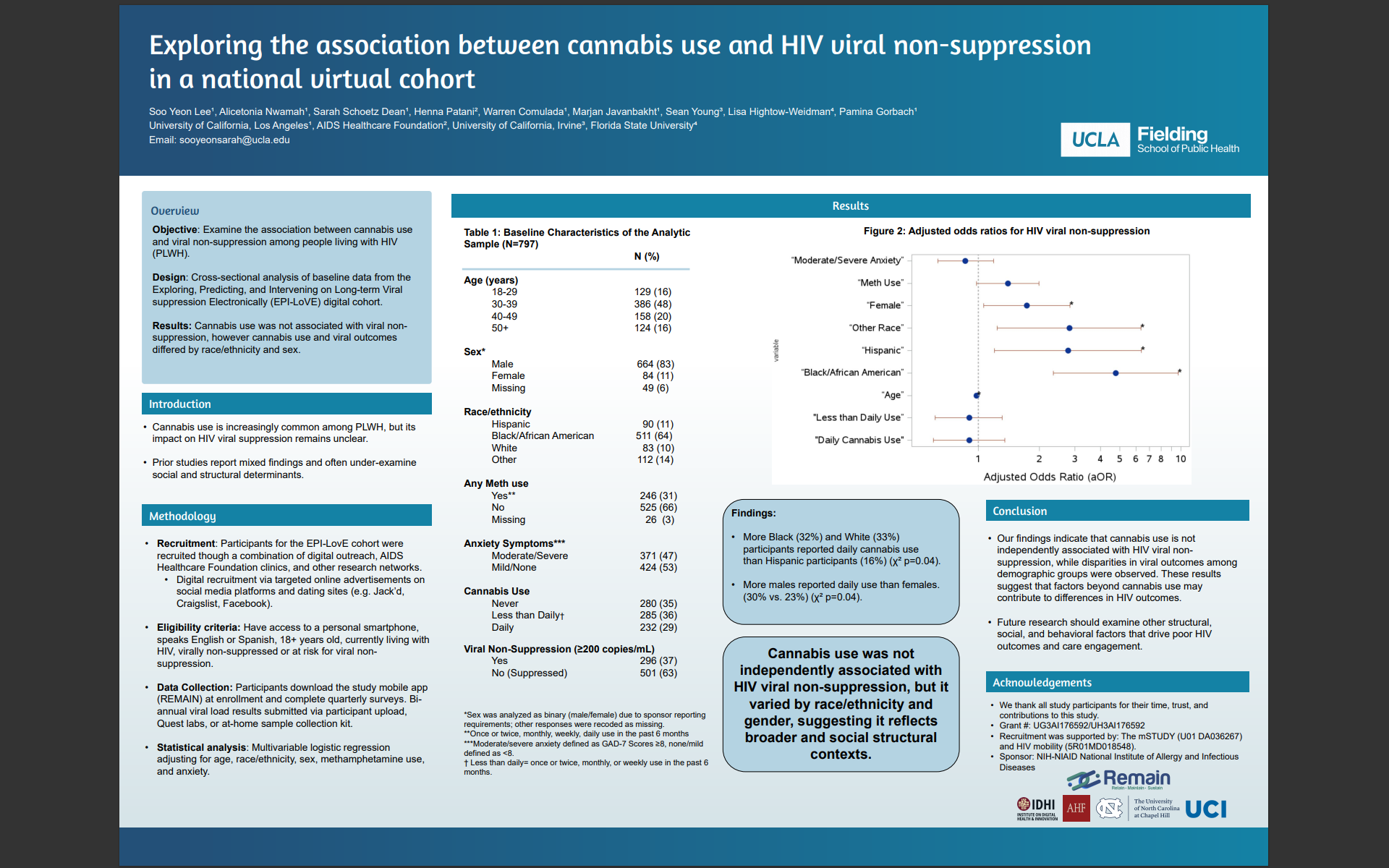 Click on image to expand poster
Poster Presentation #8
Title: Child, Caregiver, and Health Care Provider Perspectives and Experiences Regarding Disclosure of HIV Status to Perinatally Infected Children in Lima, Peru
Presenter(s): Jaime G. Deville, MD, FAAP and Citlalin Lopez-Torres, MPH
Summary: This qualitative study examines the experiences and perspectives of perinatally infected children living with HIV, their caregivers, and health care providers regarding HIV status disclosure in Lima, Peru. Before disclosure, families faced challenges such as medication adherence difficulties, alternative explanations for illness, and instances of unintentional disclosure, though children preferred direct communication from trusted adults. After disclosure, children reported improved adherence, emotional adjustment, and stronger relationships, while caregivers experienced relief despite ongoing fears of stigma and guilt. The study emphasizes the need for early, developmentally appropriate, and supported disclosure processes, including national guidelines, provider and caregiver training, and strengthened support systems to improve long-term outcomes.
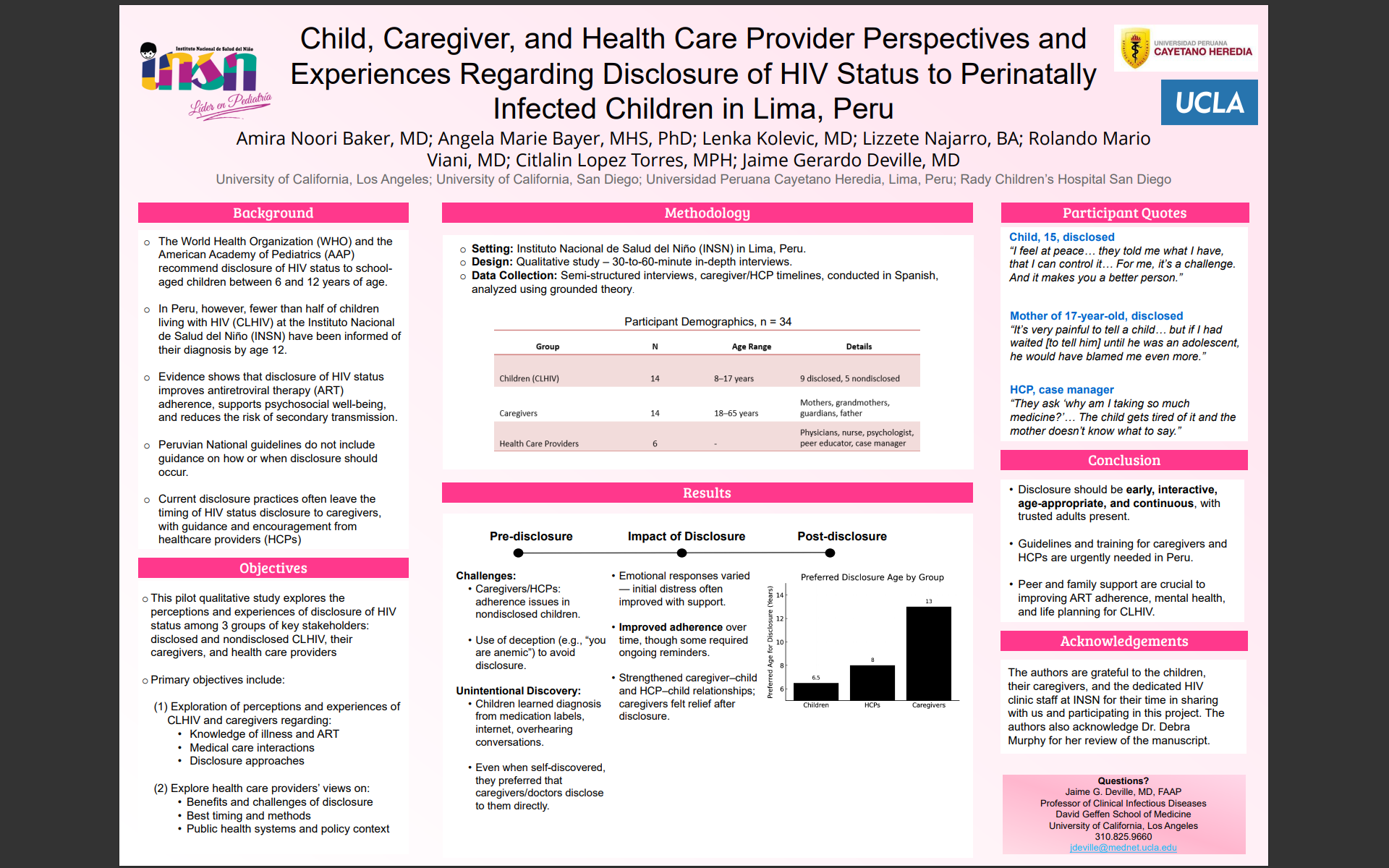 Click on image to expand poster
Poster Presentation #9
Title: Understanding Barriers to HIV and STI Testing Among Latina Women in California’s Inland Empire
Presenter(s): Andrea Manzur
Summary: This presentation examines the sociocultural contexts of disparities for HIV/STD test-taking behaviors amongst Latina women in the Inland Empire. Its focus sheds light on how cultural norms, systemic barriers, and social conditions impact health outcomes.
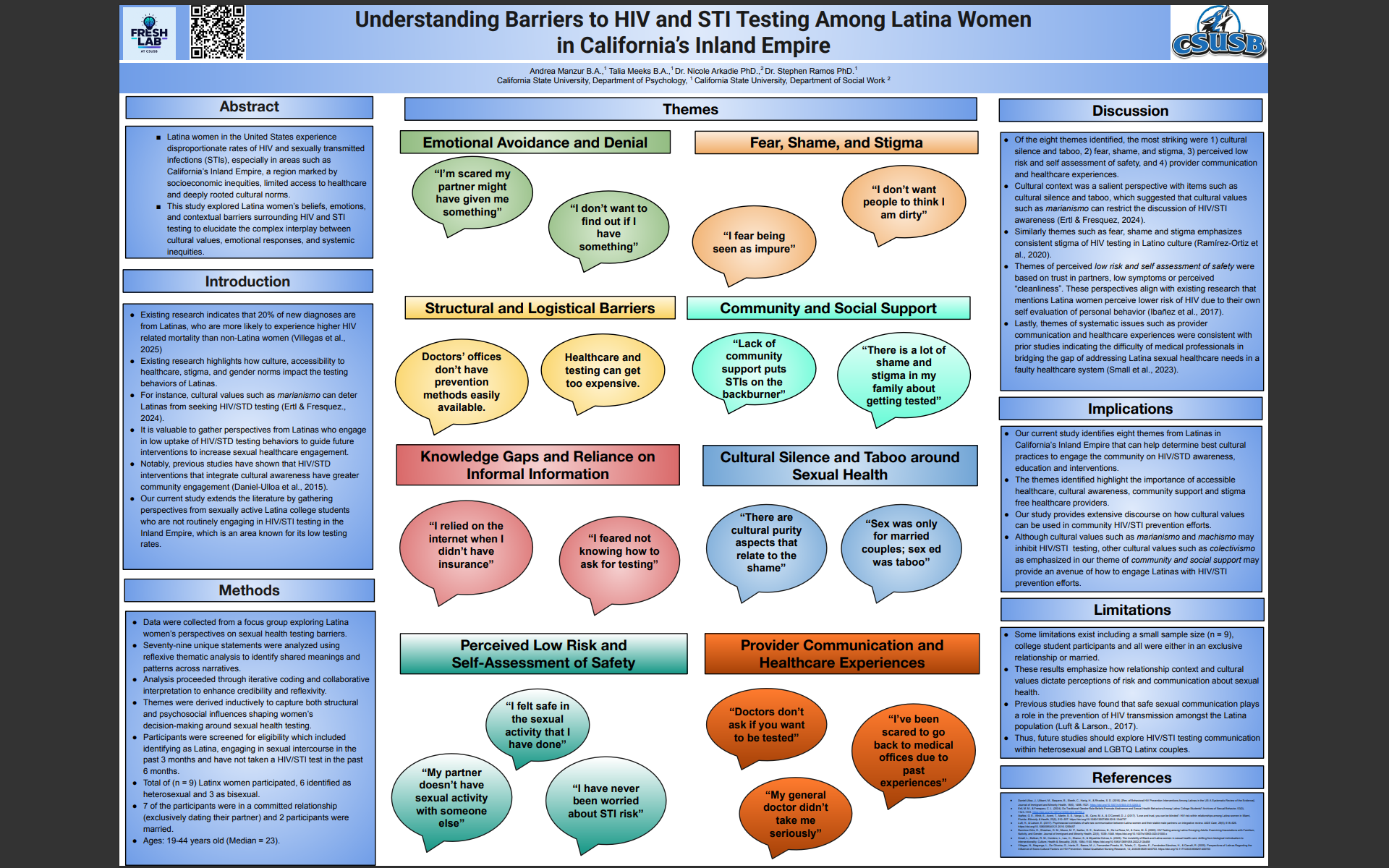 Click on image to expand poster
Poster Presentation #10
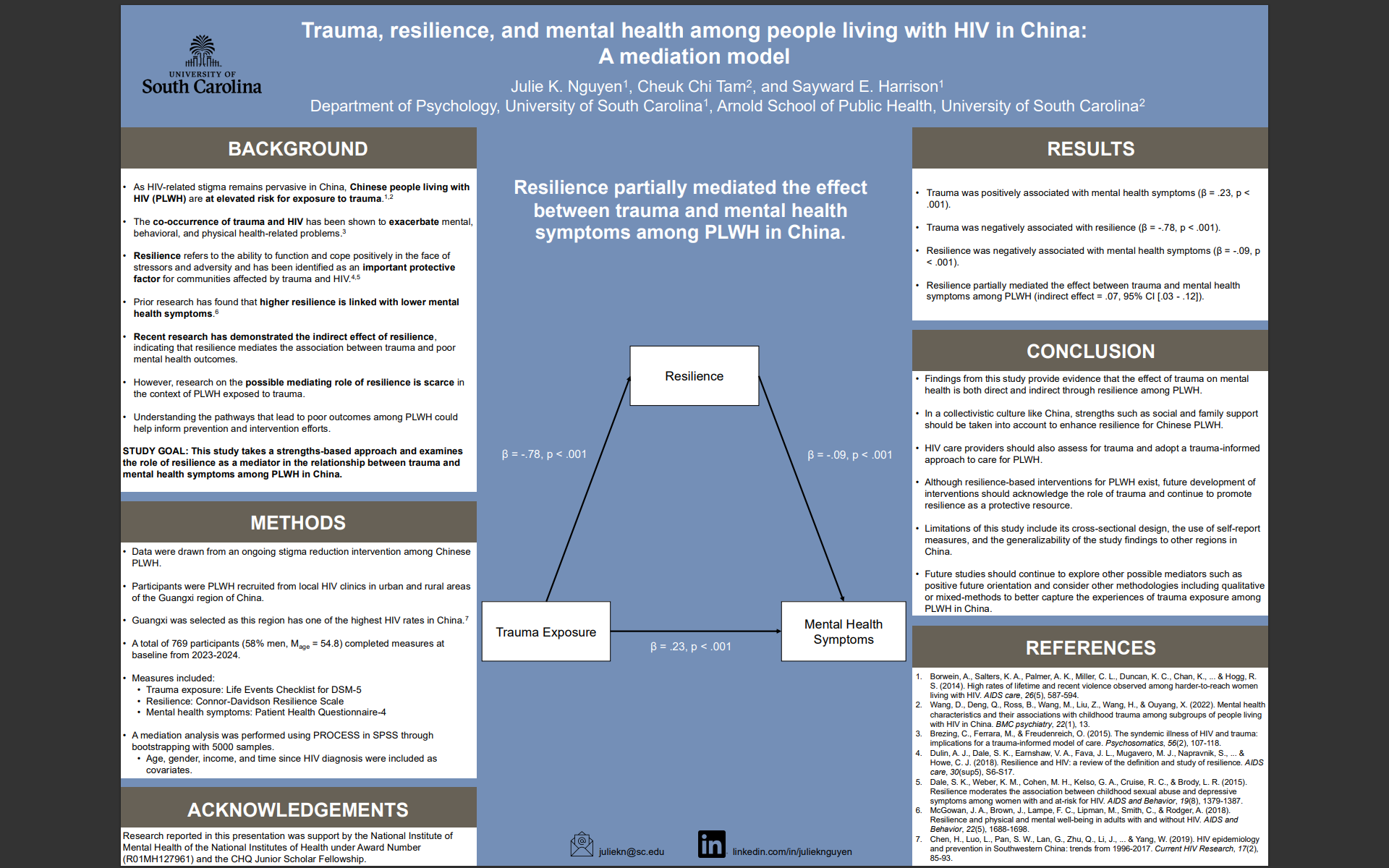
Title: Trauma, resilience, and mental health among people living with HIV in China: A mediation model
Presenter(s): Julie Nguyen, MA
Summary: This study examined the association between trauma, resilience, and mental health among people living with HIV in China. Resilience partially mediated the effect between trauma and mental health symptoms among PLWH.
 Click on image to expand poster
Poster Presentation #11
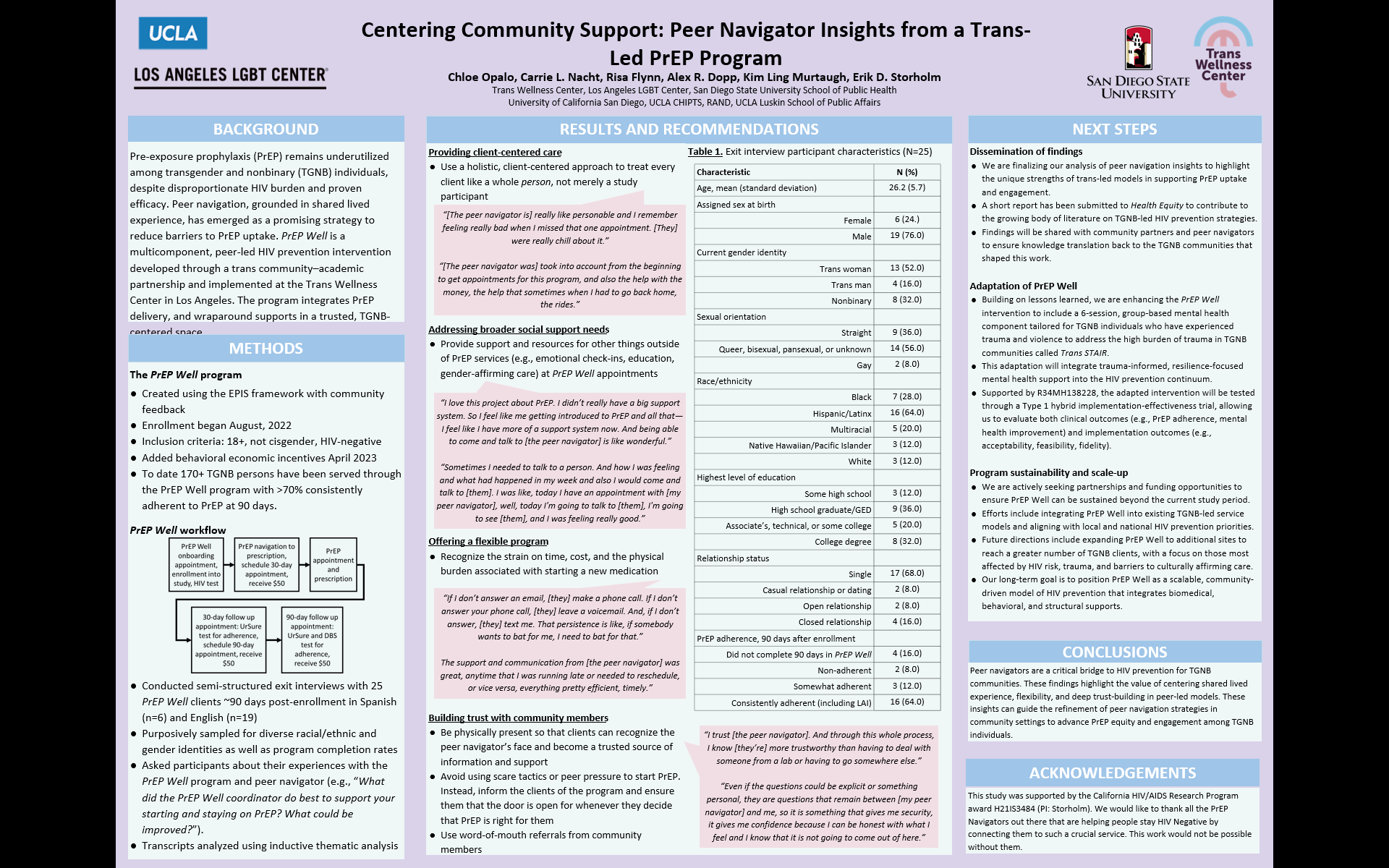
Title: Scoping Centering Community Support: Peer Navigator Insights from a Trans-Led PrEP Program
Presenter(s): Chloe Opalo
Summary: We can help facilitate uptake of PrEP in Trans and Nonbinary populations by meeting community members where they’re at, with a shared lived experience and identity and bridging the gap between our own expectations as PrEP Navigators and where the community member is currently at, logistically, economically, mentally, etc. and helping them connect with a caring
PrEP provider that will help them overcome any barriers that may have prevented them from accessing PrEP on their own.
 Click on image to expand poster
Poster Presentation #12
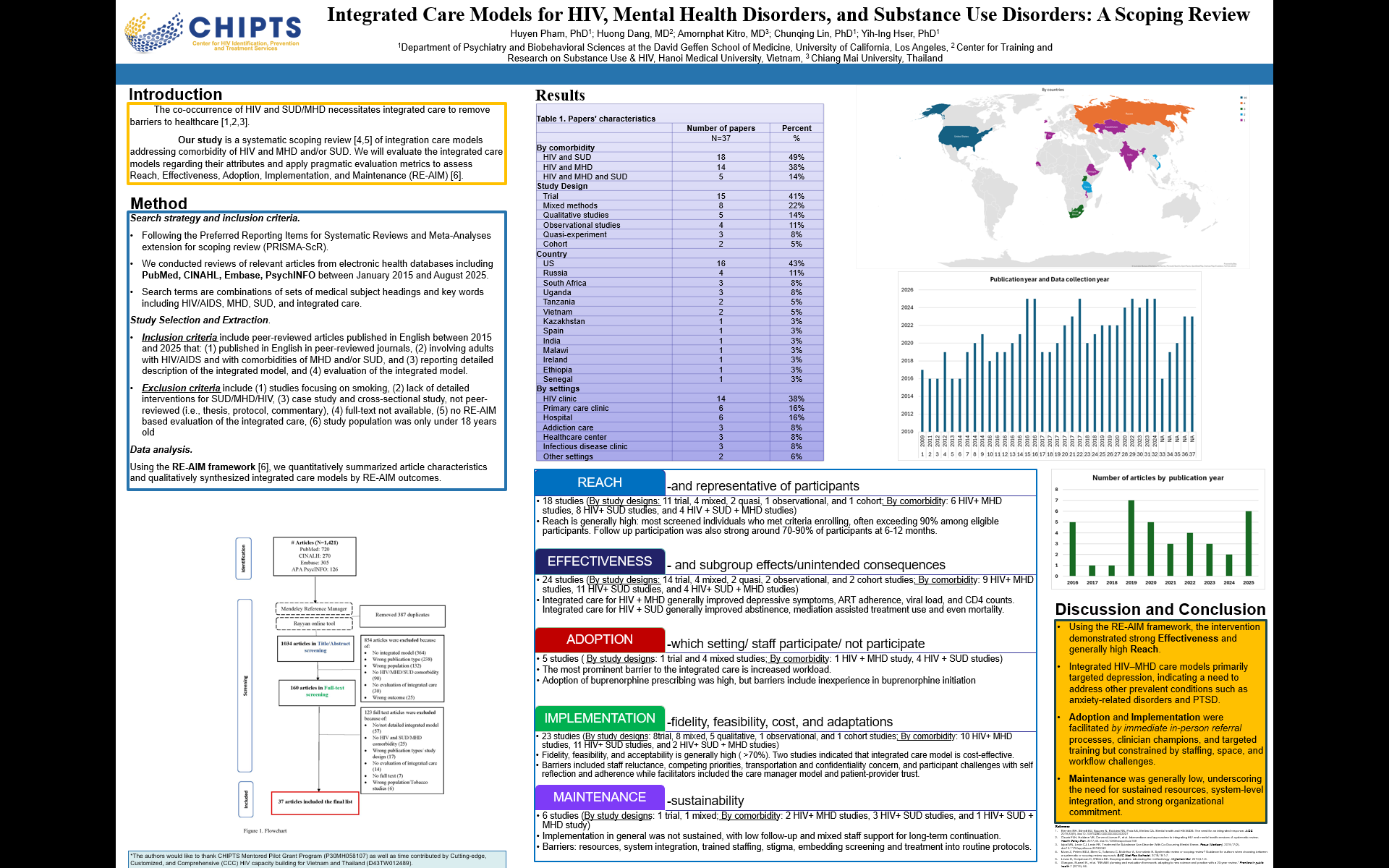
Title: Scoping Review of Integrated Care Models for Comorbidities of HIV and MHD/SUD
Presenter(s): Huyen Pham, PhD
Summary: We conduct a scoping review of integrated care models for HIV and MHD/SUD comorbidity regarding their attributes and apply pragmatic evaluation metrics to assess Reach, Effectiveness, Adoption, Implementation, and Maintenance (RE-AIM). 1,034 articles have been screened from four health databases, including PubMed, CINAHL, Embase, and PsychINFO between 2015 and 2024.
 Click on image to expand poster
Poster Presentation #13
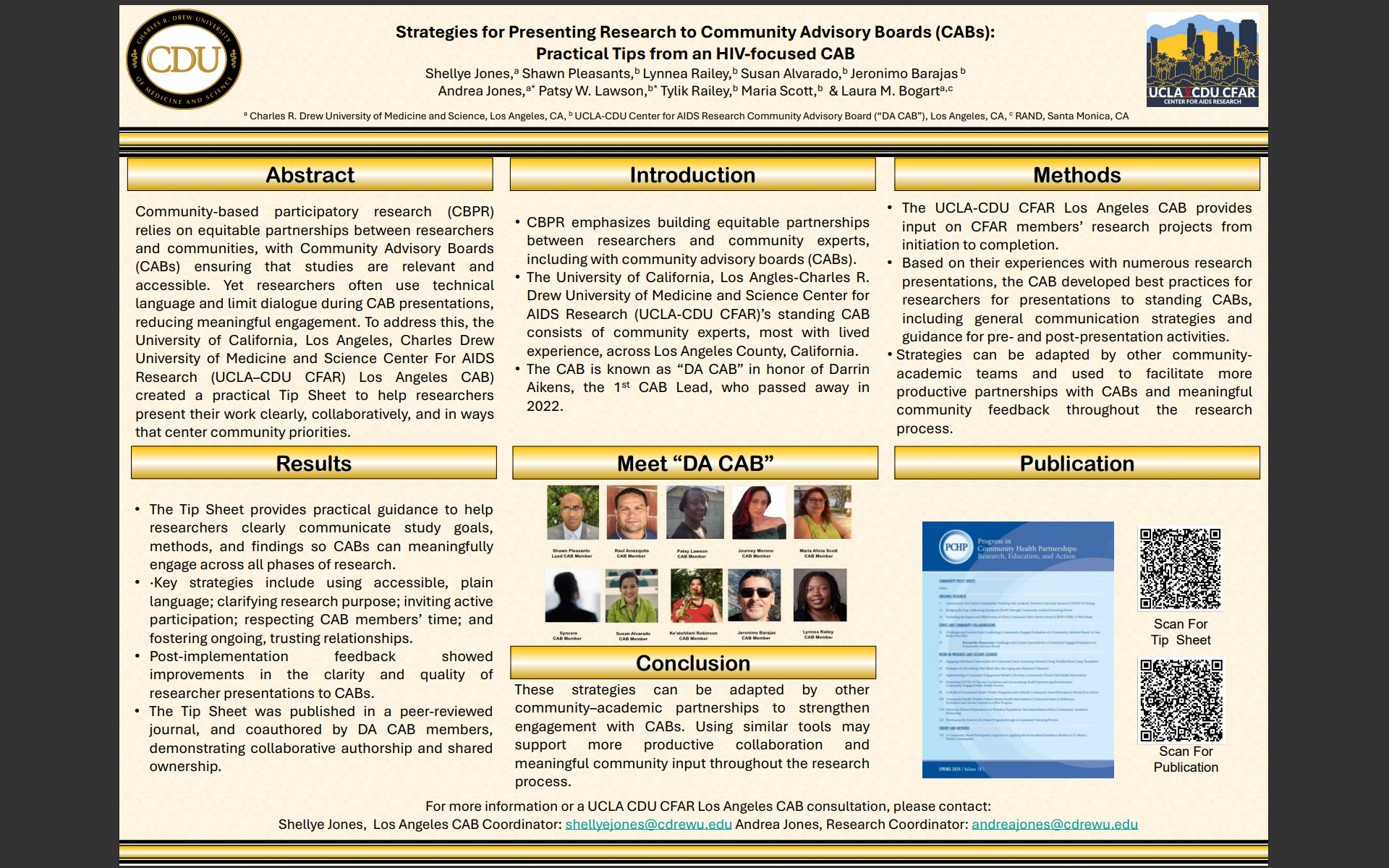
Title: Strategies for Presenting Research to Community Advisory Boards (CABs): Practical Tips from an HIV-focused CAB
Presenter(s): Shawn Pleasants, BA and Ke’alohilani Robinson
Summary: Community advisory boards (CABs) are essential to community-based participatory research (CBPR), ensuring studies are relevant, culturally appropriate, and beneficial to communities. CABs, composed of community experts with lived experience, provide independent input distinct from study team members or participants. The UCLA-CDU CFAR CAB developed best practices for researchers presenting to standing CABs, offering communication strategies and guidance for pre- and post-presentation activities to foster productive partnerships and meaningful community feedback throughout the research process.
Click on image to expand poster
Poster Presentation #14
Title: How Masculinity and Stigma Shape PrEP Use among Latino Men Who Have Sex with Men
Presenter(s): Stephen D. Ramos, PhD
Summary: This study found that among Latino MSM, greater conformity to masculine norms emphasizing emotional restriction was indirectly associated with lower PrEP use through increased internalized homophobia and heightened PrEP-related stigma. While masculine conformity was not directly linked to PrEP use, stigma—shaped by internalized negative beliefs about sexuality—emerged as a key mechanism reducing PrEP uptake. These findings underscore the need for culturally tailored HIV prevention interventions that address masculine norms, internalized homophobia, and PrEP stigma simultaneously.
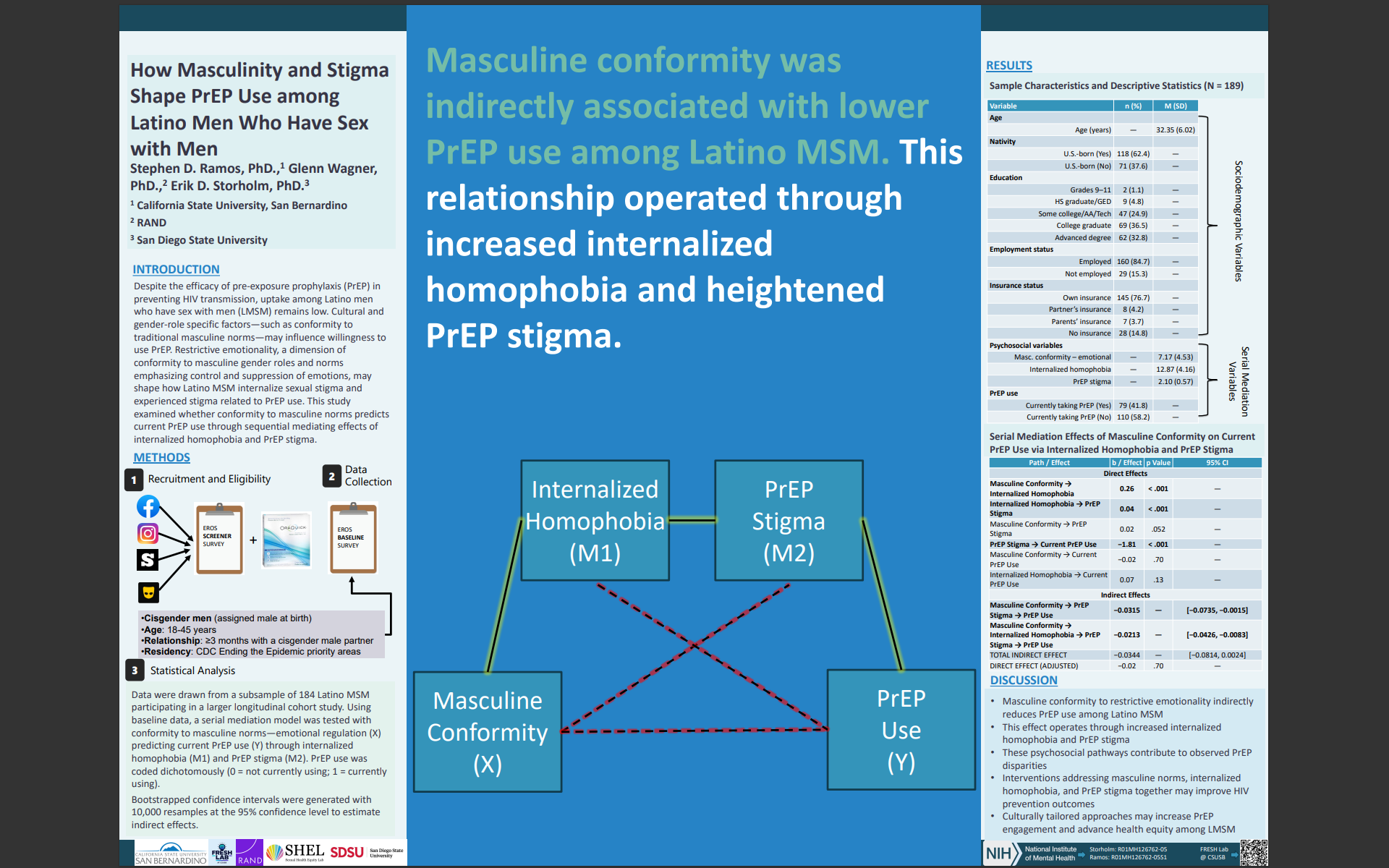 Click on image to expand poster
Poster Presentation #15
Title: Transgender Empathy Training
Presenter(s): Mallery Jenna Robinson, BA
Summary: Transgender Empathy Training is an interactive, educational session designed to build cultural competency and practical understanding of transgender experiences. It equips participants with tools to reduce harm, challenge bias, and create safer, more inclusive environments in healthcare, education, and public-facing spaces.
N/A
Poster Presentation #16
Title: A Hateful Homicide
Presenter(s): Mallery Jenna Robinson, BA
Summary: A Hateful Homicide is a storytelling-based presentation that examines real cases of anti-transgender violence, honoring the lives lost while highlighting the systemic failures that contribute to these tragedies. Through narrative, data, and lived experience, the presentation fosters awareness, accountability, and collective responsibility.
N/A
Poster Presentation #17
Title: Wounded Healer: Identity Reconstruction & Transformation Among Male HIV and HIV/TB Peer Counselors in South Africa.
Presenter(s): Kelly Rutt, PhD
Summary: This study explores the experience of peer counselors in the Coach Mpilo intervention while supporting other men living with HIV and HIV/TB in South Africa. Using interviews, focus groups, and Photovoice, the study shows that counselors’ own trauma and stigma are reframed as assets, fostering personal and professional growth, emotional healing, relationship transformation, and more nurturing, gender-transformative expressions of masculinity.
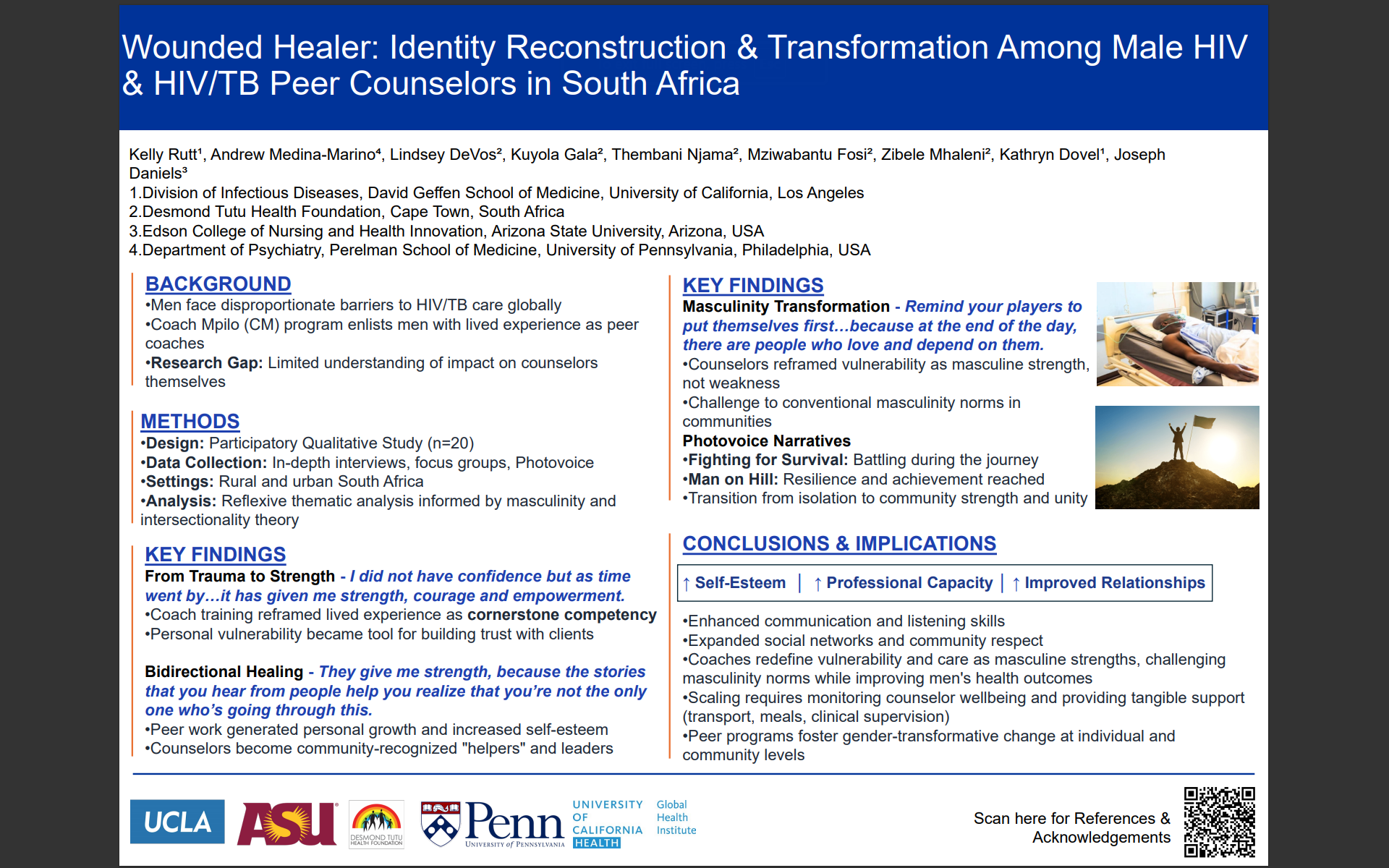 Click on image to expand poster
Poster Presentation #18
Title: HIV-Related Shame and Alcohol Use Among Men Who Have Sex with Men: The Mediating Role of Posttraumatic Stress Symptoms Related to Being Recently Diagnosed with HIV
Presenter(s): Karissa Tran, BA
Summary: The present study aimed to examine whether posttraumatic stress symptoms related to being recently diagnosed with HIV would mediate the relationship between HIV-related shame and alcohol use among men who have sex with men (MSM). The findings suggest that interventions addressing posttraumatic stress symptoms related to being recently diagnosed with HIV could help reduce alcohol use and improve health outcomes among MSM.
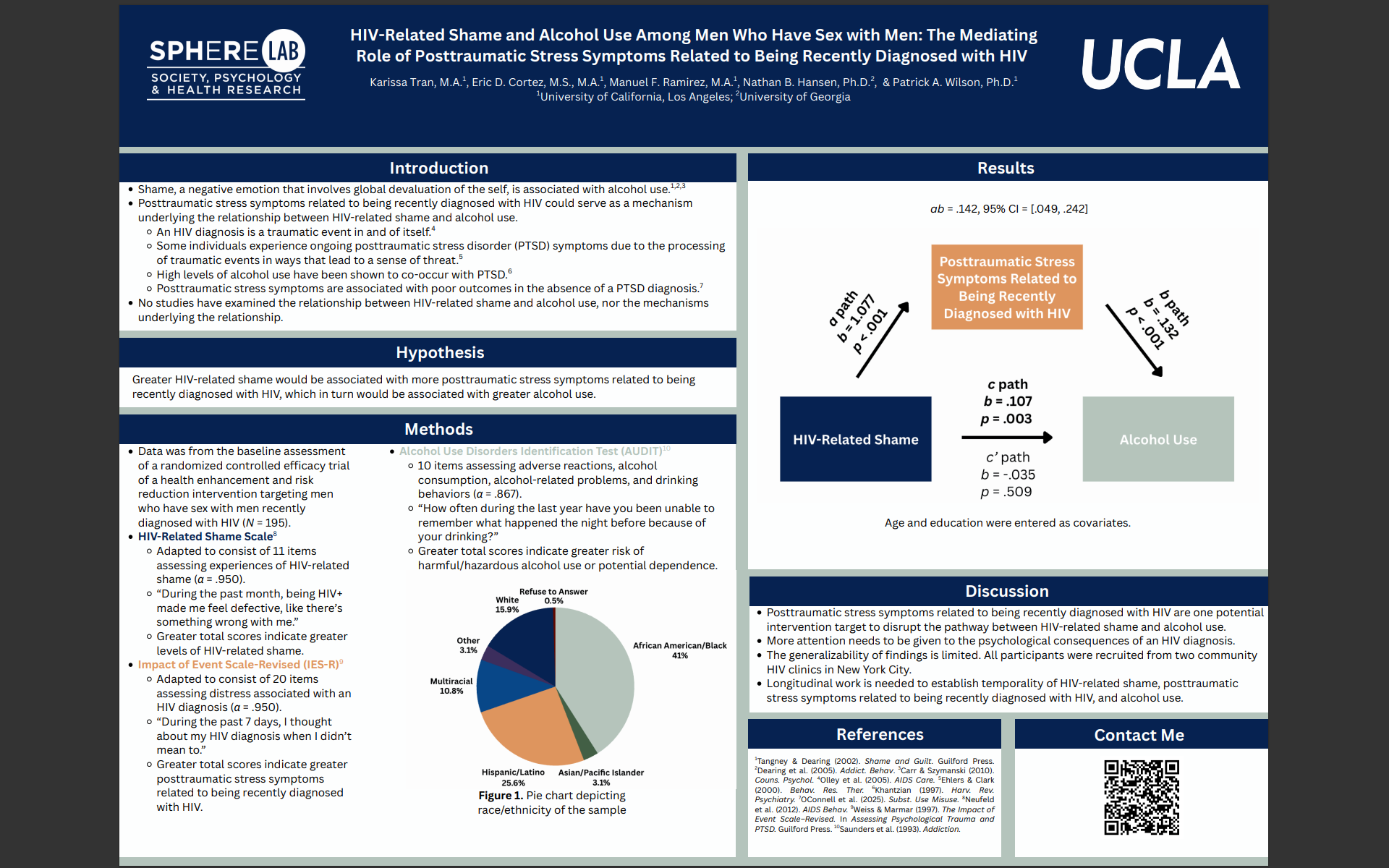 Click on image to expand poster
Poster Presentation #19
Title: Reach of Doxycycline Post-Exposure Prophylaxis for Bacterial STI Prevention to Impacted Populations in Los Angeles Clinics, 2025
Presenter(s): Amanda Wahnich, MPH
Summary: Analysis of the uptake of doxycycline post-exposure prophylaxis (DoxyPEP) across Los Angeles County Department of Public Health–funded clinics found that more than one-third of clients received DoxyPEP, with strong reach to populations experiencing high HIV/STI burden, particularly Latinx clients and those with public insurance or low income. However, uptake was lower than indicated among younger adults, Black clients, cisgender women, and in some high-incidence geographic areas when compared with countywide syphilis and gonorrhea surveillance data. Early implementation is promising, and additional work is needed to ensure that the roll-out of DoxyPEP does not perpetuate existing inequity gaps.
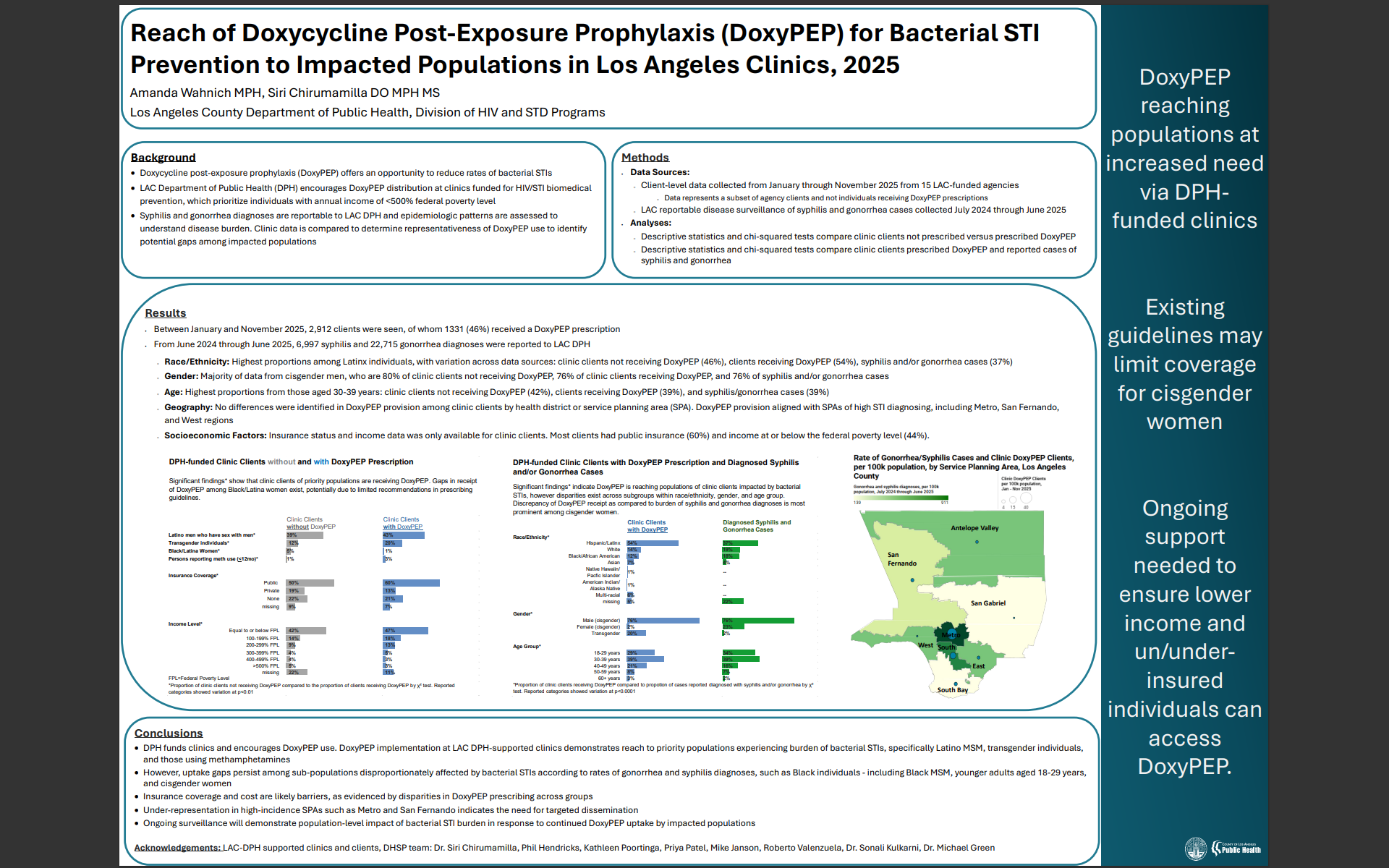 Click on image to expand poster
Poster Presentation #20
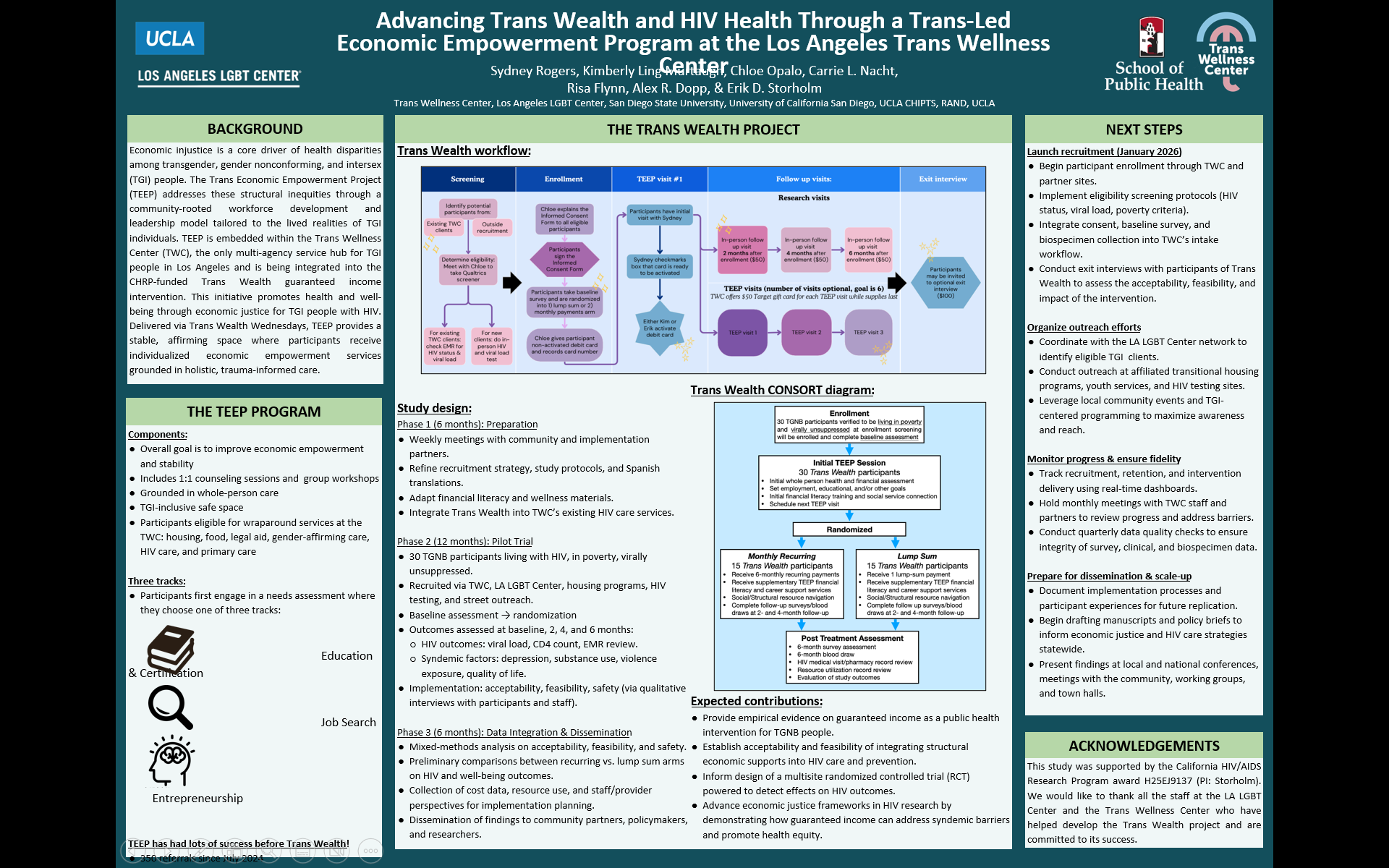
Title: Advancing Trans Wealth and HIV Health Through a Trans-Led Economic Empowerment Program at the Los Angeles Trans Wellness Center
Presenter(s): Sydney Rogers, MSW
Summary: Economic injustice is a core driver of health disparities among transgender, gender nonconforming, and intersex (TGI) people. The Trans Economic Empowerment Project (TEEP) addresses these structural inequities through a community-rooted workforce development and leadership model tailored to the lived realities of TGI individuals. TEEP is embedded within the Trans Wellness Center (TWC), the only multi-agency service hub for TGI people in Los Angeles and is being integrated into the CHRP-funded Trans Wealth guaranteed income intervention. This initiative promotes health and well-being through economic justice for TGI people with HIV. Delivered via Trans Wealth Wednesdays, TEEP provides a stable, affirming space where participants receive individualized economic empowerment services grounded in holistic, trauma-informed care.
 Click on image to expand poster
Event Description
The 2025 CHIPTS HIV Next Generation Conference occurred on Friday, January 31, 2025 from 8:00 AM – 3:00 PM PT. The conference was IN-PERSON at the California Endowment and FREE to attend.
The conference is organized to support the next generation of HIV researchers and service providers who are working towards an end to HIV/AIDS through networking and sharing visions for future priorities. The theme of this year’s conference was “Navigating the Impacts of Environmental Factors on HIV Treatment and Prevention.” The conference featured oral and poster presentations by faculty, student and emerging researchers from various institutions.
Welcome/ Opening Plenary
Welcome and Opening Remarks:
Recording: N/A
- Steve Shoptaw, PhD, Director, CHIPTS Administrative Core
Conference Facilitator and Announcements:
- Dallas Swendeman, PHD, Co-Director, CHIPTS Development Core
Opening Plenary:
Slides: Download here
Jerry John Ouner, PhD, RN, FAAN, Associate Professor, University of California San Francisco
Presentation Title: Impact Of Water Insecurity and Extreme Weather Events on HIV Treatment Outcome
Presentation Summary: The presentation will focus on the influence of water insecurity and extreme weather events such as droughts, precipitation anomalies, and flood on HIV treatment. Dr. Ouner will highlight how water insecurity and extreme weather events affect adherence to antiretroviral therapy, viral load suppression and occurrences of opportunistic infection among people living with HIV.
Plenary Discussions
Panel 1: Adherence and Viral Suppression
Panel Presentations:
1. Shifting from in-person to expanded telehealth delivery of medical care coordination for people with HIV: Impact on viral suppression
- Brendon Chau, MS
Slides: Download here
Summary: We model longitudinal trends in viral suppression before and after the transition to telehealth services during COVID-19 pandemic. The expected probability of viral suppression was not negatively impacted by tele-health adoption.
2. Adherence Self-Efficacy as a Conditional Mediator Between Internalized Heterosexism and Antiretroviral Medication Adherence: The Role of Hazardous Alcohol Use in Young Black Sexual Minority Men with HIV (YBSMM+)
- Stephen D. Ramos, PhD
Slides: Download here
Summary: We found that internalized heterosexism is indirectly associated with self-reported ART adherence, via adherence self-efficacy. This mediating effect is strongest among participants who showed hazardous alcohol use. This underscores a contextualized understanding of these associations among a sample of young Black sexual minority men with HIV.
3. The Intersection of Place and Health: Neighborhood and Socio-Economic Determinants of Viral Suppression
- Roxana Rezai, PhD
Slides: Download here
Summary: Despite the availability of resources such as Ryan White-funded clinics that offer free access to HIV healthcare, significant disparities in viral suppression rates exist. This study examines the association between neighborhood characteristics, socioeconomic factors, and viral suppression among people living with HIV in neighborhoods served by Ryan White-funded clinics in Southern California.
Panel 2: Linkage and Retention Among People Living with HIV
Panel Presentations:
1. Evaluating Linkages to Care among UCLA Patients with Detectable HIV Viremia
- Hollie David, MPH
Slides: Download here
Summary: This study examines barriers to engagement in the HIV care continuum, focusing on patients at UCLA Health with detectable viral loads. By analyzing patient demographics, clinical characteristics, and care engagement, the study identifies factors like frequent visits and adherence to ART as key to achieving virologic suppression. Results suggest that increased healthcare interactions and timely follow-ups are crucial for improving engagement and retention in care, emphasizing the need for continued outreach and support for individuals living with HIV.
2. Reviewing Retention Rates & Medication Adherence Differences Between Differentiated Service Delivery Model and the RiseUP! Enhanced Differentiated Service Delivery (EDSD) Model for HIV Care & Treatment in Sub Saharan Africa
- Wanjiku Dyer, MD Candidate
- Czarina Kate Igama, MSc
Slides: Download here
Summary: This presentation compares traditional Differentiated Service Delivery (DSD) models with the RiseUP! Enhanced Differentiated Service Delivery (EDSD) model for HIV care and treatment among adolescent girls and young women (AGYW) in Sub-Saharan Africa. We analyze retention rates and medication adherence across various countries, highlighting the effectiveness of the RiseUP! model’s holistic, youth-friendly approach. The study emphasizes the importance of tailored, community-based interventions in improving HIV care outcomes for vulnerable populations.
3. Analyzing Complex Pathways Between Resilience, Health, and Well-Being in Kenyan Youth Aged 15-24 Living with HIV in Informal Settlements
- Ariana Waters, BS
Slides: Download here
Summary: We conducted a cross-sectional survey to examine various pathways of resilience among HIV-positive youth living within informal settlements outside of Nairobi, Kenya. Relationships between variables were modelled and evaluated using linear regression analysis and structural equational modelling. We identified unique pathways linking social support, adverse childhood experiences, and HIV stigma to general health and resilience. These results may provide valuable insights for developing targeted intervention strategies to improve treatment adherence and HIV management in this population.
Panel 3: Testing, Prevention, and PrEP
Panel Presentations:
1. Violence and Coercion among Sex Workers in India: Gender Differences and PrEP Implications
- Katherine Lewis, MPH
Slides: Download here
Summary: We examined the relationship between violence/coercion and PrEP acceptability among cisgender female sex workers and transgender sex workers in urban West Bengal, India. We found very high rates of violence and coercion among participants, particularly among transgender sex workers. We also found that the relationship between coercion/violence and PrEP willingness was conditional on gender.
2. Identifying Preferences for a Conditional Cash Transfer to Increase PrEP Use among MSM of Color in Los Angeles County
- Dillon Trujillo, MPH
Slides: Download here
Summary: This study examines how to optimize a conditional cash transfer (CCT) intervention to increase PrEP use among Black and Latinx men who have sex with men (MSM) in Los Angeles County. Findings from a discrete choice experiment reveal preferences for larger cash payments provided more frequently, with some variation in PrEP modality. These results highlight the potential of tailored CCT designs to improve PrEP uptake and advance national efforts to reduce new HIV transmissions among key populations.
3. Community Health Ambassador Program (CHAP): Evaluating the Success of a CDR SNS Strategy in LAC
- Brian Valencia, MPH
Slides: Download here
Summary: In Los Angeles County (LAC), we implemented a cluster detection and response (CDR) social network strategy (SNS) among HIV molecular clusters with the goal of addressing service gaps and bringing individuals into HIV prevention and care, preventing further HIV transmission. SNSs have strong evidence of effectively reaching populations who may not otherwise test. The Community Health Ambassador Program (CHAP) used this strategy to distribute HIV self-test kits among the social, sexual, and behavioral networks of communities who may be at increased risk for HIV.
Panel 4: Impact of Policy on Research
Panel Presentation:
1. Potential Implications of Key 2024 California Ballot Measures
- Nina T. Harawa, PhD, MPH
- Charles Vignola, MPA
- Michael Li, PhD
Slides: Download here
Summary: Panel will discuss the potential impact of California ballot propositions that passed and did not pass on the well-being of individuals and communities that are affected by HIV, with a focus on those related to the criminal legal system.
Poster Presentations
Poster Presentation #1
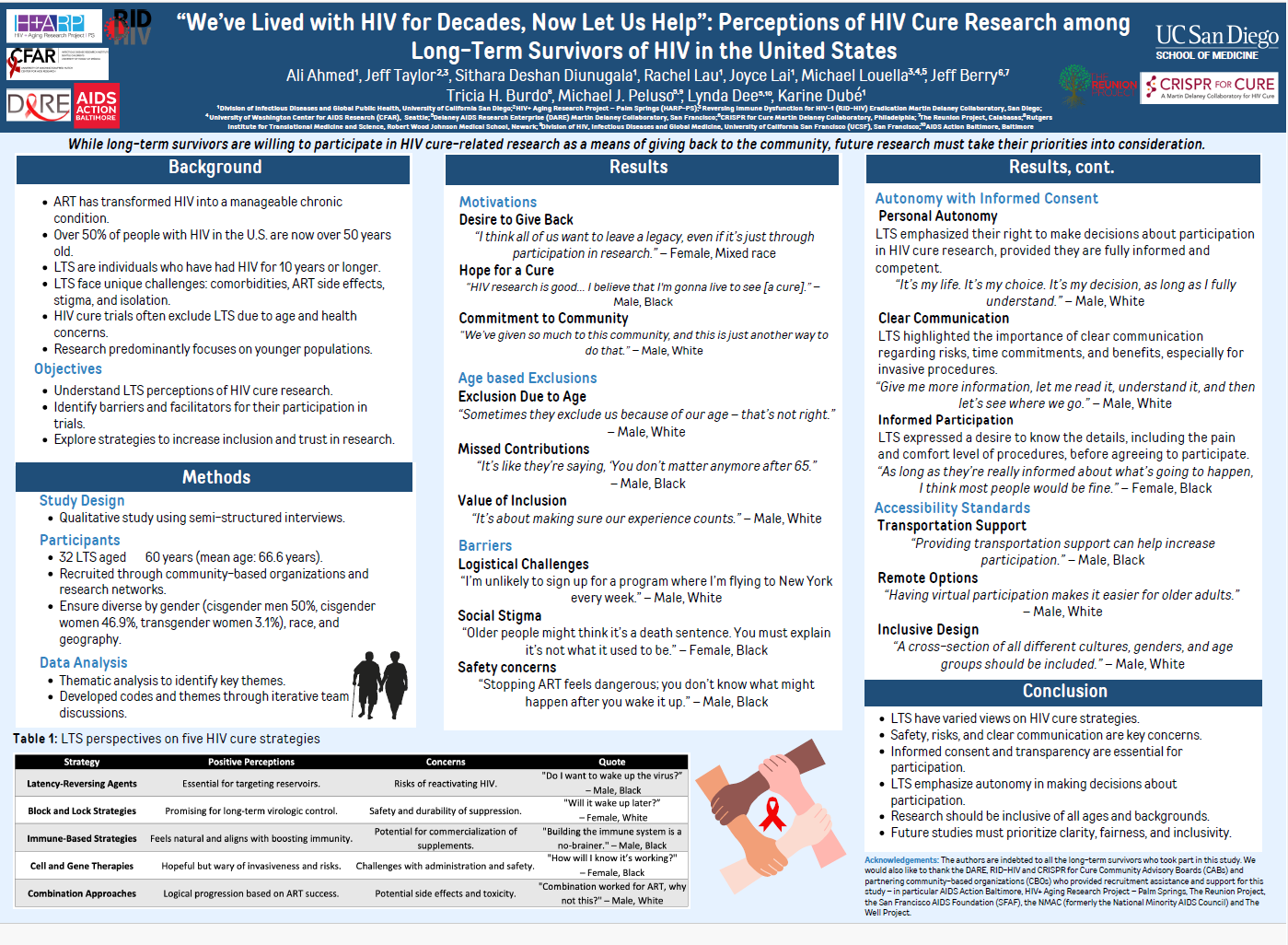
Title: “We’ve Lived with HIV for Decades, Now Let Us Help”: Perceptions of HIV Cure Research among Long-Term Survivors of HIV in the United States
Presenter(s): Ali Ahmed, PhD and Jeff Taylor and Rachel Lau, BS and Whitney Tran, BS
Summary: This study explored the perceptions of HIV cure research among long-term survivors (LTS) aged 60 and older in the U.S., highlighting their motivations, concerns, and barriers to participation. While participants expressed willingness to support research out of responsibility to future generations, they also voiced concerns about age-based exclusions, safety risks, logistical challenges, and invasive procedures. Addressing these barriers through transparent communication and inclusive research designs is crucial to fostering meaningful engagement and enhancing the inclusivity of HIV cure efforts.
 Click on image to expand poster
Poster Presentation #2
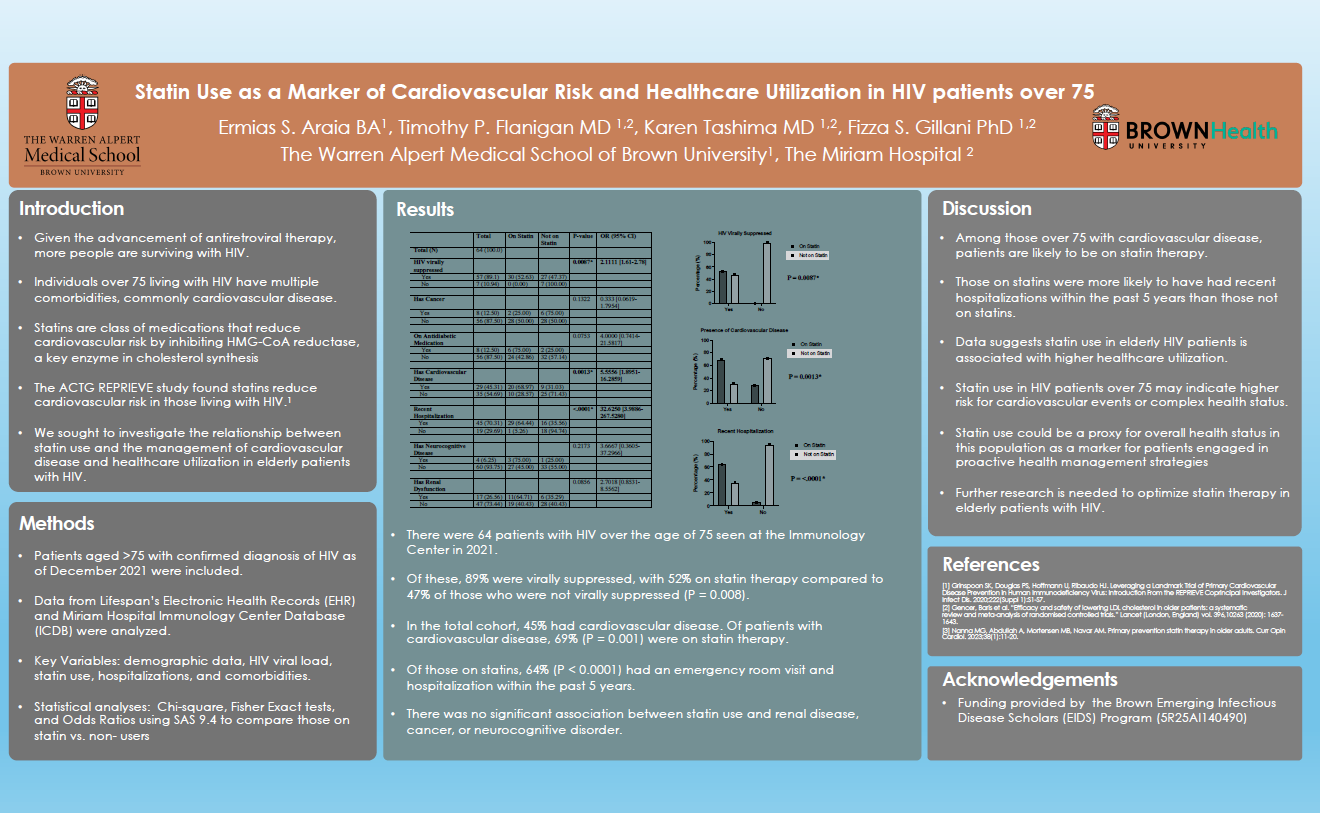
Title: Statin Use as a Marker of Cardiovascular Risk and Healthcare Utilization in HIV Patients Over 75
Presenter(s): Ermias S. Araia, BA
Summary: This presentation explores the relationship between statin use and cardiovascular risk in elderly HIV patients over 75 years old. Using data from electronic health records and a hospital database, the study highlights how statin use correlates with cardiovascular disease, viral suppression, and healthcare utilization, emphasizing its potential as a marker for complex health management in this population.
 Click on image to expand poster
Poster Presentation #3
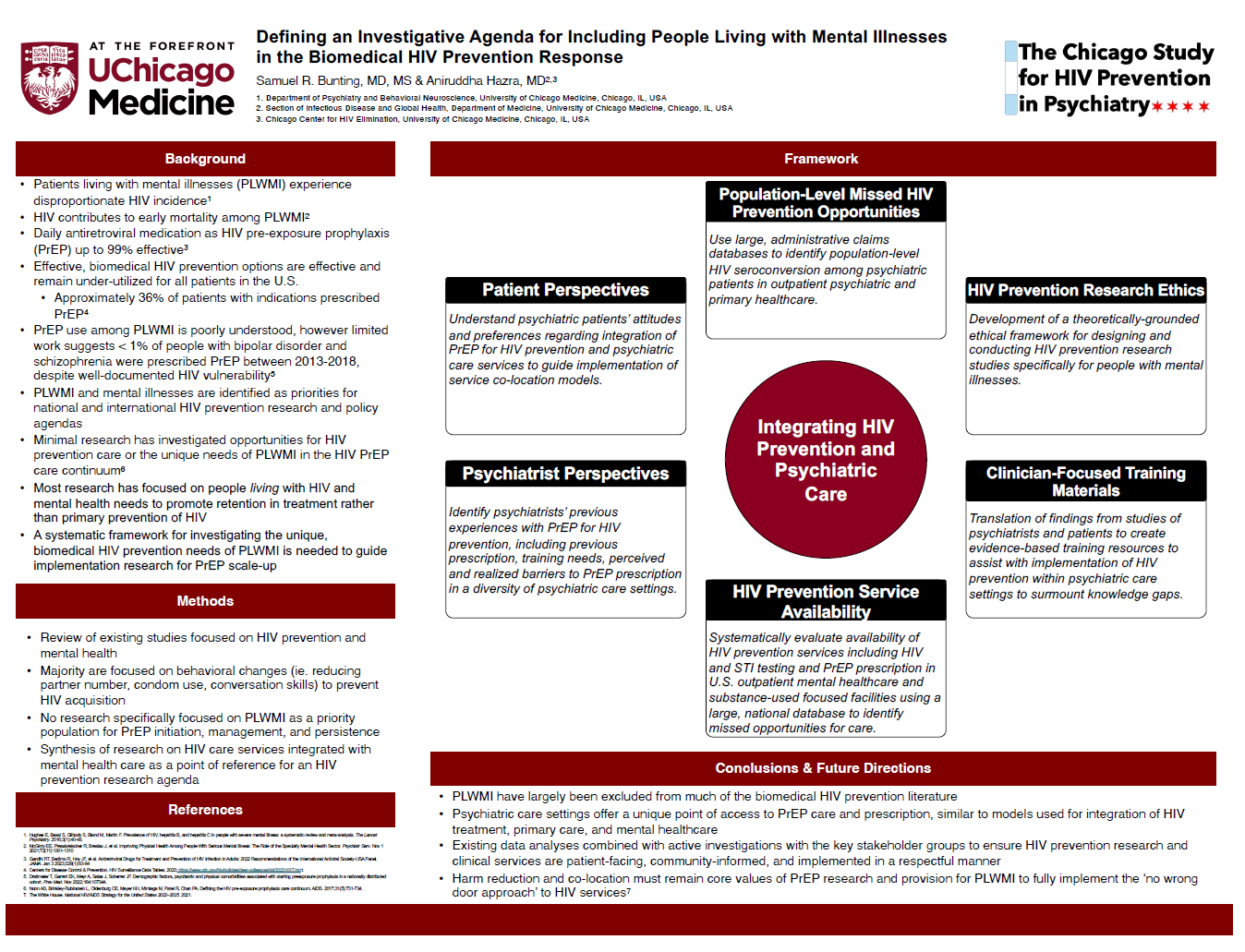
Title: Defining an Investigative Agenda for Including People Living with Mental Illnesses in the Biomedical HIV Prevention Response
Presenter(s): Samuel R. Bunting, MD, MS
Summary: People living with mental illnesses (PLWMI) have up to a 25-year shortened life expectancy largely attributed to communicable and chronic diseases, like HIV. A systematic framework for investigating the unique, biomedical HIV prevention needs of PLWMI is needed. A comprehensive research framework was developed based on review of existing interventions and published data to identify research gaps in the PrEP care continuum for PLWMI.
 Click on image to expand poster
Poster Presentation #4
Title: Challenges in Multi-Portal Data Collection and Reporting
Presenter(s): Morgan Clark, MA
Summary: Through the Transgender Health/Housing/HIV Equity (T.H3.E) project, SSG/APAIT, San Jose State University, and public health partners identified significant challenges with data fragmentation in service delivery due to disconnected workflows and funder-specific portals. This fragmentation hinders data centralization, burdens staff, and causes “questionnaire fatigue” for vulnerable clients, leading to disengagement and incomplete data. While initial strategies, such as centralizing data collection, offer limited improvements, a systemic solution – like a unified reporting platform across funders – is needed to streamline processes, enhance service delivery, and better address inequities. x
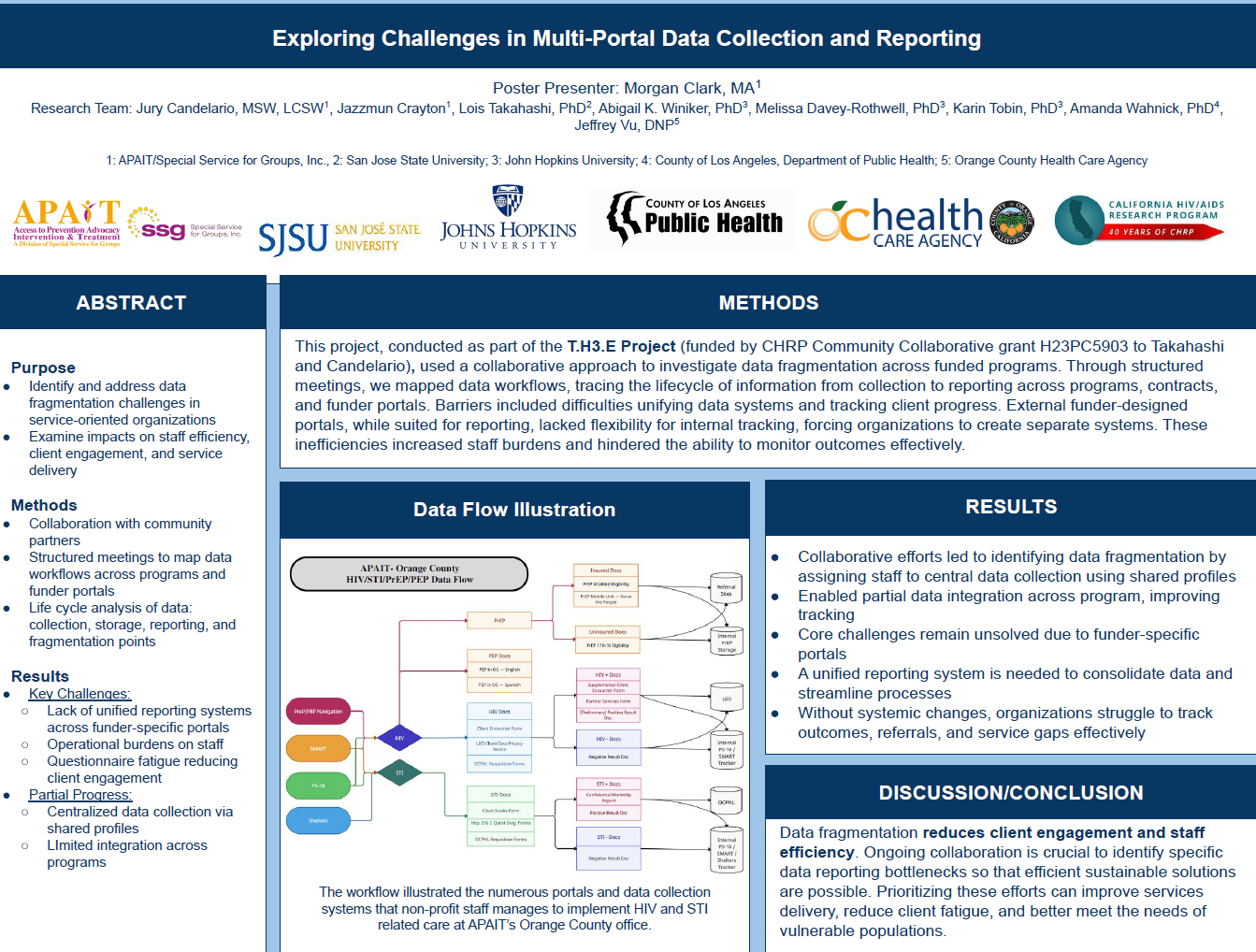
Click on image to expand poster
Poster Presentation #5
Title: Results of RCT Testing a Sibling-based Intervention to Promote PrEP to Latinx Sexual Minority Men
Presenter(s): Homero E. del Pino, PhD, MS and Petra Duran, BA and Edwin Rojas, MPH
Summary: We conducted a RCT to test the efficacy of a homegrown, internet-based, sibling-delivered intervention. We enrolled 60 sibling pairs in each of the study. To date, 24% of the participants in the intervention arm changed their behavior, compared to 14% in the control group.
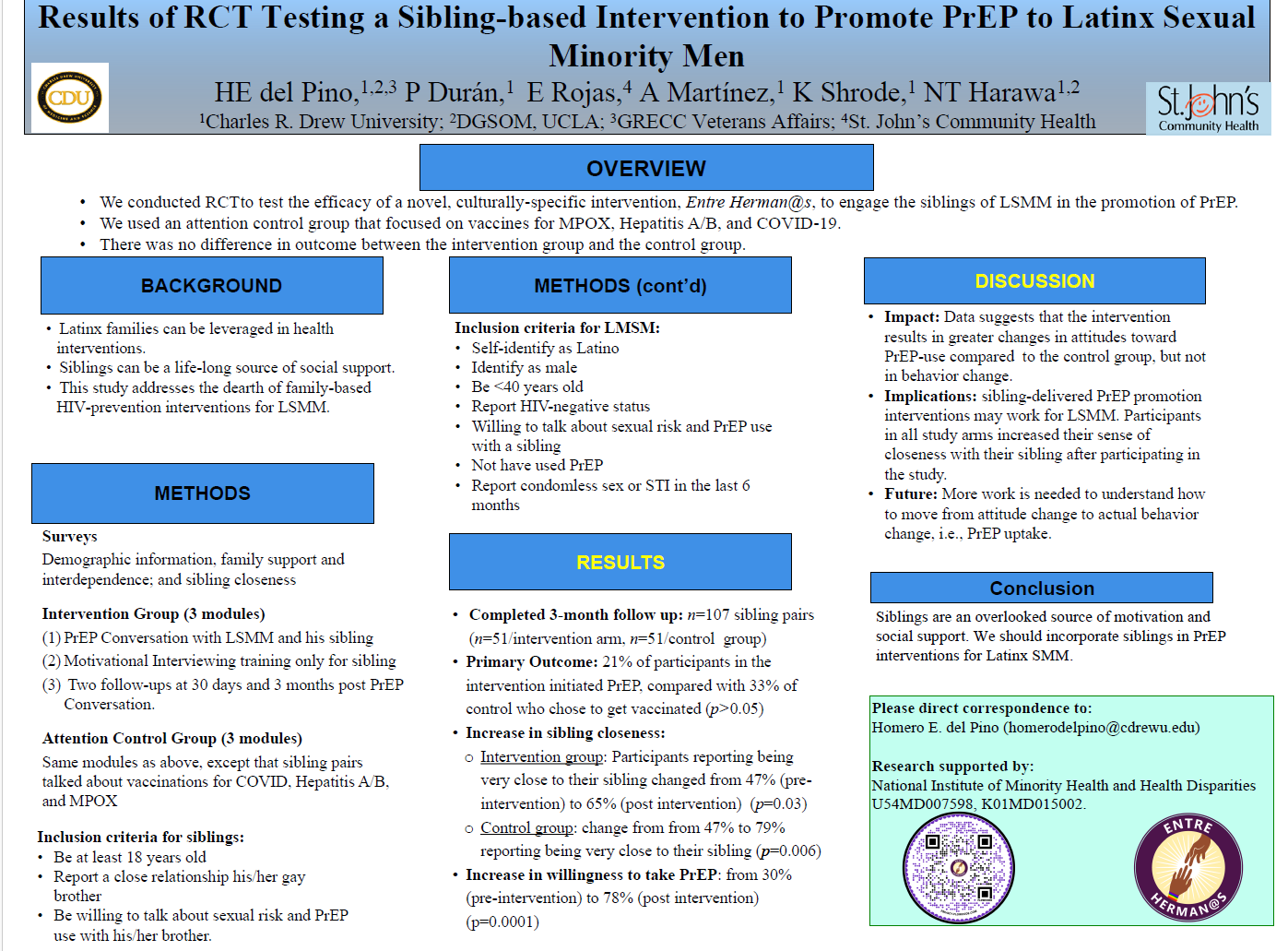 Click on image to expand poster
Poster Presentation #6
Title: Community LINX: Mental Health Symptom Tracking Among HIV-Positive, Queer-Identified Black Men Using a Community-Developed Application to Address Relevant Needs
Presenter(s): Zachary Fabrick, MA
Summary: This study evaluated the mental health benefits of LINX, a smartphone-based intervention designed for Black men who have sex with men living with HIV in Los Angeles County. Developed through a collaboration between UCLA researchers and HIV stakeholders, LINX aimed to reduce anxiety, depression, and suicidality over a year. x
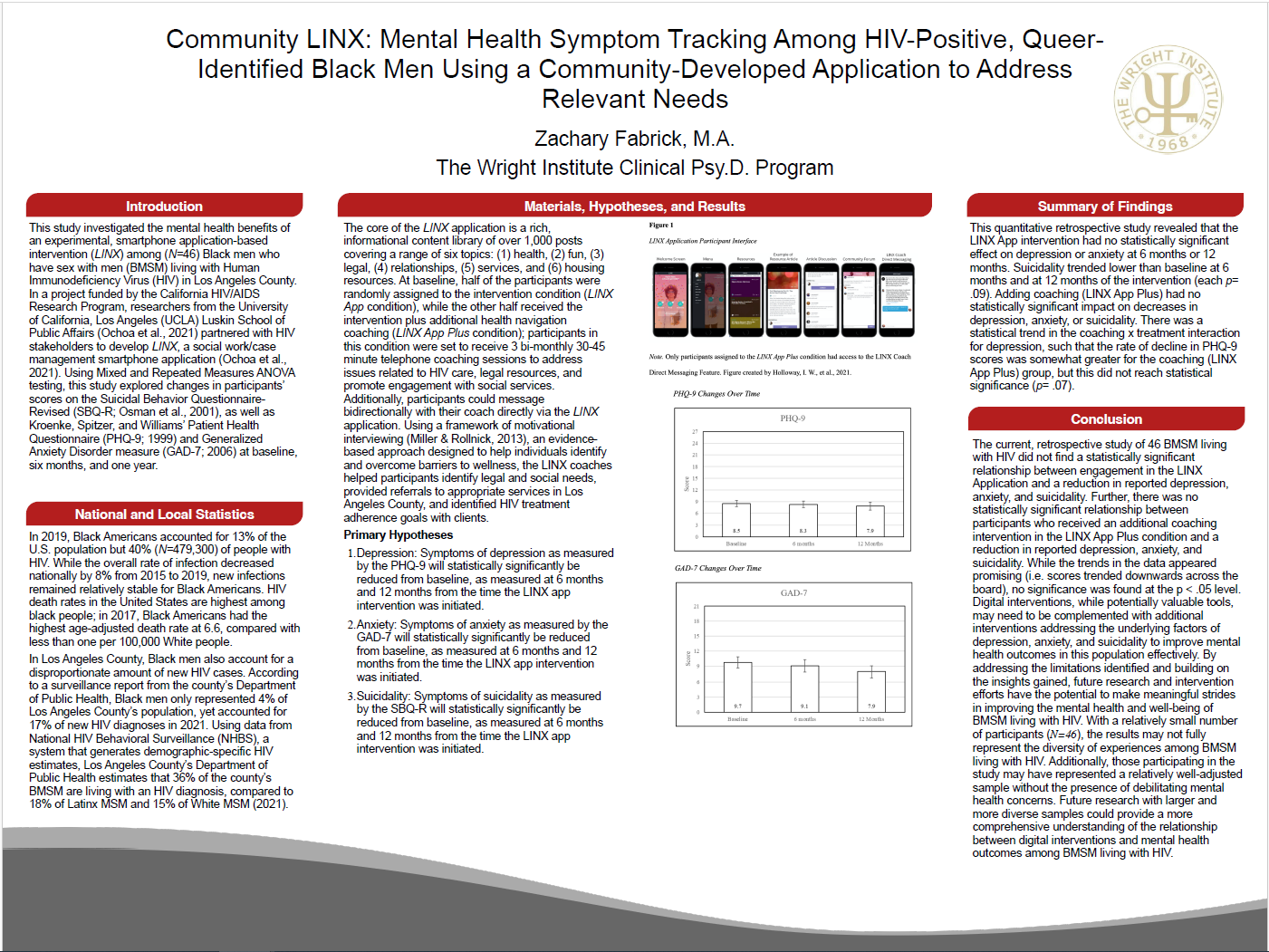 Click on image to expand poster
Poster Presentation #7
Title: HIV.E—HIV Education & Empowerment—AMAAD’s Approach to Whole Person Care
Presenter(s): Gerald Garth, MBA
Summary: The poster presentation will provide the findings, learnings, and recommendations of AMAAD’s 5-year Ending the HIV Epidemic (EHE) community based participatory research (CBPR) project for 6 priority populations and two geographic communities: Black MSM, Latino MSM, women of color, transgender and gender nonconforming individuals, youth, young adults, South Los Angeles, and East Los Angeles.
Click on image to expand poster
Poster Presentation #8
Title: Recruitment and engagement strategies for African immigrants in HIV prevention research: A qualitative study
Presenter(s): Elaine Jeon, MPH
Summary: African-born immigrant women experience higher rates of new HIV diagnoses compared to their Black counterparts in the US but recruiting them for research studies presents unique challenges as they are often underrepresented and grouped with other Black ethnic categories. Barriers to recruitment and engagement include mistrust, language differences, perceived lack of research benefits to their community, and logistical issues. This qualitative study aimed to identify strategies for recruiting and engaging African-born immigrant women in an HIV prevention research study. x
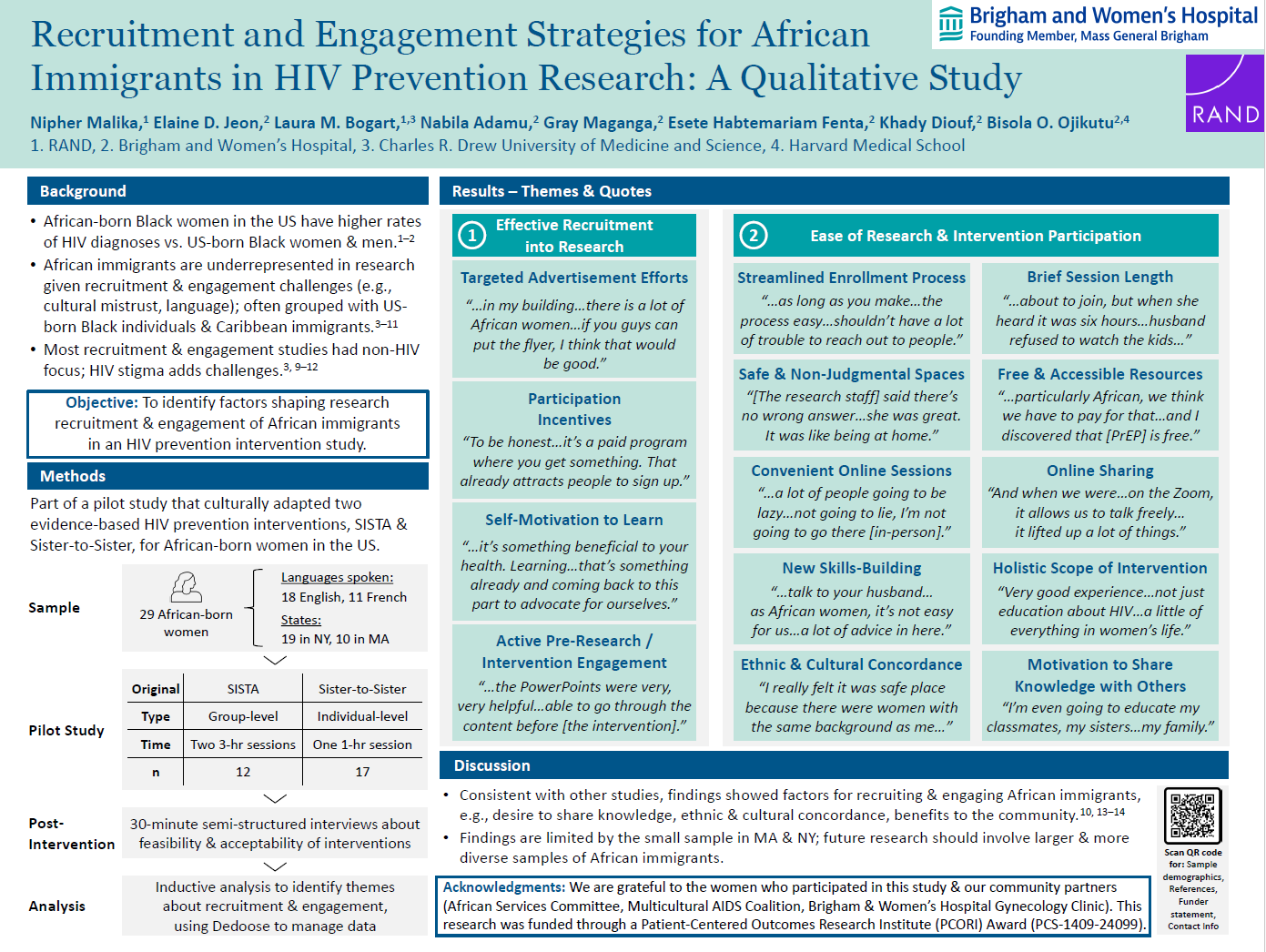 Click on image to expand poster
Poster Presentation #9
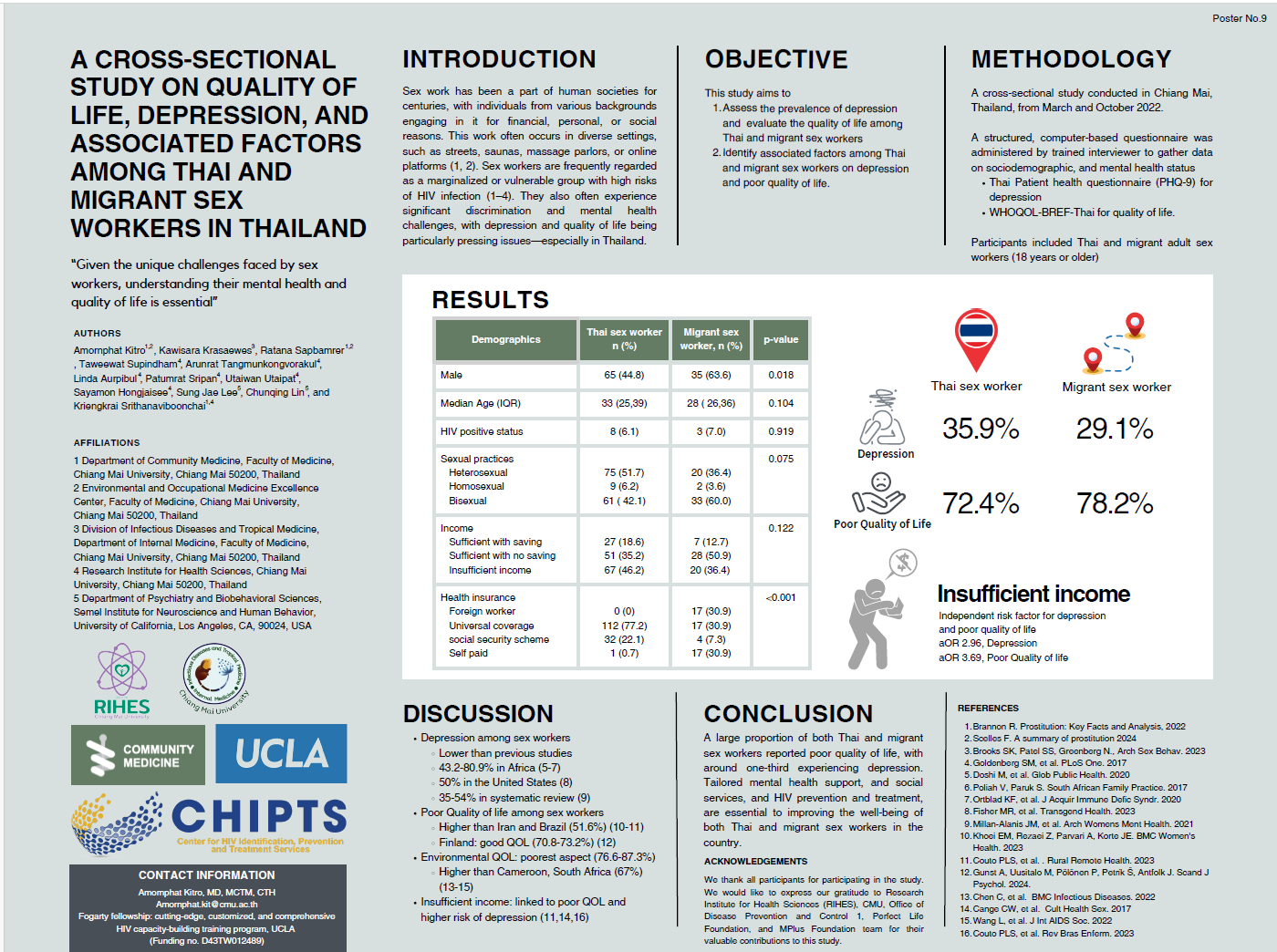
Title: SEX Worker: A Cross-sectional Study on Quality of Life, Depression, and Associated Factors among Male and Female Thai and Migrant Sex Workers in Thailand
Presenter(s): Amornphat Kitro, MD, MCTM
Summary: A cross-sectional study conducted in Thailand, assessed the prevalence of depression, quality of life (QOL), and associated factors among Thai and migrant sex workers. Among 200 participants, one-third experienced depression and over 70% reported poor QOL, with insufficient income linked to worse in both outcomes. Tailored interventions, including healthcare and mental health support, are critical to improving their well-being. x
 Click on image to expand poster
Poster Presentation #11
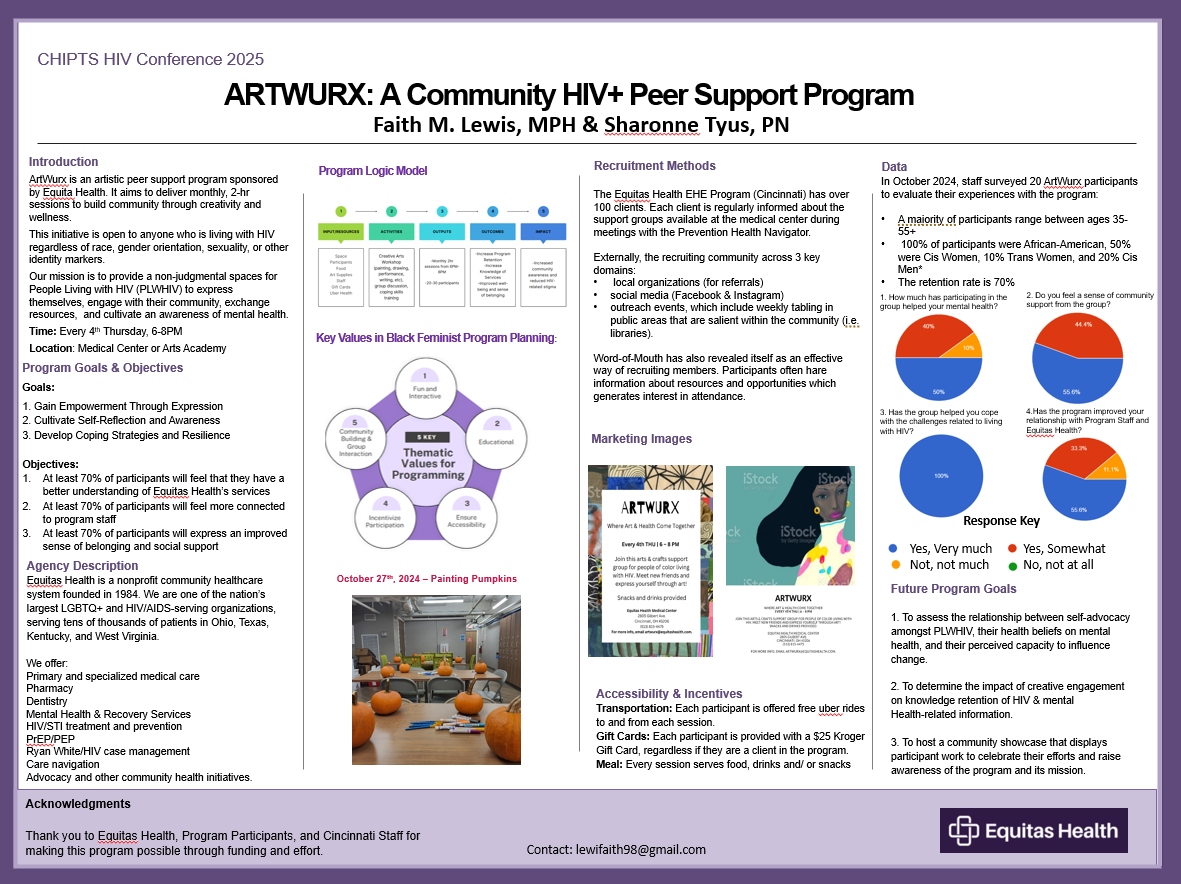
Title: ART Therapy: Integrating Creative Arts in HIV Peer Support Programming
Presenter(s): Faith M. Lewis, MPH, BA
Summary: ArtWurx is a creative peer support program for People Living with HIV (PLWHIV), designed to foster education, engagement, and community through the arts. Guided by five key values observed through a review of Black Feminist literature—being fun, interactive, informative, accessible, and incentivizing participation—the program offers a supportive space for individuals to explore HIV, discuss mental health topics, and have fun. Feedback from participants indicates that the program is beneficial in promoting resilience and well-being, regardless of how long participants have been diagnosed or engaged. ArtWurx exemplifies the power of integrated, culturally competent services that address both mental health and HIV care, empowering individuals and strengthening community bonds.
 Click on image to expand poster
Poster Presentation #12
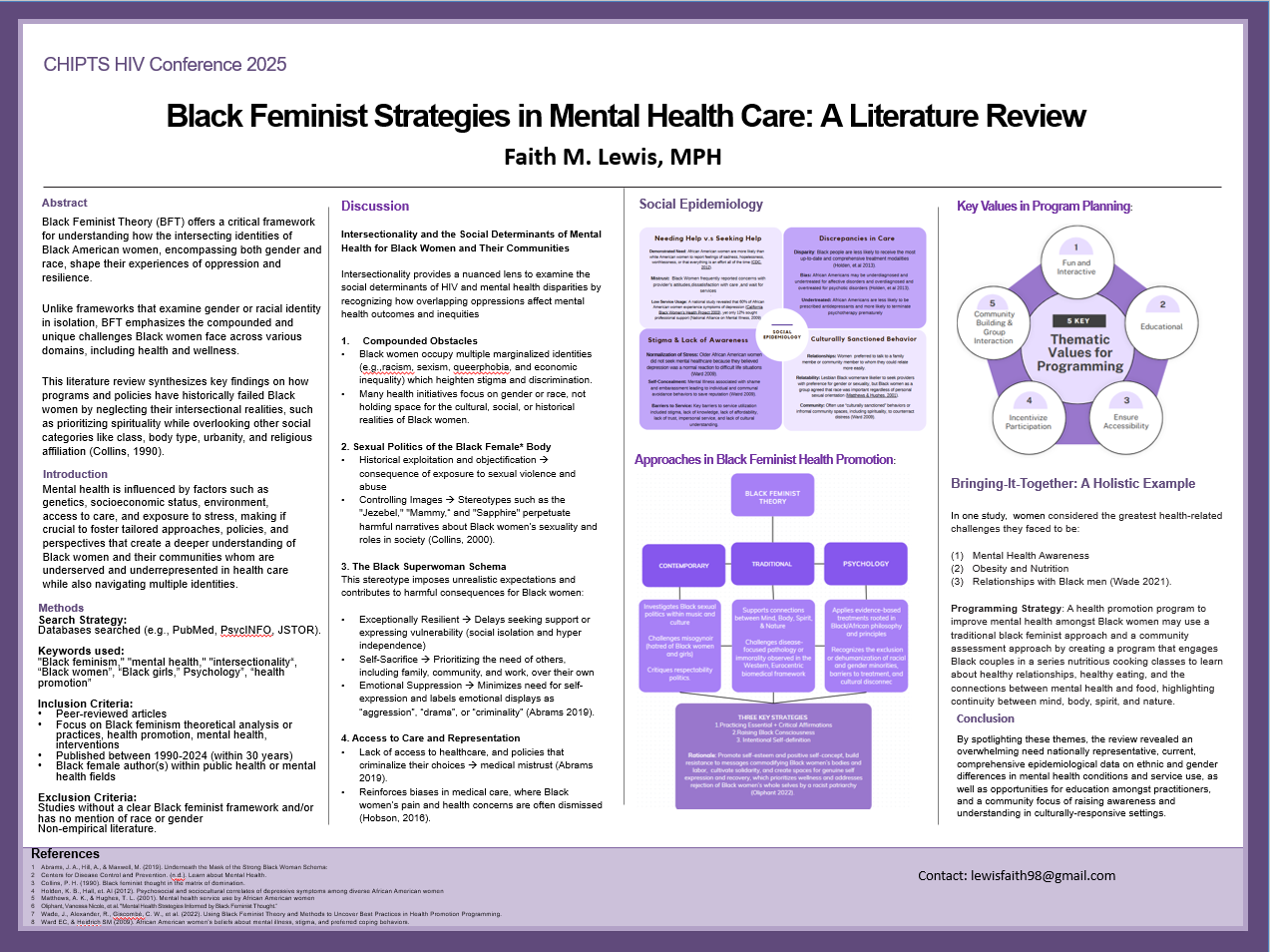
Title: Black Feminist Strategies in HIV and Mental Health Care: A Literature Review
Presenter(s): Faith M. Lewis, MPH, BA
Summary: The experiences of Black Women remain relatively overlooked, necessitating a closer examination to inform targeted support strategies. Black Women encounter systemic racism, pervasive stereotypes, sexism, and socio-economic disparities that intersect to create a distinctive set of stressors that can impact their sexual and psychological well-being which hinders their care and visibility in health promotion. The literature suggests that a Black Feminist approach to health promotion addresses these challenges by emphasizing cultural values that recognize the interconnectedness of mind, body, and community to cultivate well-being.
 Click on image to expand poster
Poster Presentation #13
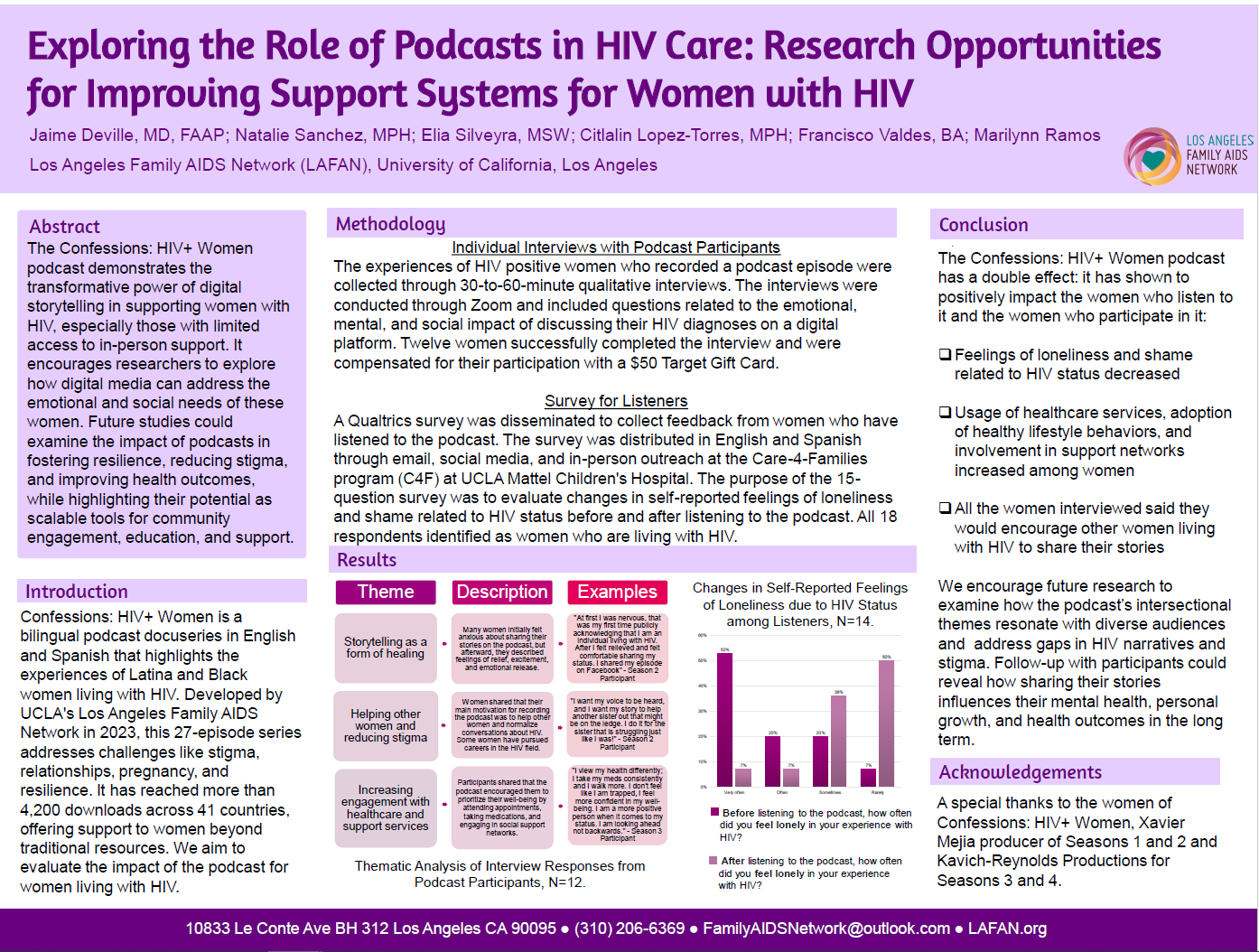
Title: Exploring the Role of Podcasts in HIV Care: Research Opportunities for Improving Support Systems for Women with HIV
Presenter(s): Citlalin Lopez-Torres, MPH and Marilynn Ramos and Natalie Sanchez, MPH and Elia Silverya, MSW and Francisco Valdes, BA
Summary: Confessions: HIV+ Women is a 16-episode bilingual podcast docuseries in English and Spanish that focuses on the experiences of Latina and Black women living with HIV. Topics covered include shame, stigma, relationships, family dynamics, pregnancy, child abuse, immigration, substance use, and resilience. The Confessions: HIV+ Women podcast illustrates the potential for digital storytelling to offer a transformative approach in supporting women living with HIV, particularly those who face barriers to accessing in-person support.
 Click on image to expand poster
Poster Presentation #14
Title: Considerations of Equity and Intersectionality in the Recruitment for HIV Cure Related Research at the End of Life
Presenter(s): Leslie Matherne, BS
Summary: In this study, we explore the barriers to HIV research participation for people who use drugs, older adults, and individuals who are unstably housed in order to enhance generalizability and decrease underrepresentation. We outline the importance of identifying intersectionality to support enrollment and retention in intensive studies and call for future directions to mitigate these barriers. x
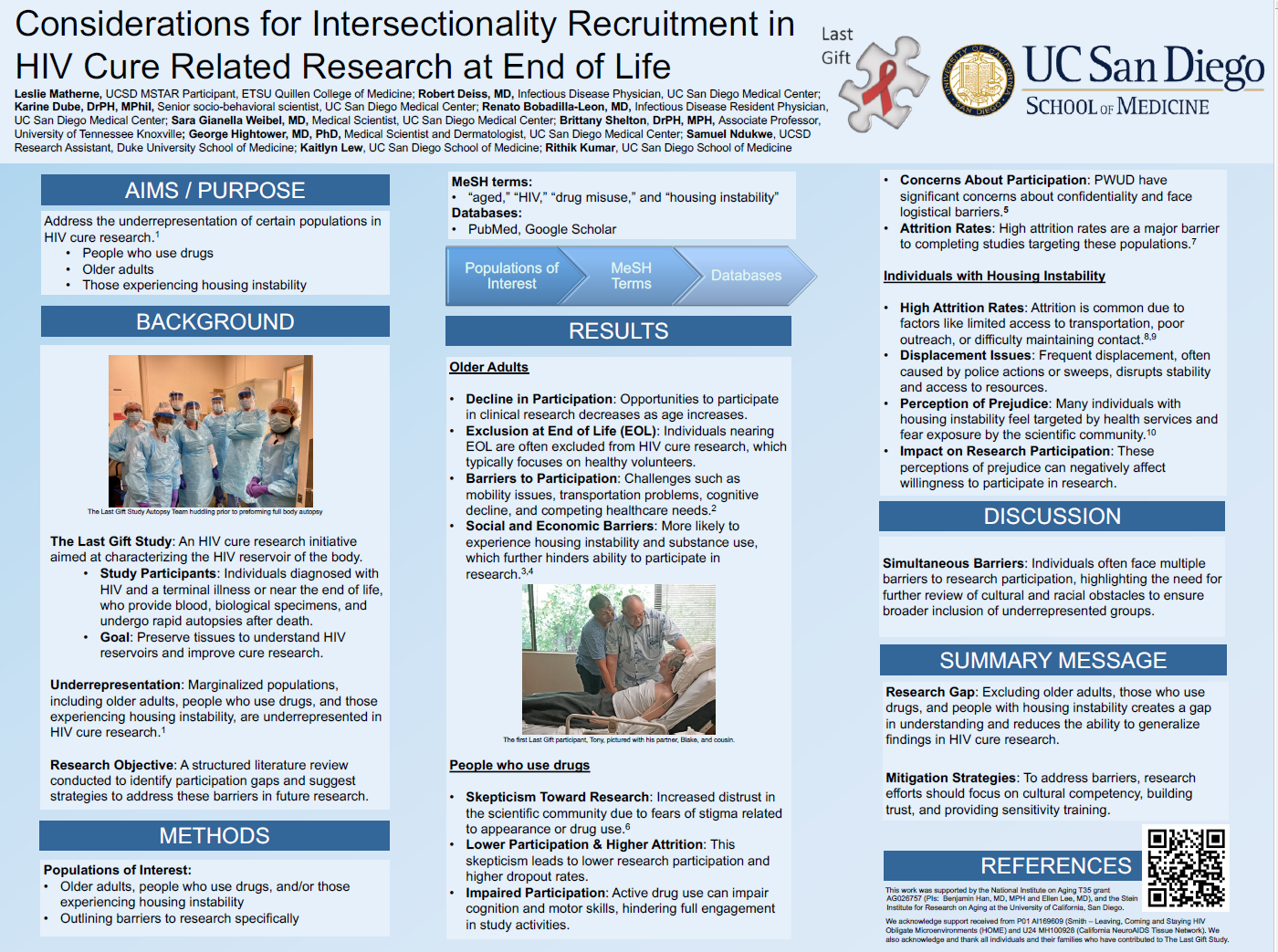 Click on image to expand poster
Poster Presentation #15
Title: Community Co-Design of Study Protocols: Culturally Affirming Design and Implementation by the Transgender Health/Housing/HIV Equity Project
Presenter(s): Abrahán (a.b.) Monzón, MS and Paolo Gutierrez, BA
Summary: The Transgender Health/Housing/HIV Equity (T.H3.E.) project, funded by a CHRP Community Collaborative grant, explores how social determinants like housing instability impact HIV outcomes for Transgender, Gender Non-Conforming, and Intersex (TGI) individuals. Using a community-centered approach, the project co-designed culturally affirming recruitment, screening, and data collection protocols that prioritize inclusivity and lived experiences. By integrating these protocols into existing workflows and leveraging tools like REDCap, the T.H3.E. project enhances participant engagement, retention, and data quality while addressing barriers such as stigma and distrust in research. x
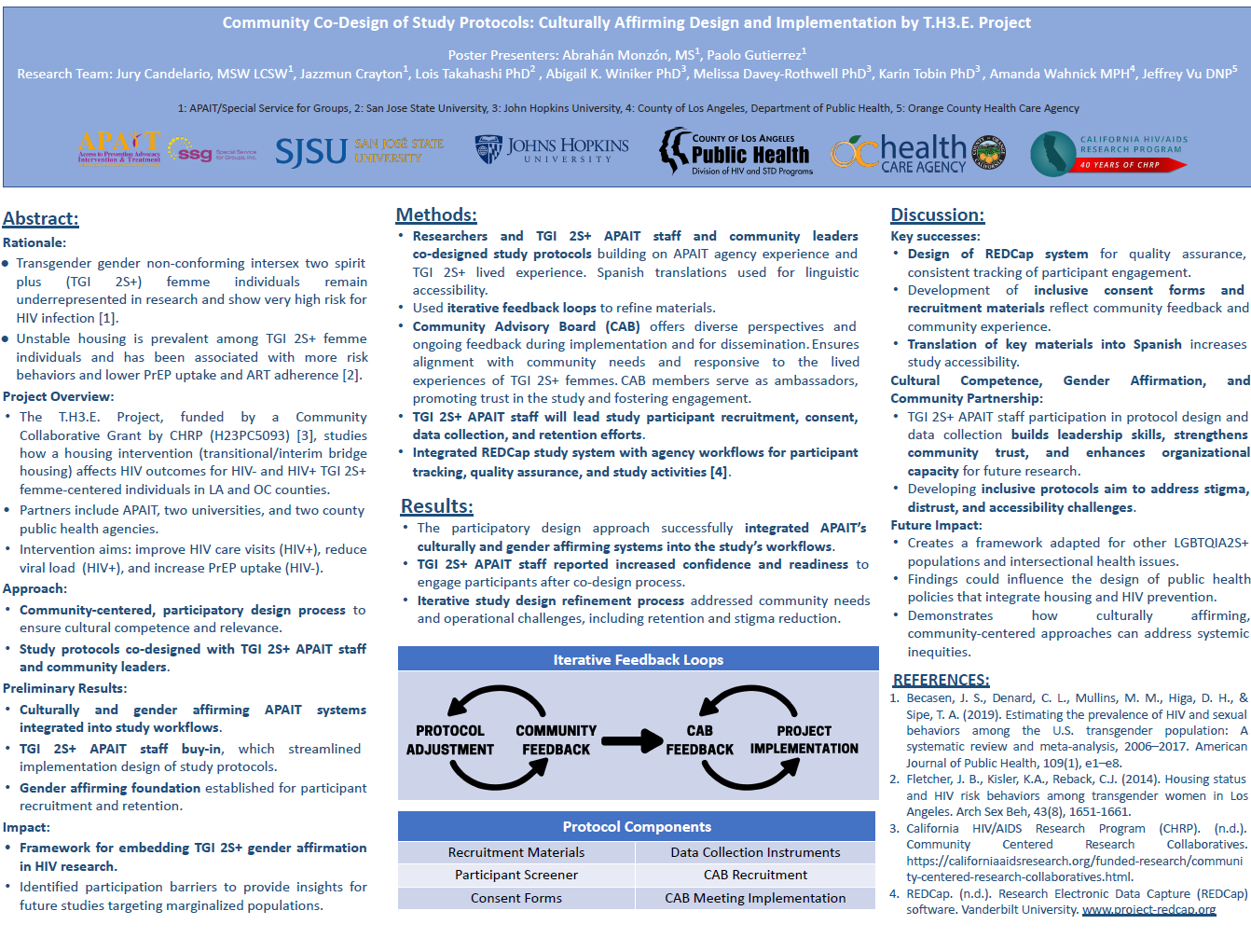 Click on image to expand poster
Poster Presentation #16
Title: Virtual cohort participation among people living with HIV who are at risk for viral non-suppression
Presenter(s): Eden Moore, BA
Summary: Digital cohorts utilize the flexibility of the internet to help address some of the challenges associated with conventional cohort studies. Here, we describe participant demographics in order to determine how to optimally enroll and retain a large diverse digital cohort of people living with HIV struggling to engage in or stay with care and maintain consistent viral suppression. x
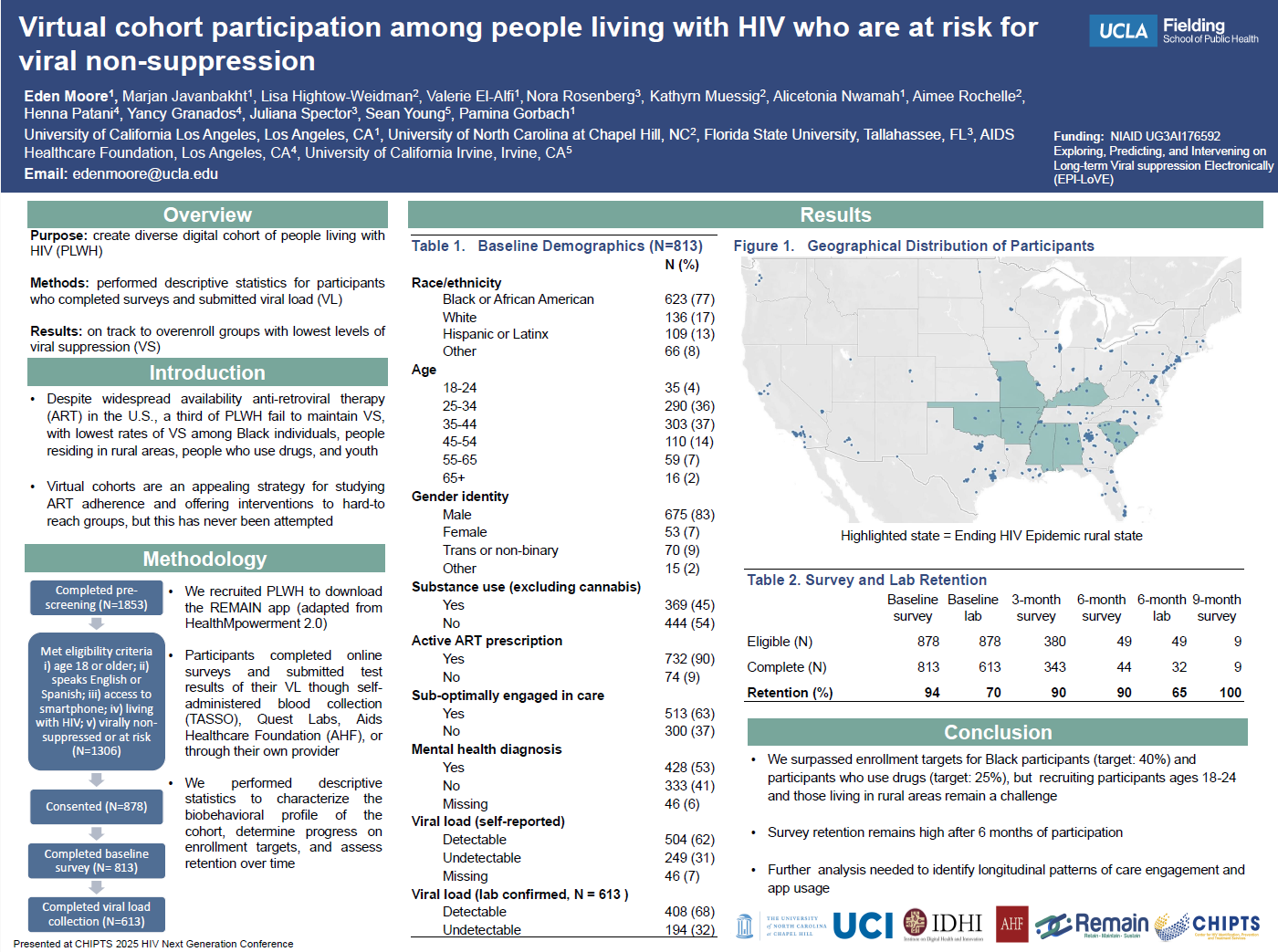 Click on image to expand poster
Poster Presentation #17
Title: Barriers and Facilitators to Participation in PrEP Well: A Community-Led PrEP Implementation Project at a Transgender and Non-Binary Community Center
Presenter(s): Carrie L. Nacht, MPH
Summary: This qualitative analysis describes the factors contributing to program retention of a community-based PrEP program for transgender and non-binary clients. Participants also recommended different strategies that may improve program efficacy and attendance. x
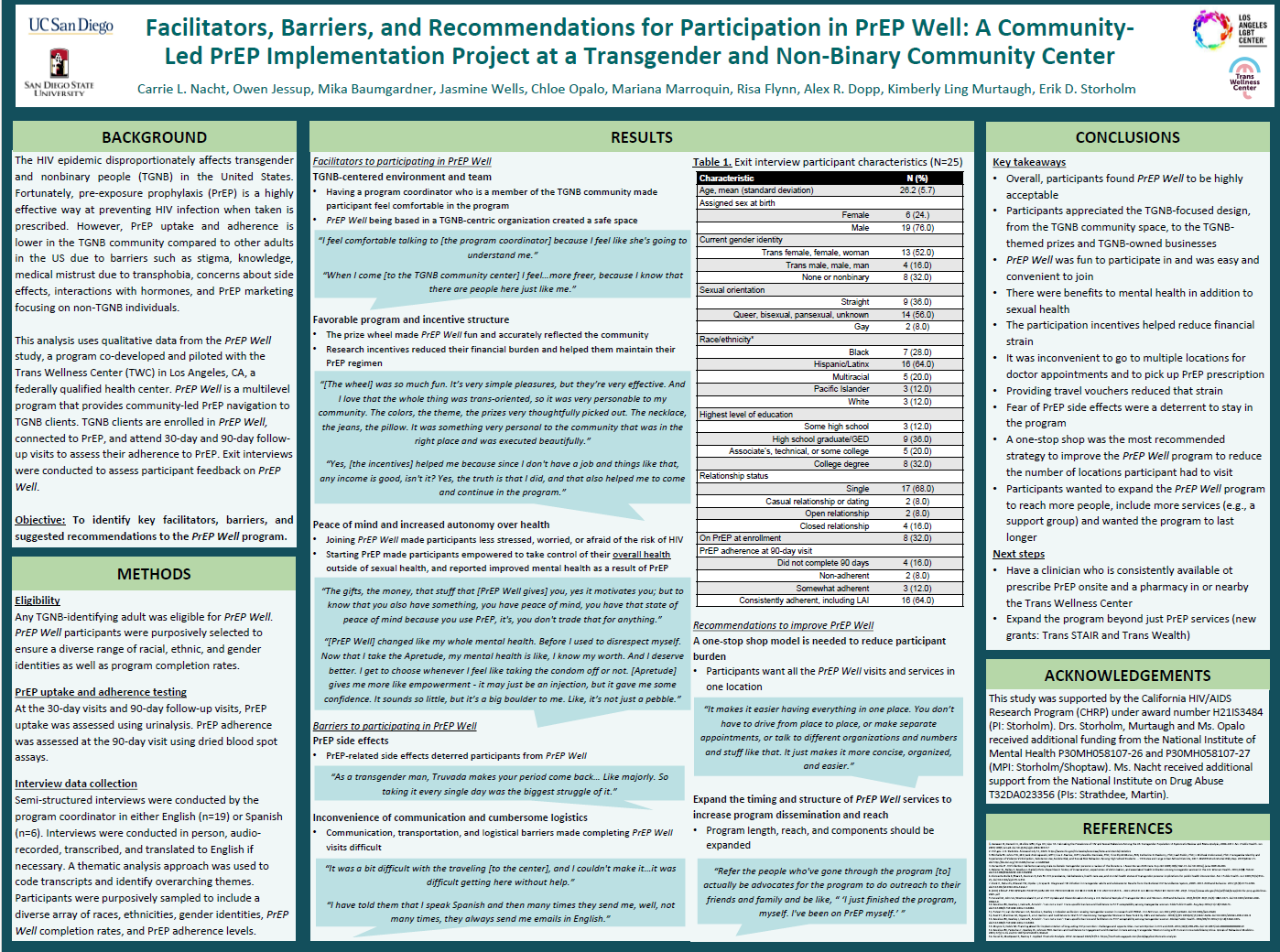 Click on image to expand poster
Poster Presentation #18
Title: Engagement in Methadone Maintenance Treatment and Concurrent Opioid Use Among People with Secondary Methamphetamine Use In Vietnam
Presenter(s): Diep Nguyen, MD, PhD
Summary: This study examines the impact of methamphetamine use and underlying factors on adherence to methadone maintenance treatment (MMT) and concurrent opioid use among patients in Vietnam. The findings reveal that methamphetamine use behaviors and motivations significantly contribute to MMT non-adherence and concurrent opioid use, emphasizing the need for integrated interventions targeting methamphetamine use and its underlying causes to enhance treatment outcomes.
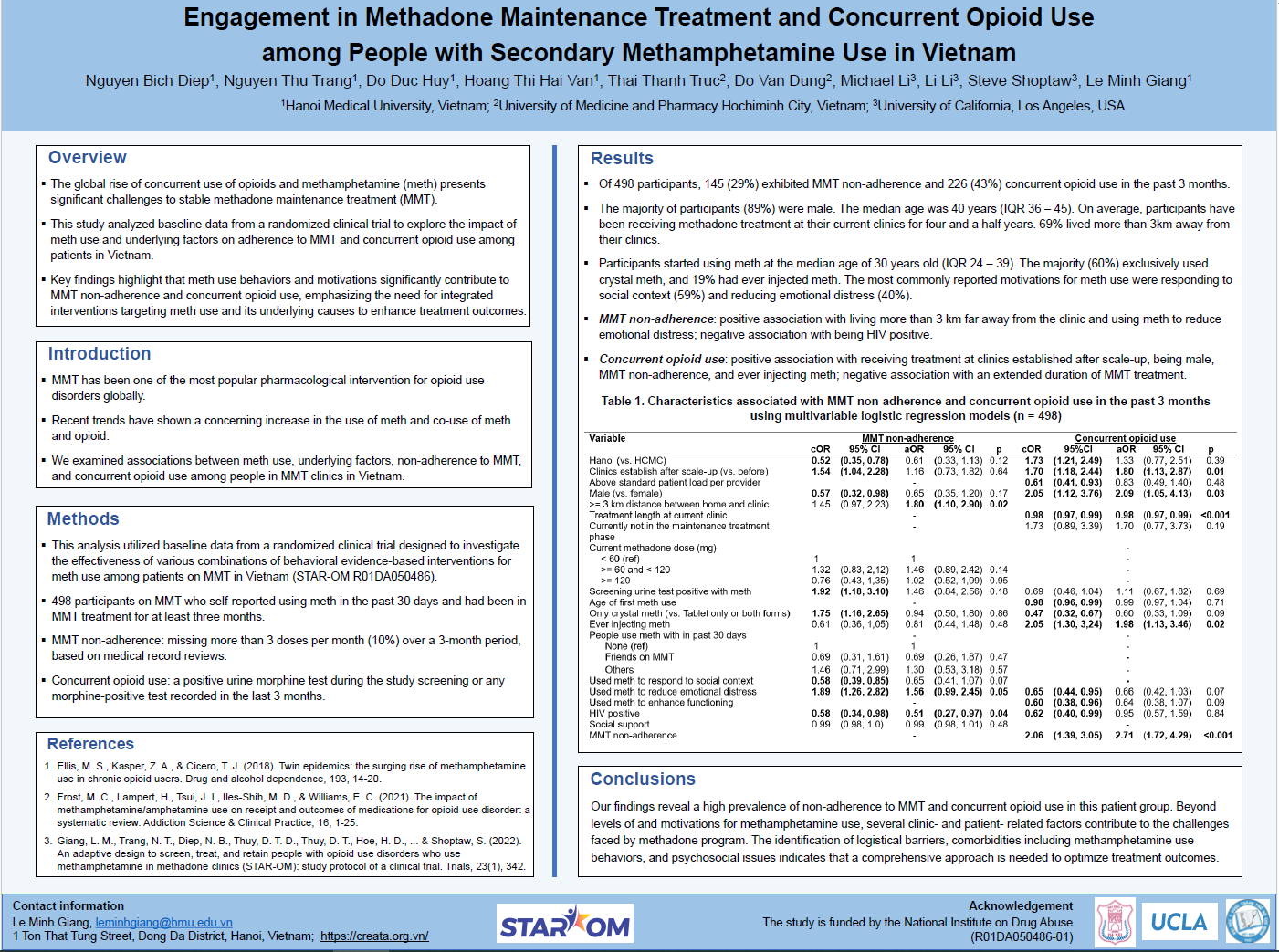 Click on image to expand poster
Poster Presentation #20
Title: Perceived and anticipated behavioral changes from DoxyPEP introduction among gay, bisexual, and other men who have sex with men in Los Angeles: Results from a mixed-methods study
Presenter(s): Elizabeth Yonko, MPH
Summary: This mixed-methods study explored anticipated behavioral changes associated with DoxyPEP introduction among gay, bisexual, and other men who have sex with men (GBMSM) in Los Angeles. Participants expressed strong interest in DoxyPEP, with some concerns about potential risk compensation, including reduced condom use and increased number of sexual partners. Positive changes included improved adherence to HIV medications and opportunities for more intentional partner communication about STI prevention, though public health efforts should address concerns about medication sharing and emphasize comprehensive prevention strategies.
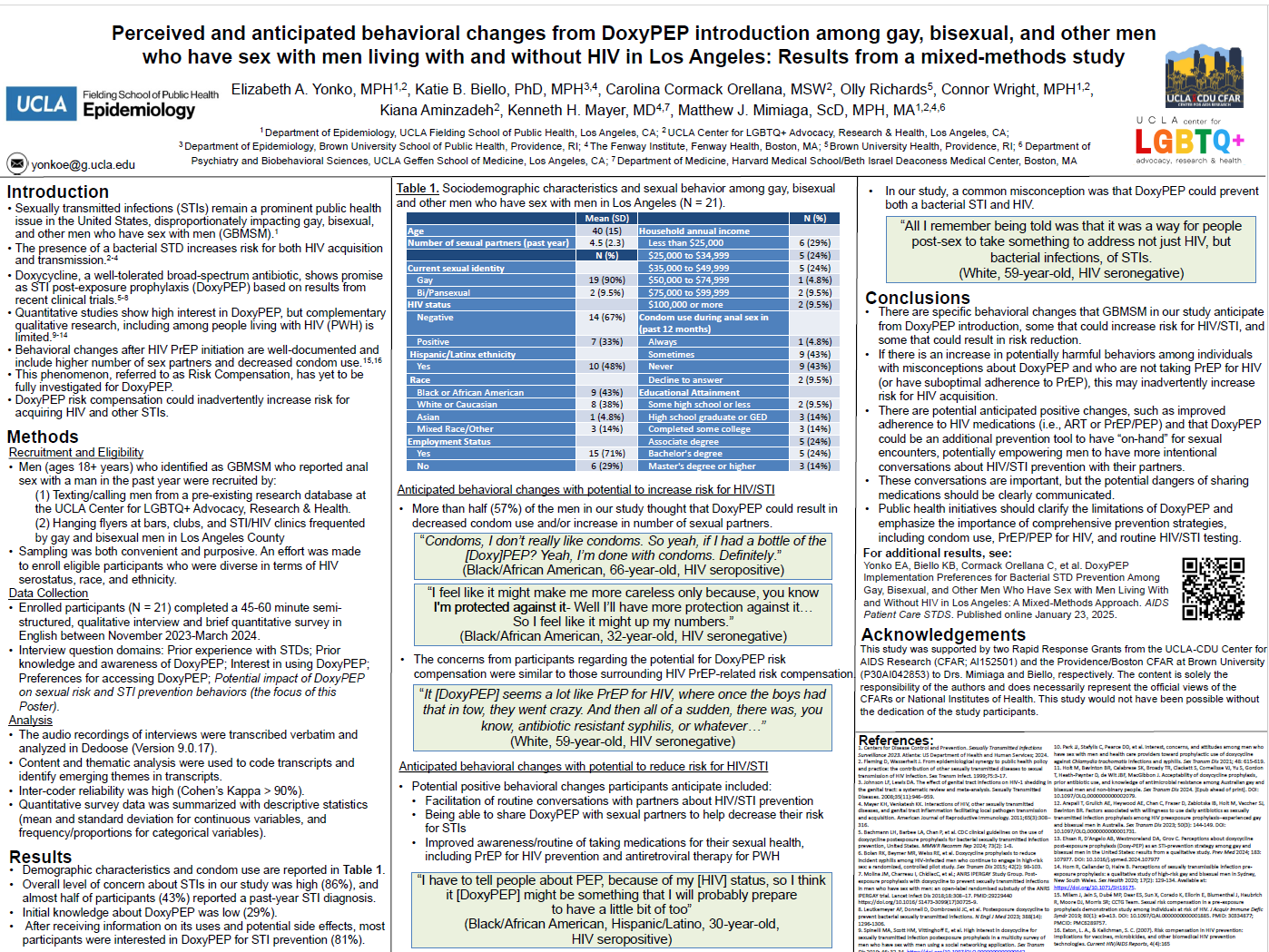 Click on image to expand poster
Poster Presentation #21
Title: STI testing rates and telehealth use in youth with HIV pre- and post-COVID-19 pandemic emergence in Houston, Texas, a high-priority area for Ending the HIV Epidemic
Presenter(s): Emily A. Barr, PhD, RN, CPNP-PC, CNM, FACNM, FAAN
Summary: This study examined STI testing, and telehealth use among youth with HIV (YWH) in Houston, Texas, before and after the COVID-19 pandemic. Telehealth use increased significantly post-pandemic without significant changes in STI testing rates, though syphilis positivity remained high at 41%. Findings suggest telehealth supports STI screening but highlight the need for targeted syphilis interventions.
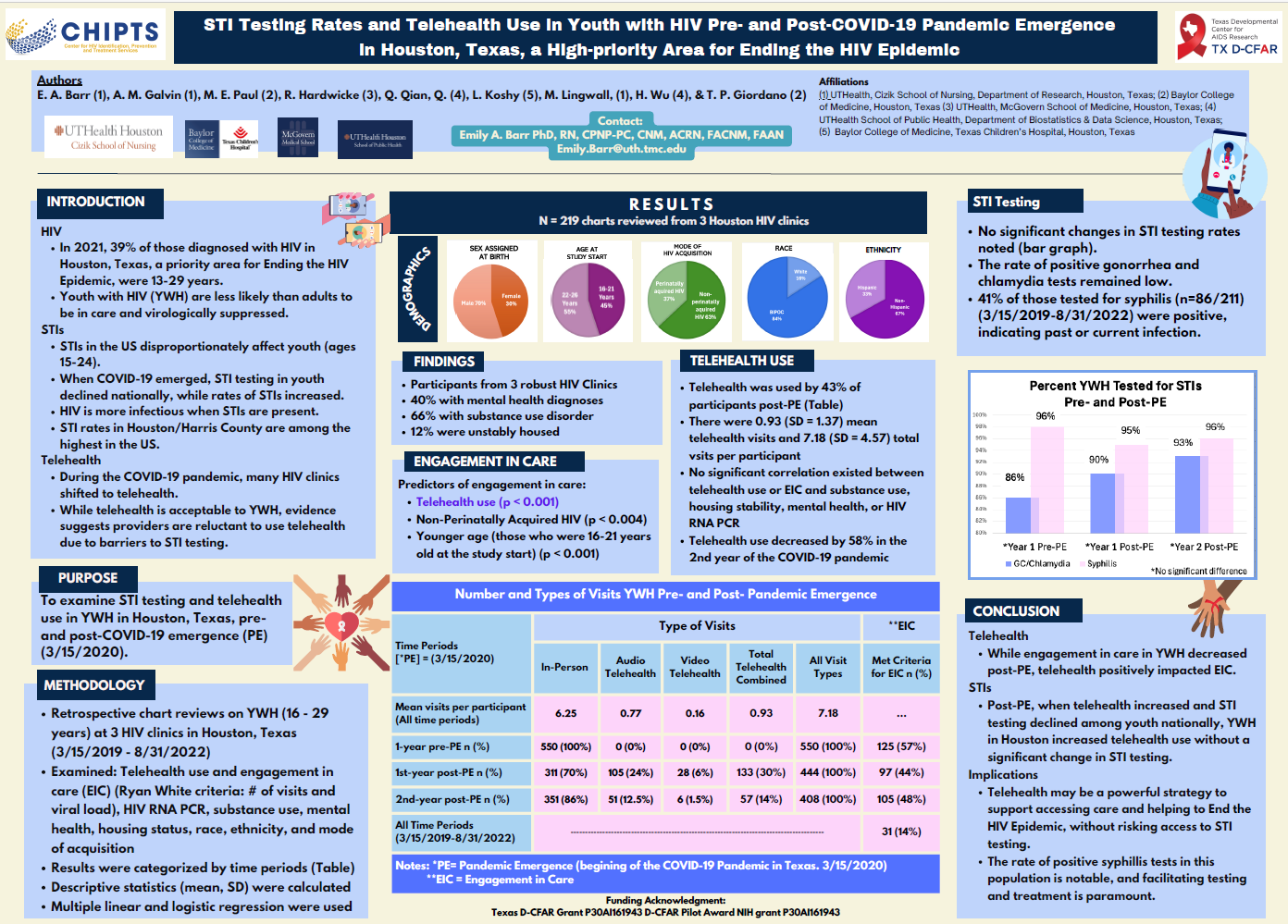 Click on image to expand poster
Poster Presentation #22
Title: Community Engagement and Psychosocial Services for Individuals Living with HIV: A Case Study of the Rise UP! Project in Zambia
Presenter(s): Tania Twinoburyo
Summary: This presentation explores the impact of psychosocial services and community engagement on HIV treatment outcomes for adolescent girls and young women (AGYW) participating in Zambia’s Rise UP! project. Using comparative analysis of two participant groups, it highlights how interventions like Community Adolescent Action Groups (CAAGs) and caregiver meetings enhanced ART adherence, mental health, and social support networks, contributing to improved retention in care. The findings underscore the importance of integrating community-based, patient-centered approaches in resource-limited settings to achieve global HIV treatment goals and improve quality of life.
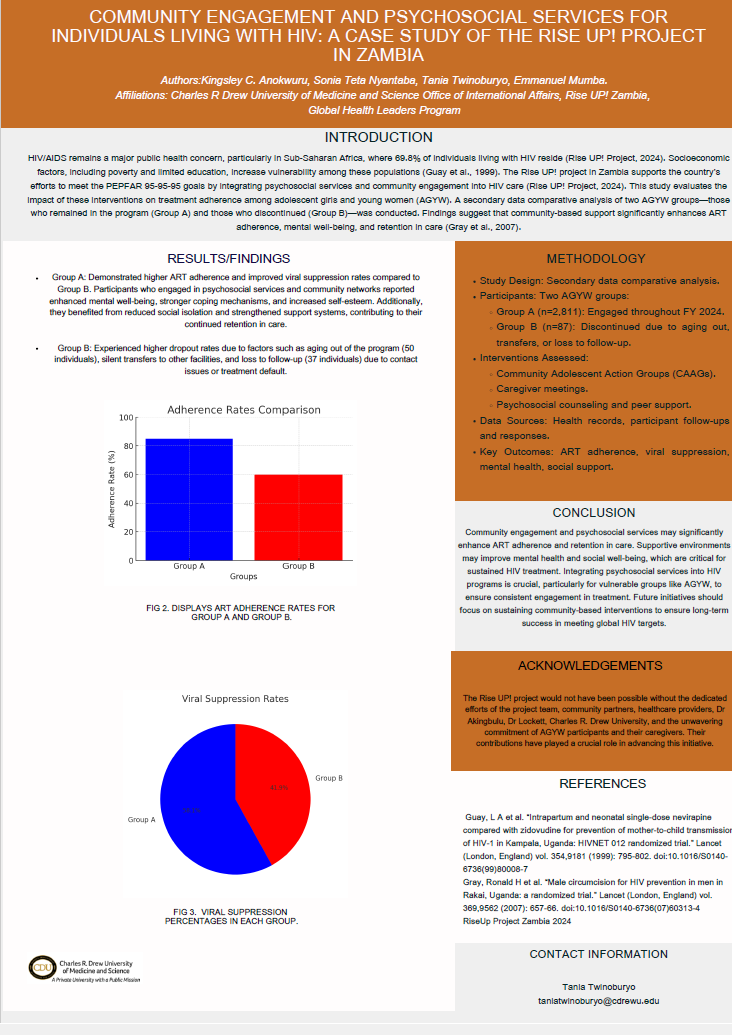 Click on image to expand poster
Poster Presentation #23
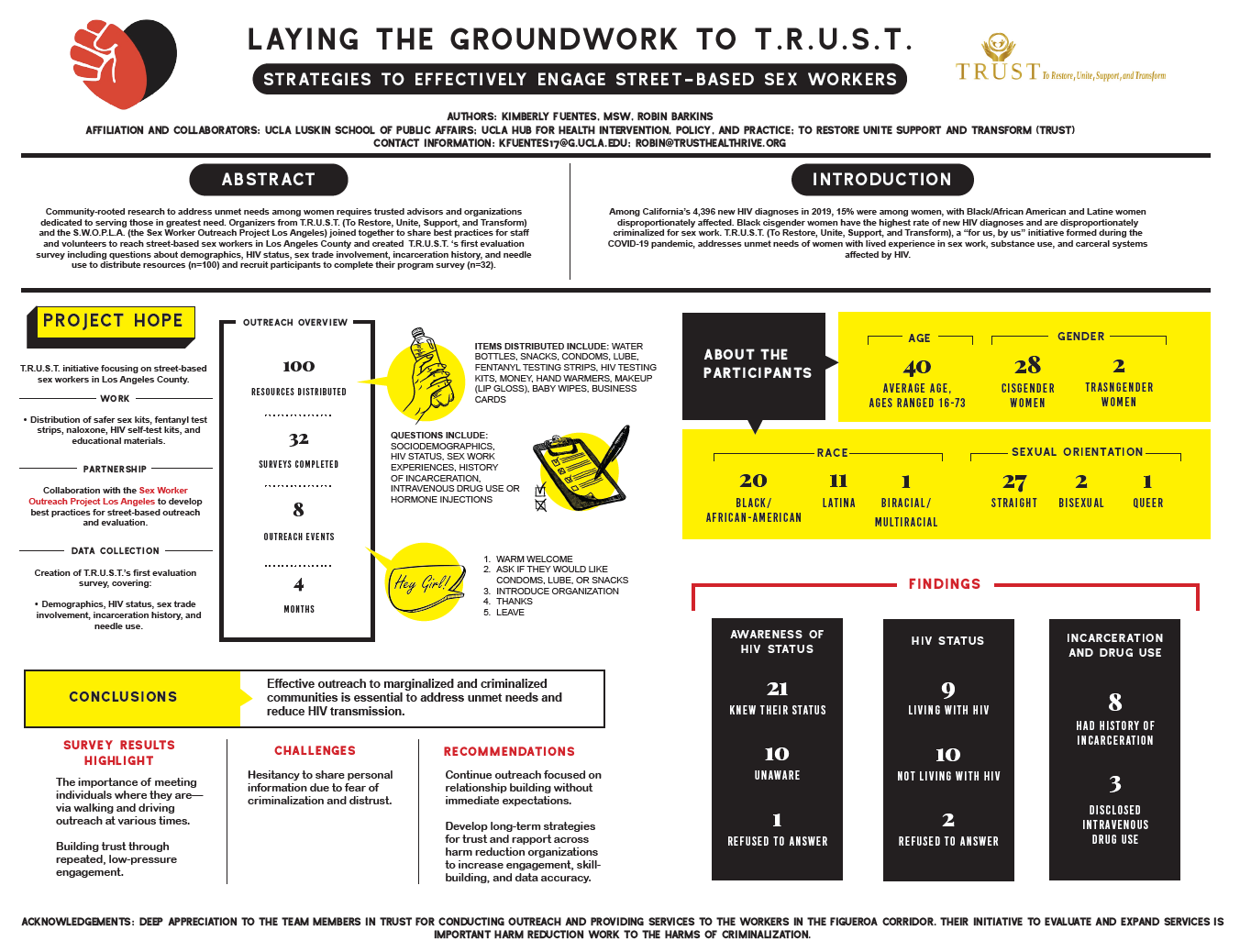
Title: Laying the Groundwork to T.R.U.S.T: Strategies to Effectively Engage Street-based Sex Workers
Presenter(s): Kimberly Fuentes, MSW and Robin Barkins
Summary: Community-rooted research to address unmet needs among women requires trusted advisors and organizations dedicated to serving those in greatest need. Organizers from T.R.U.S.T. (To Restore, Unite, Support, and Transform) and the S.W.O.P.L.A. (the Sex Worker Outreach Project Los Angeles) joined together to share best practices for staff and volunteers to reach street-based sex workers in Los Angeles County and created T.R.U.S.T. ‘s first evaluation survey including questions about demographics, HIV status, sex trade involvement, incarceration history, and needle use to distribute resources (n=100) and recruit participants to complete their program survey (n=32).
 Click on image to expand poster
Poster Presentation #24
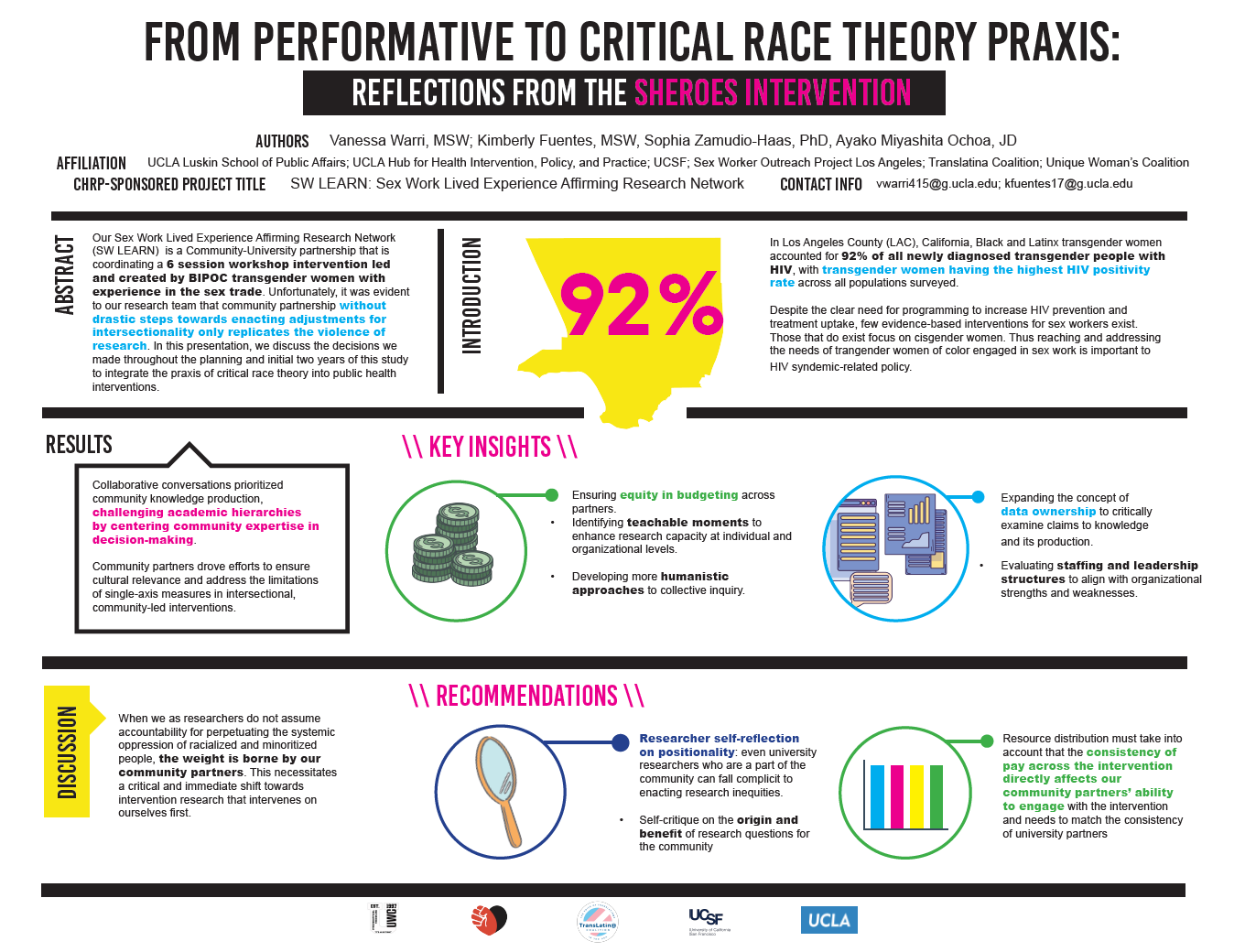
Title: From Performative to Critical Race Theory Praxis: Reflections from the Sheroes Intervention
Presenter(s): Vanessa Warri, MSW and Kimberly Fuentes, MSW
Summary: Our Sex Work Lived Experience Affirming Research Network (SW LEARN) is a Community-University partnership that is coordinating a 6-session workshop intervention led and created by BIPOC transgender women with experience in the sex trade. To counteract the violence of research, the team enacted an adaptation process with a justice-centered approach in the planning and initial two years of this study to integrate the praxis of critical race theory into public health interventions. This presentation shares these insights on how to include equity in budgeting across partners, exploring staffing and leadership structures to address organizational strengths and weaknesses, expanding on the concept of data ownership to question claims to knowledge and knowledge production, identifying and leveraging teachable moments to increase research capacity at the individual and organizational level, and creating more humanistic modes of collective inquiry.
 Click on image to expand poster
Conference Resources
- [download id=”31869″]
- [download id=”31873″]
- [download id=”31876″]
- 2025 CHIPTS HIV Next Generation Conference Whova Agenda
- 2025 CHIPTS HIV Next Generation Conference Whova Web App
Access the conference recap featuring key highlights, recordings, and additional conference
Event Description
The 2024 CHIPTS HIV Next Generation Conference occurred on Friday, January 26, 2024 from 8:30 AM – 2:30 PM. The conference was IN-PERSON at the UCLA Covel Commons and FREE to attend. Access the conference recap with opening remarks, open plenary, and panel discussions: https://chipts.ucladev.pendari.com/news/2024-hiv-next-generation-conference-recap/
The conference is organized to support the next generation of HIV researchers and service providers who are working towards an end to HIV/AIDS through networking and sharing visions for future priorities. The theme of this year’s conference was “Innovating Interventions to Prevent HIV: Intersectionality and Syndemics.” The conference featured oral and poster presentations by faculty, student and emerging researchers from various institutions.
Welcome/ Opening Plenary
Welcome and Opening Remarks:
Recording: N/A
- Norweeta Milburn, PhD, Director, CHIPTS Development Core
- Steve Shoptaw, PhD, Director, CHIPTS Administrative Core
Conference Facilitator and Announcements:
- Dallas Swendeman, PHD, Co-Director, CHIPTS Development Core
Opening Plenary:
Slides: Download here
Abenaa A. Jones, PhD, Ann Atherton Hertzler Early Career Professor in Health and Human Development, Department of Human Development and Family Studies
Presentation Title: Developing comprehensive interventions to address the syndemic of HIV, substance use disorders, and violence among women involved in the criminal justice system
Presentation Summary: Substance use, HIV and associated risk behaviors, and experiences of violence are prevalent and often inextricably linked among women who use drugs, particularly those involved in the criminal justice system. The presentation will explore the syndemic of substance use, HIV, and violence, along with the development of an all-female and trauma-informed intervention to reduce the incidence and adverse effects of these syndemic issues.
Plenary Discussions
Panel 1: Social Determinants and HIV
Panel Presentations:
1. A qualitative study of Black and Latine HIV care consumers’ perceptions of providers’ behaviors, medical mistrust, and experiences of discrimination
- Toluwani Adekunle, PhD
Slides: Download here
Summary: The presentation highlights the experiences of Black and Latine HIV care consumers that foster medical mistrust. These are experiences as pertaining to care consumers’ perceptions of healthcare provider behaviors that invoked feelings of stigma/discrimination, thereby influencing care consumers’ levels of trust and mistrust.
2. Amp: Developing a mobile app using human-centered design to improve the health and well-being of young Black men living with HIV
- Taj Morgan, MPH
Slides: Download here
Summary: This presentation will describe how we used human-centered design to develop an innovative mobile app to improve HIV care continuum outcomes and overall well-being among young Black gay and bisexual men living with HIV. This process, which involved co-creating the app with end users and HIV service providers, resulted in a program with high feasibility, acceptability, and likely uptake.
3. Exploring self-management strategies among young adults with recent criminal justice experience to improve ART adherence
- Lauren Mungo, BS
Slides: Download here
Summary: This presentation will discuss a qualitative analysis within the LINK2 study intervention trial regarding the various barriers preventing ART adherence in a population of young adults who have recent criminal justice experience. It will evaluate the effects of self-management strategies in alleviating the daily barriers participants face in taking their medication and its role in fostering positive behaviors that assist in increasing adherence.
Panel 2: HIV and Other Health Needs
Panel Presentations:
1. HIV and Hepatitis C virus infection and co-infection among trans women in San Francisco, 2020
- Izzy Chiu, BA
Slides: Download here
Summary: Trans women experience a high burden of HIV and are at high risk for hepatitis C virus (HCV). The interaction between these two diseases and the behavioral risks for HIV/HCV co-infection among trans women are understudied. We present the results of an analysis of HIV and HCV serological and behavioral data collected among trans women in San Francisco from 2019 to 2020 as part of the CDC’s first National HIV Behavioral Surveillance survey for trans women.
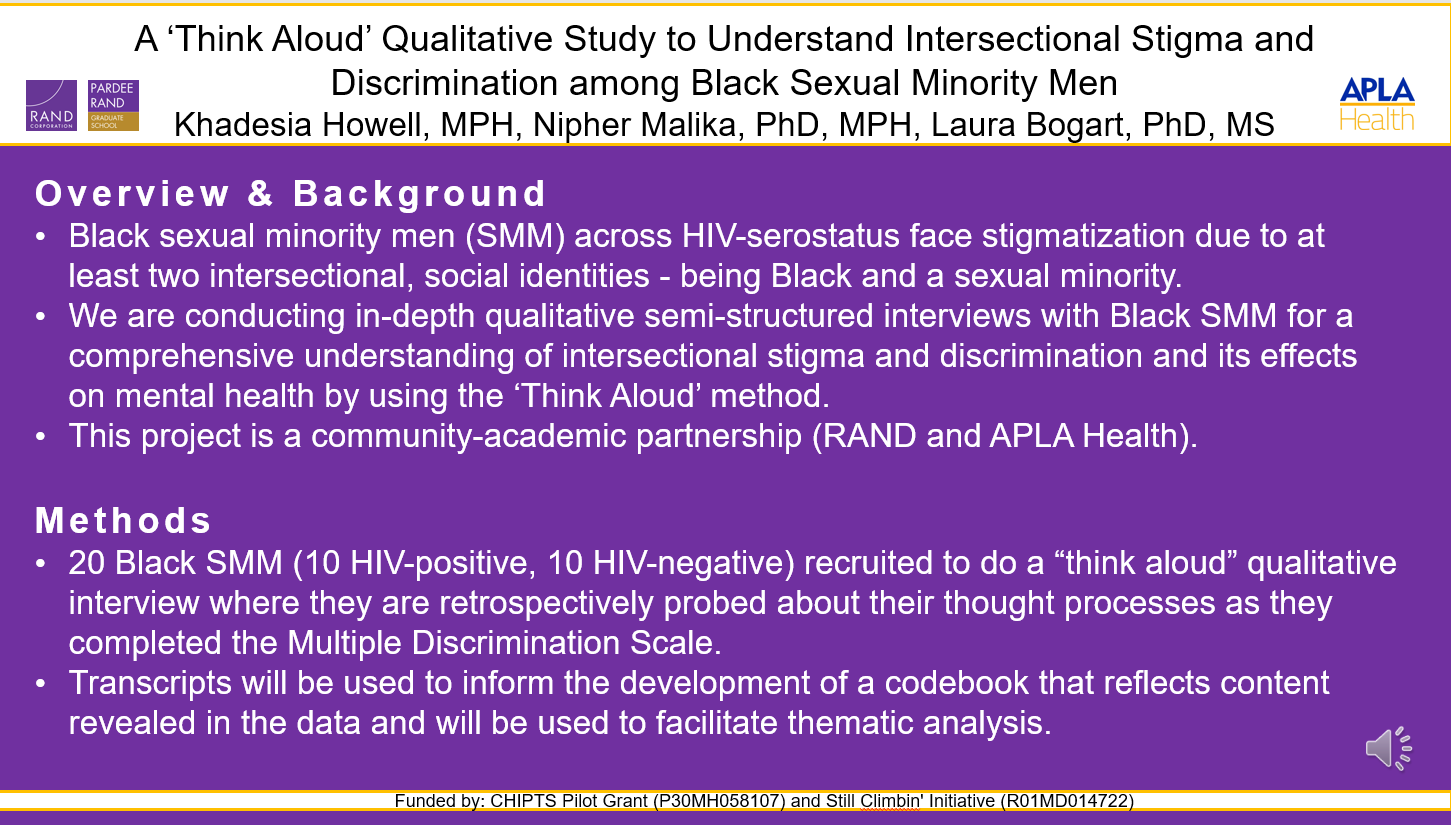
2. A ‘Think Aloud’ qualitative study to understand intersectional stigma and discrimination among black sexual minority men (SMM)
- Khadesia Howell, MPH, MPhil
Slides: Download here
Summary: This study’s aim is to better understand intersectional stigma and discrimination and its effects on mental health, as well as to improve intersectional stigma assessment tools. It is a qualitative study executed by doing in-depth semi-structured interviews as a way for Black SMM to ‘think aloud’ and tell their stories and experiences. From this we were able to better understand how this marginalized group responds to stigma and discrimination and how they interact with intersectional stigma assessment tools.
3. Unraveling reproductive and maternal health challenges of women living with HIV/AIDS in Vietnam: A qualitative study
- Lynn Nguyen, BA
Slides: Download here
Summary: Women living with HIV/AIDS (WLHA) have the additional and unique need to seek sexual and reproductive health services. WLHA’s maternal health journeys can be shaped by the cultural norms and resources that exist in their society. This study sought to understand if and how WLHA’s family planning, pregnancy, and motherhood experiences could be influenced by the patriarchal culture, gender roles, and HIV stigma in Vietnam, specifically.
Panel 3: PrEP Implementation
Panel Presentations:
1. Comparing PrEP retention and prevalent inequities among in clinic and telehealth modalities in Texas
- Mark Erwin, BA
Slides: Download here
Summary: Telehealth is often touted as a solution to overcome several PrEP barriers. We explore how PrEP retention compared for clients who accessed it via Telehealth versus In clinic clients. Further, we examined inequities in each group and then compared those inequities with each other.
2. The Chicago study for HIV prevention in psychiatry: A mixed-methods investigation of knowledge, perceived barriers to implementation, and training needs to support pre-exposure prophylaxis (PrEP) prescription by psychiatrists
- Samuel Bunting, MD
Slides: Download here
Summary: Patients living with mental illnesses experience disproportionately high HIV incidence and prevalence, while simultaneously experiencing numerous barriers to care. We conducted a mixed-methods, pilot study of psychiatrists practicing in the EHE priority jurisdictions about integrating PrEP into psychiatric care given the role as primary points of contact with the healthcare system for people with mental illnesses and HIV risk-factors. Psychiatrists practicing in high-HIV incidence areas were largely interested in prescribing PrEP but need additional training with a specific focus on practical management and integration with existing clinical workflows.
3. Making the switch: Impact of changing PrEP regimens on retention among men who have sex with men in Hanoi, Vietnam
- Naira Setrakian, MPH
Slides: Download here
Summary: This presentation will describe patterns of HIV pre-exposure prophylaxis (PrEP) use and switching between event-driven PrEP and daily PrEP regimens in a population of men who have sex (MSM) in Hanoi, Vietnam. Data from a large PrEP clinic at Hanoi Medical University show that switching PrEP regimens is common and results in longer periods of PrEP use.
Event Description
The 2022 HIV Next Generation Conference occurred on Friday, December 2, 2022 from 9:00 AM – 12:15 PM. The conference was VIRTUAL and FREE to attend. Access the conference recap with opening remarks, open plenary, and panel discussions: https://chipts.ucladev.pendari.com/news/2022-chipts-hiv-next-generation-virtual-conference-recap/
The conference is organized to support the next generation of HIV researchers and service providers who are working towards an end to HIV/AIDS through networking and sharing visions for future priorities. The theme of this year’s conference was “Implementation Science for HIV Prevention and Treatment to End the Epidemics.” The conference featured oral and poster presentations by faculty, student and emerging researchers from various institutions.
Access printable resources from the conference:
[download id=”27340″] [download id=”27334″] [download id=”27331″] [download id=”27313″]
Welcome/ Opening Plenary
Welcome and Opening Remarks:
Recording: https://www.youtube.com/watch?v=fqcFFA_Kst4
- Norweeta Milburn, PhD, Director, CHIPTS Development Core
- Steve Shoptaw, PhD, Director, CHIPTS Administrative Core
Conference Facilitator and Announcements:
- Dallas Swendeman, PHD, Co-Director, CHIPTS Development Core
Opening Plenary:
Recording: https://www.youtube.com/watch?v=CpyL5k6srls
Amaya Perez-Brumer, PhD, MSC, Assistant Professor, Dalla Lana School of Public Health, Division of Social and Behavioural Health Science
Presentation Title: Who Benefits from Global HIV Prevention Science? A Call for Researcher Accountability
Presentation Summary: To imagine and reimagine a more just praxis for HIV research globally, we, as scholars and practitioners, must grapple with the extreme privilege at the center of who gets to do global HIV health research, who are its beneficiaries, and who are its subjects. To begin to think through these provocations, this talk will discuss three ongoing paradoxes rooted in data politics and the extractive logics at the center of global HIV prevention science.
Panel Discussions
Set 1 – Panel 1: Mental Health and HIV Prevention
Recording: https://www.youtube.com/watch?v=DoqxoWlKwy8
Panel Presentations:
1. A virtual platform to mitigate the effects of isolation among older people living with HIV: Lessons learned in usability with Discord
- Jasmine Lucero Lopez, BS
Slides: Download here
Summary: This presentation will discuss the perspectives of a Community Advisory Board (CAB) on the usability of Discord as a virtual village. We will explore the benefits and drawbacks of this platform for the purpose of this study, based on the opinions expressed by the CAB. Lessons learned from this experience and how to improve future studies will be shared.
2. I have moments where I am down, but it has made me resilient: Mental health strengths among youth at-risk for and living with HIV
- Katherine Lewis, BA
Slides: Download here
Summary: Youth enrolled in several linked HIV prevention and treatment continua studies who participated in a telehealth coaching intervention completed a strengths assessment, and qualitative data on mental health strengths was analyzed using thematic analysis and a resilience lens. Youth self-described mental health strengths included intrapersonal resilience assets (protective traits, stress management activities, feeling positive despite current mental health challenges, and no current mental health challenges) and external resilience resources (social/emotional support, therapy/counseling, and use of mental health medication). These results highlight the utility of strengths-based intervention methods and resilience for youth at-risk for and living with HIV.
3. Sexual health promotion methods and decision-making among youth at-risk for and living with HIV in Los Angeles and New Orleans: A qualitative, choice-based analysis
- Curtis Wong, BSc & Alice Ma, BSc
Slides: Download here
Summary: A strengths-based telehealth coaching intervention was delivered to youth at-risk for or living with HIV in Los Angeles and New Orleans within the context of several linked HIV prevention and treatment continua studies. We used a choice-based framework and qualitative methods to analyze strengths assessment data, which revealed intrapersonal, interpersonal, and structural factors that influenced participants’ sexual health decision-making, including decisions regarding PrEP use, condom use, and other strategies. These results demonstrate the utility of self-determination and choice-based frameworks in sexual health promotion efforts for youth.
Set 1 – Panel 2: HIV Prevention
Recording: https://www.youtube.com/watch?v=YewaWlGCMSQ
Panel Presentations:
1. Addressing PrEP/PEP use disparities amongst marginalized communities by way of peer-led collaborative initiative
- David Mosqueda & Dino Selders, B.S
Slides: Download here
Summary: PrEP Furnishing shows promise of assisting marginalized peoples living in primary care healthcare shortage areas. AltaMed fast tracks furnishing initiatives by placing PrEP navigators in the lead when it comes to Patient initial care and retention.
2. Medical student run telehealth for HIV testing and counseling among sexual minority men: Impact on patient experience and implications for student education
- Lori Zomback BS
Slides: Download here
Summary: A group of medical students conducted tele-health HIV testing using OraQuick and provided education and risk-reduction counseling during the turnaround time. There was high participant satisfaction and educational benefit for the students, demonstrating benefits to both public health and medical education.
3. Factors associated with HIV testing among Spanish and English speaking Latinx youth
- Pablo Zapata, PhD
Slides: Download here
Summary: Data for the current project were collected as part of SMART, an ongoing pragmatic trial of an online HIV prevention intervention for adolescent sexual minority youth. Despite higher risk, few Latino youth reported ever having received an HIV test. Results suggest sexual health education and pediatricians are an important, but largely untapped, source of testing and could be further supported with familial support to end the epidemic
Set 2 – Panel 1: Substance Use and HIV
Recording: https://www.youtube.com/watch?v=CjQN-n0tArQ
Panel Presentations:
1. Factors influencing betel nut chewing behavior in people living with HIV in Myanmar
- Boram Kim, PhD, RN & Cheng-Shi Shiu, PhD & Wei-Ti Chen, RN, CNM, PhD, FAAN
Slides: Download here
Summary: Despite the WHO classifying betel nuts as a carcinogen with a high risk of oral and laryngeal cancer, Myanmar is one of the world’s largest consumers of betel nuts because chewing betel nuts is socially and culturally influenced in Myanmar. The study aimed to examine factors that influence betel nut chewing in people living with HIV (PLWH) in Myanmar. From a secondary analysis of 2020 Myanmar PLWH data, physiological hyperarousal symptoms and loneliness were associated with increased betel nut chewing among PLWH in Myanmar.
2. Substance use and associated intimate partner violence risk among MSM in Los Angeles, California
- Amanda P. Miller, PhD, MS
Slides: Download here
Summary: Prior work suggests substance use is a risk factor for intimate partner violence but limited research exploring this association among MSM exists. We explored associations between substance use and experiences of IPV among MSM participating in the mSTUDY cohort in Los Angeles. Stimulant use was associated with increased odds of experiencing IPV relative to those reporting no stimulant use and the magnitude of this association was greater among MSM living with HIV.
Set 2 – Panel 2: EHE Implementation Science (PT. 1)
Recording: https://www.youtube.com/watch?v=BwbZbwInZYo
Panel Presentations:
1. The UCLA rapid, rigorous, relevant (3R) implementation science hub: Supporting EHE initiatives
- Alison Hamilton, PHD, MPH
Slides: Download here
Summary: The UCLA 3R Hub, a supplement to CHIPTS, is one of eight hubs funded by the NIMH to support EHE pilot Implementation studies. Tis presentation will briefly address the critical role of Implementation science in ending the HIV Epidemic and will describe services and supports that are available to the Southern California community and beyond.
2. Addressing intersectional oppression in Asian Pacific Americans with HIV in southern CA: An implementation science framework
- Wei-Ti Chen, RN, CNM, PhD, FAAN
Slides: Download here
Summary: The purpose of this study is to collaborate with the local Asian Pacific American With HIV (APAWH) community to adapt and evaluate the appropriateness, acceptability, and feasibility of a 4-session, 4-week Social-justice Oriented, Family Informed self-management intervention to promote health among APAWH in Southern California, particularly Orange counties (SOFIAA). The scientific premise is that APAWH experience systematic barriers in healthcare delivery and policies, resulting in poor health outcomes. Additionally, regardless of ethnicity, APAs often prioritize their responsibilities to their families over their own individual needs. Our hypothesis is that APAWH will perceive SOFIAA as acceptable, feasible, and appropriate and a future study will demonstrate SOFIAA may be used to promote family support, decrease the effects of structural racism and HIV-related stigma, and achieve better outcomes in APAWH. This study addresses the critical need to optimize an intervention to promote self-management skills among APAWH by simultaneously addressing the reality and effects of structural racism and discrimination against APAWH from both the mainstream U.S. society and the APA communities.
3. Implementing a community engaged equity approach to identify barriers and facilitators to the PrEP care continuum in Long Beach, CA
- Laura Hoyt D’Anna, MPA, DrPH & Everardo Alvizo, LCSW & Jaelen Owens, BA
Slides: Download here
Summary: The study aims to address the HIV epidemic by improving PrEP linkage, uptake, and retention among Black and Latinx same-gender loving men, transgender women, and other gender-diverse persons in Long Beach, CA. This is a mixed methods study designed to explore barriers and facilitators to engagement along the PrEP care continuum from the viewpoints of community members and current and potential PrEP providers. Findings will inform the following: 1) the Long Beach HIV/STI Strategic Plan, 2) a culturally appropriate PrEP readiness and facilitation tool, and 3) intervention opportunities to be studied in future research.
Set 3 – Panel 1: Policy Impact
Recording: https://www.youtube.com/watch?v=eD34aDov8xo
Panel Presentations:
1. HIV and the carceral state: Researching effects on health outcomes
- Felipe Findley, PA-C, MAPS, AAHIVS & Vanessa Warri, MSW
Slides: Download here
Summary: This panel will share broad perspectives of CHIPTS Community Advisory Board member and community partners engaged in CHIPTS PIC work to address disproportionate health outcomes across communities engaged by carceral systems. Panelists will elucidate pathways for researchers to better capture the effects of criminalization on health outcomes.
Set 3 – Panel 2: EHE Implementation Science (PT. 2)
Recording: https://www.youtube.com/watch?v=dX9GWa2ZDbo
Panel Presentations:
1. The incentives for prevention study (TIPS): Financially incentivizing strategies for HIV prevention in high incidence populations in LA County
- Ronald A. Brooks, PhD
Slides: Download here
Summary: The project will host 7 informational/educational community workshops to provide up-to-date and relevant information on LAI-PrEP to providers (medical and non-medical) that serve Black/Latino/a MSM and transgender women and potential consumers. Additionally, the project will develop a community-derived and culturally appropriate strategic messaging guide to facilitate ongoing dissemination of LAI PrEP information to our focused populations of providers and consumers.
2. Pharmacist delivered PrEP and PEP in three high priority EHE Counties in CA: An overview
- Raiza M. Beltran, PhD, MPH & Tam Phan, PharmD, AAHIVP
Slides: Download here
Summary: For this presentation, we will provide a short overview of our proposed project that builds community capacity to better examine the facilitators and barriers to pharmacists-furnished HIV services in select priority areas of Southern California.
3. Haus of C.H.O.P. (Choosing healthy options for prevention/PrEP)
- Carl Highshaw, PhD & Sung-Jae Lee, PhD
Slides: Download here
Summary: For this study, we provide a plan on the equity-focused approaches aimed at optimizing engagement of young Black LGBTQ+ individuals across the PrEP care continuum by partnering with House & Ball Community (H&BC) members using social work guiding principles.
4. The incentives for prevention study (TIPS): Financially incentivizing strategies for HIV prevention in high incidence populations in LA County
- Corrina Moucheraud, ScD, MPH & Raphael J. Landovitz, MD, MSc
Slides: Download here
Summary: TIPS is a recently-funded project (an Ending the HIV Epidemic supplement to CHIPTS) that is using a mixed methods approach to understand how best to design an investigational financial incentives program for PrEP use and HIV prevention among young, Latino, Black and African American, cisgender men who have sex with men in South Los Angeles. This represents a collaborative research endeavor between investigators at UCLA, APLA Health & Wellness, and DHSP; and aims to generate policy- and program-relevant insights.
Poster Presentations
Poster Presentation #1
Title: Mobile Enhanced Prevention Support: App Design for People Leaving Jail
Presenter(s): Gabriel Edwards, MD, MPH, Associate Project Scientist, Department of General Internal Medicine and Health Services Research, UCLA David Geffen School of Medicine
Summary: This is a project which received funding as part of the CHIPTS 2022 Mentored Pilot Grant Program. It focuses on a population at high risk for HIV -sexual and gender minorities with a recent history of incarceration and substance use, and aims to gather qualitative data on the way the population engages with mobile technology to address health and social needs. We use an implementation science framework centering around health equity to guide data collection.
N/A
Poster Presentation #2
Title: A ‘Think Aloud’ Qualitative Study to Improve Coping with Discrimination and Reduce Health Disparities among Black Sexual Minority Men
Presenter(s): Khadesia Howell, MPH, RAND Corporation, Doctoral Student, Pardee RAND Graduate School
Summary: ‘Think Aloud’ is a processes can add depth to the quantitative and qualitative research and gives dimension to thought processes and behavioral responses. There are a variety of studies looking at Black sexual minority men and intersectionality’s impact on mental health and stigma; however, they do not combine ‘Think Aloud’ with self-reported discrimination for a better understanding of the impact of discrimination and stigma on mental health and coping mechanisms.
Click on image to expand poster
Poster Presentation #3
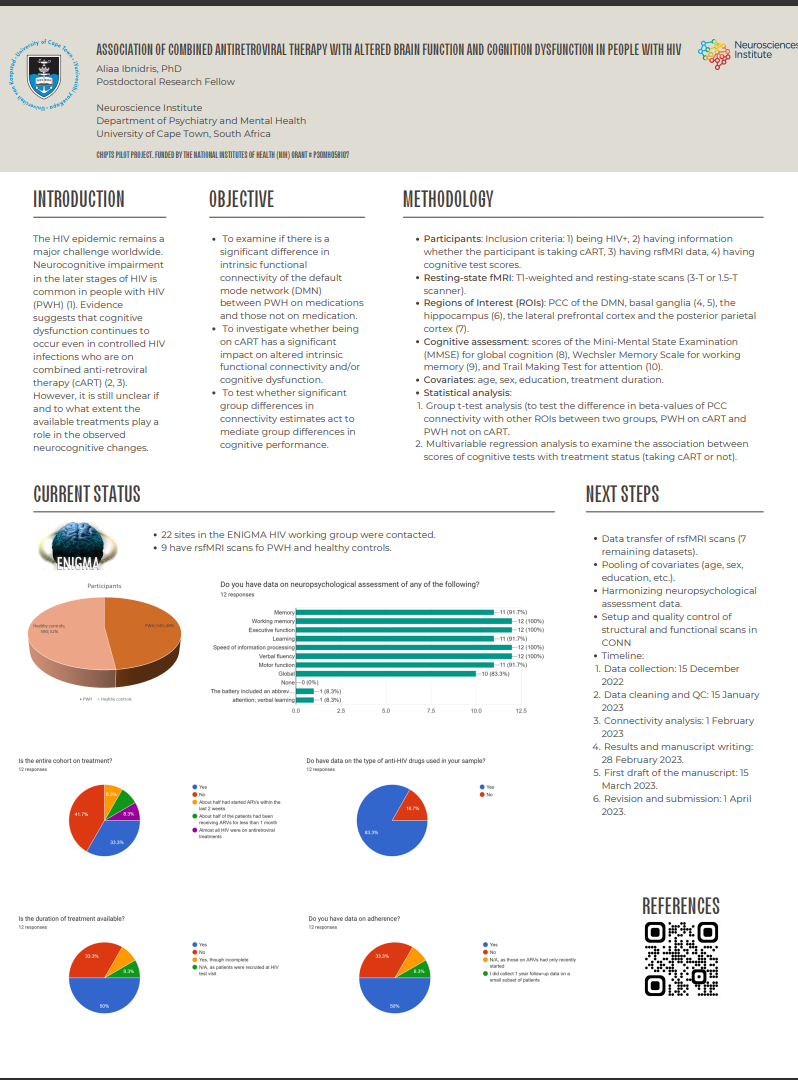
Title: Association of combined antiretroviral therapy with altered brain function and cognition dysfunction in people with HIV
Presenter(s): Aliaa Ibnidris, PhD, Postdoctoral Research Fellow, Neuroscience Institute, Department of Psychiatry and Mental Health, University of Cape Town
Summary: Neurocognitive impairment in later stages of HIV is common ad still occurs even in controlled HIV infections with combined antiretroviral therapy (cART). This project aims to look at the association between being on cART with brain function as well as with cognitive performance in people with HIV.
Click on image to expand poster
Poster Presentation #4
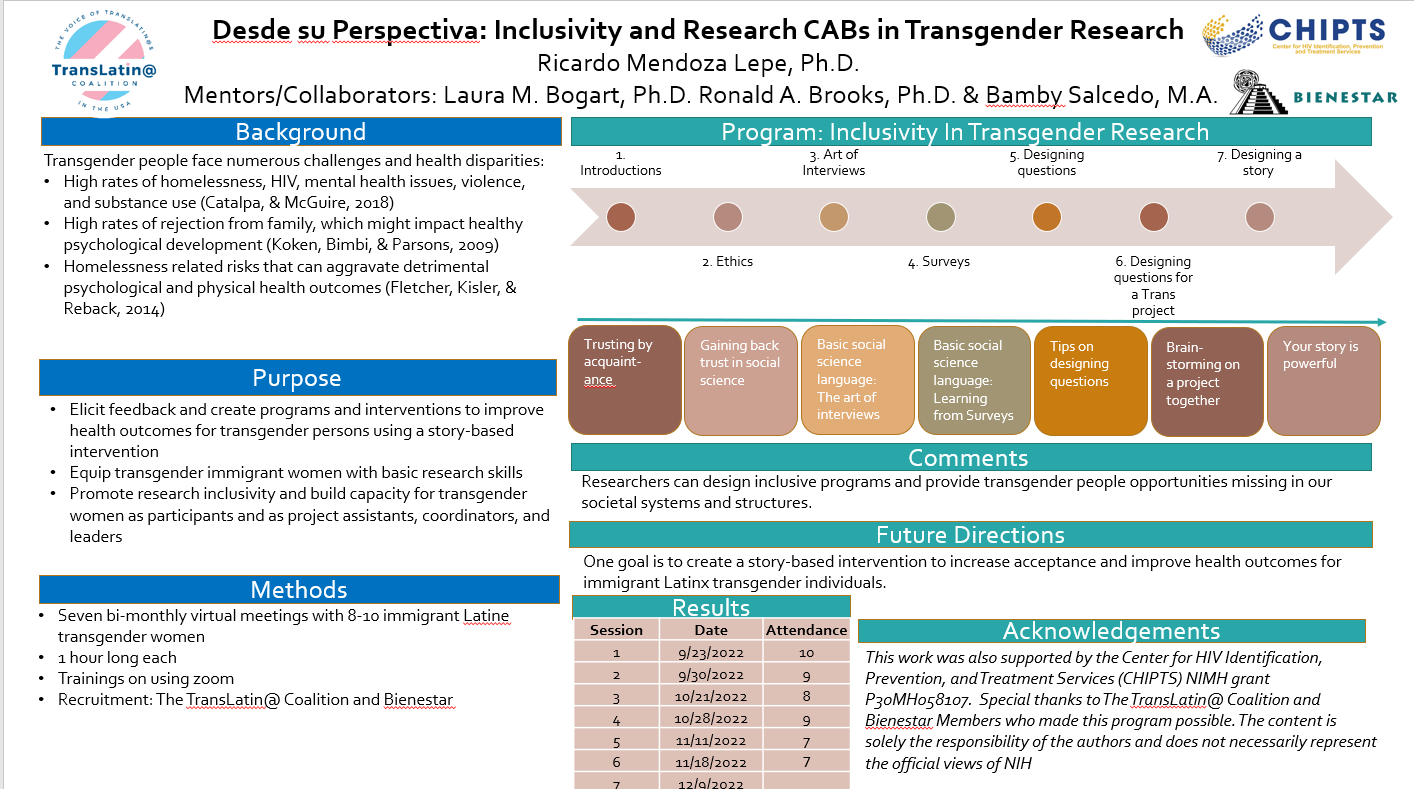
Title: Desde su Persectiva: Inclusivity and Research Community Advisory Boards in Transgender Research
Presenter(s): Ricardo Mendoza Lepe, PhD, Bilingual Research Coordinator, Bienestar Human Services
Summary: Meetings to improve research about their communities, learn and be part of their research, learn about research development, and create inclusive and trusted programs for the transgender community.
Click on image to expand poster
Poster Presentation #5
Title: Evaluating the relationship between hazardous alcohol use and intimate partner violence and PrEP use in pregnant and breastfeeding women at high risk of HIV in Cape Town, South Africa
Presenter(s): Amanda P. Miller, MS, PhD, Postdoctoral Fellow, San Diego State University & University of California San Diego (Joint T32 program)
Summary: HIV, perinatal alcohol use and intimate partner violence (IPV) represent a syndemic that produces a tremendous public health burden for both mother and fetus in South Africa. Contextualizing drivers of alcohol use and risk factors for IPV among pregnant and breastfeeding women and how alcohol use, IPV victimization and other social determinants of health experienced by South African women influence decision making around PrEP use will provide critical insight into potential points of intervention to address these intersecting health issues. We qualitatively explored these themes among pregnant women at high risk of HIV infection who report using alcohol and/or experiencing intimate partner violence during pregnancy.
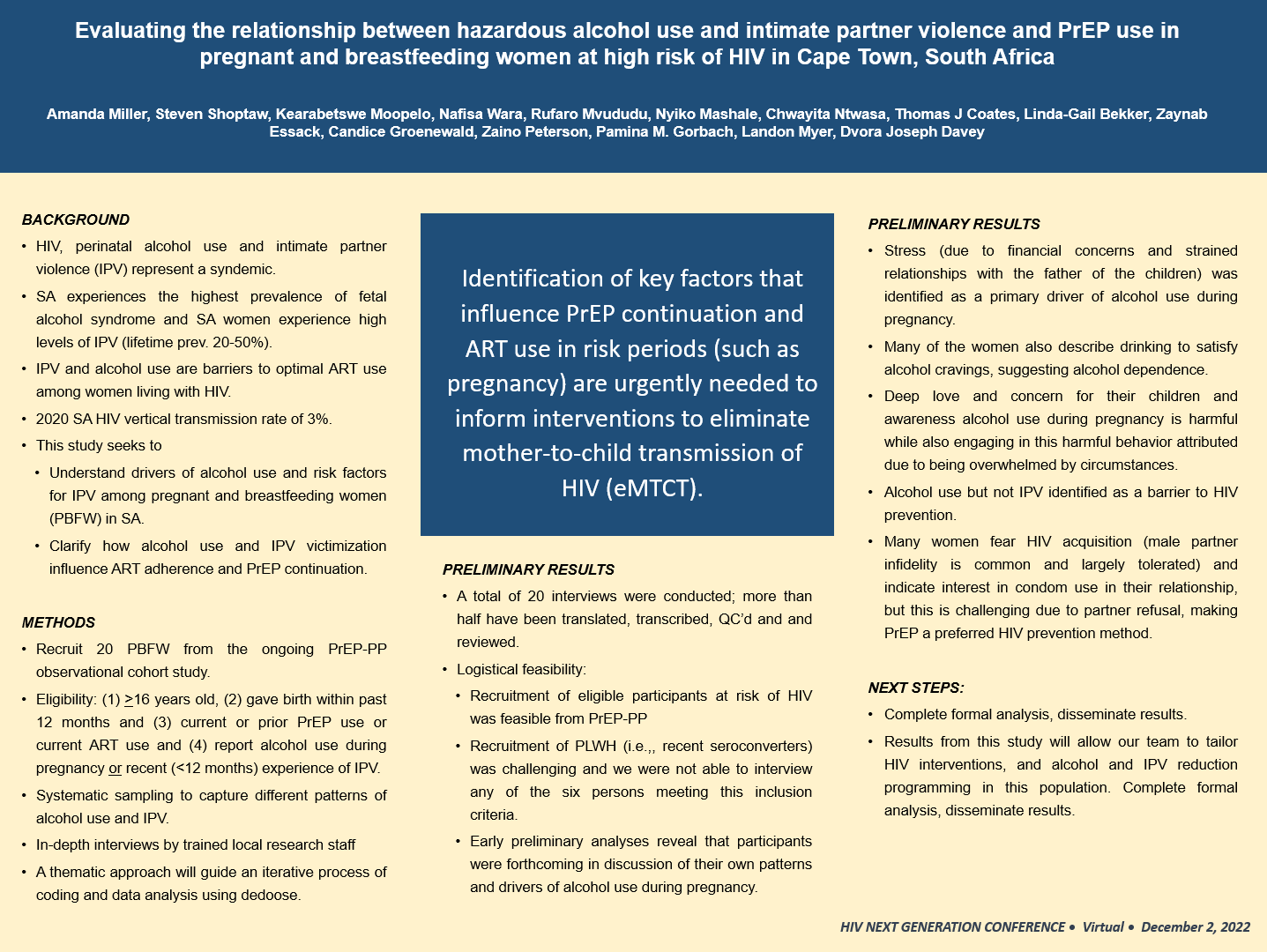
Click on image to expand poster
Poster Presentation #6
Title: “Ending the HIV Epidemic” in Los Angeles County: HIV Diagnoses Among Clients Utilizing Free, Mailed HIV Self-Test Kits
Presenter(s): Bret Moulton, MPH, Supervising Epidemiologist, Los Angeles County Department of Public Health, Division of HIV and STD Programs
Summary: As an emerging strategy to expand HIV testing availability, self-testing can expand screening access to persons who might experience barriers to accessing health care. Since 2020, Los Angeles County has provided free HIV self-test kits through the mail to targeted residents. One-third of people who ordered a kit reported never testing for HIV before, and 1.1% of participants had an HIV diagnosis within one year
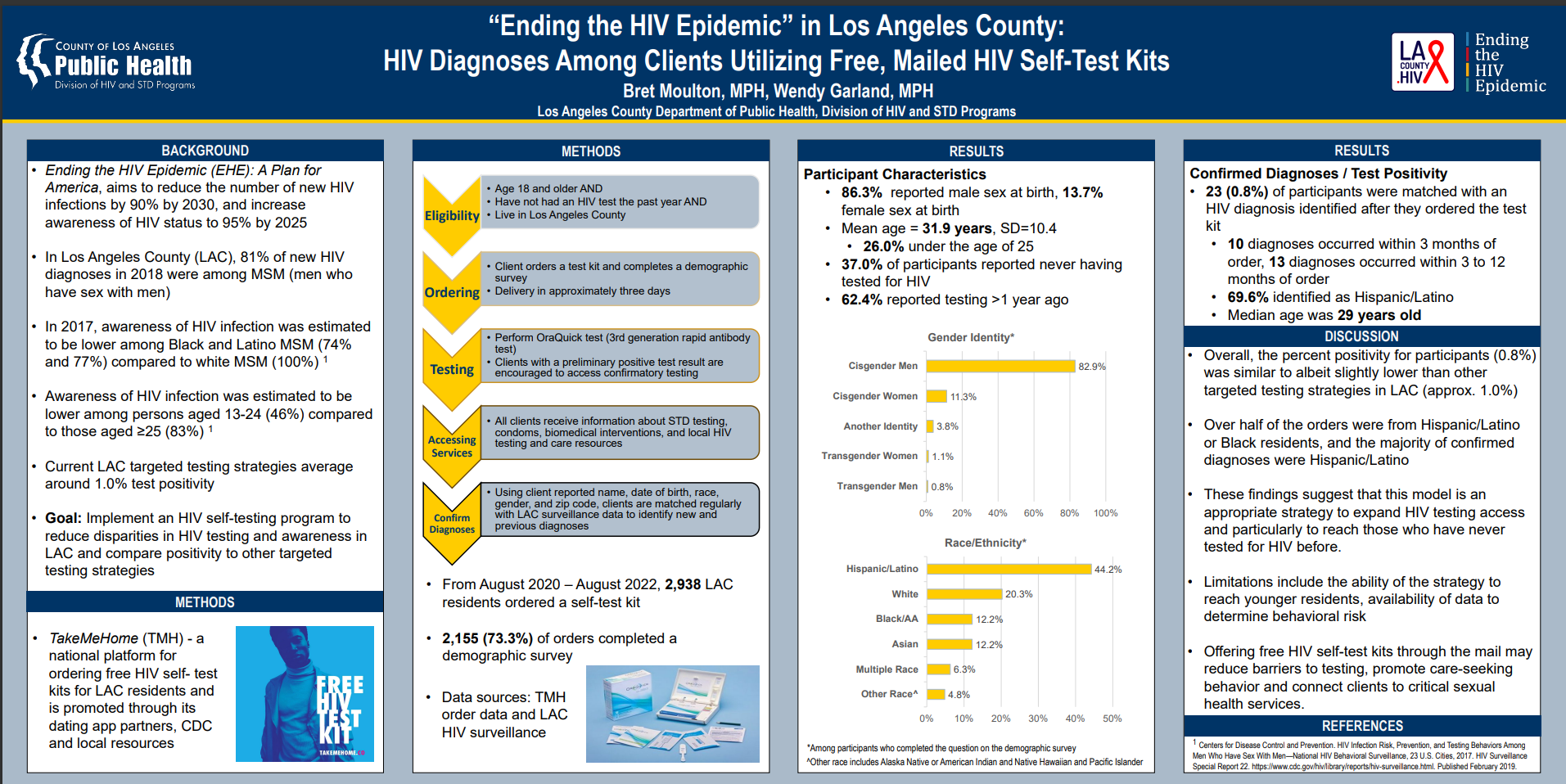
Click on image to expand poster
Poster Presentation #7
Title: Experiences of the COVID-19 Pandemic Among Queer Black Men in Los Angeles: Reflections from a Virtual Listening Session
Presenter(s): Jada Williams, BS, Graduate Student, UCLA Division of Population Behavioral Health
Summary: The CFAR Health Disparities Core convened a virtual listening session with queer Black men living in Los Angeles to describe the meanings of a shared lived experience, as well as the situations, conditions, and contexts that are part of the lived experience of participants. The current study was designed to better understand the experiences of queer Black men, including experiences associated with their sexual minority and race or racialized identities during the COVID-19 pandemic.
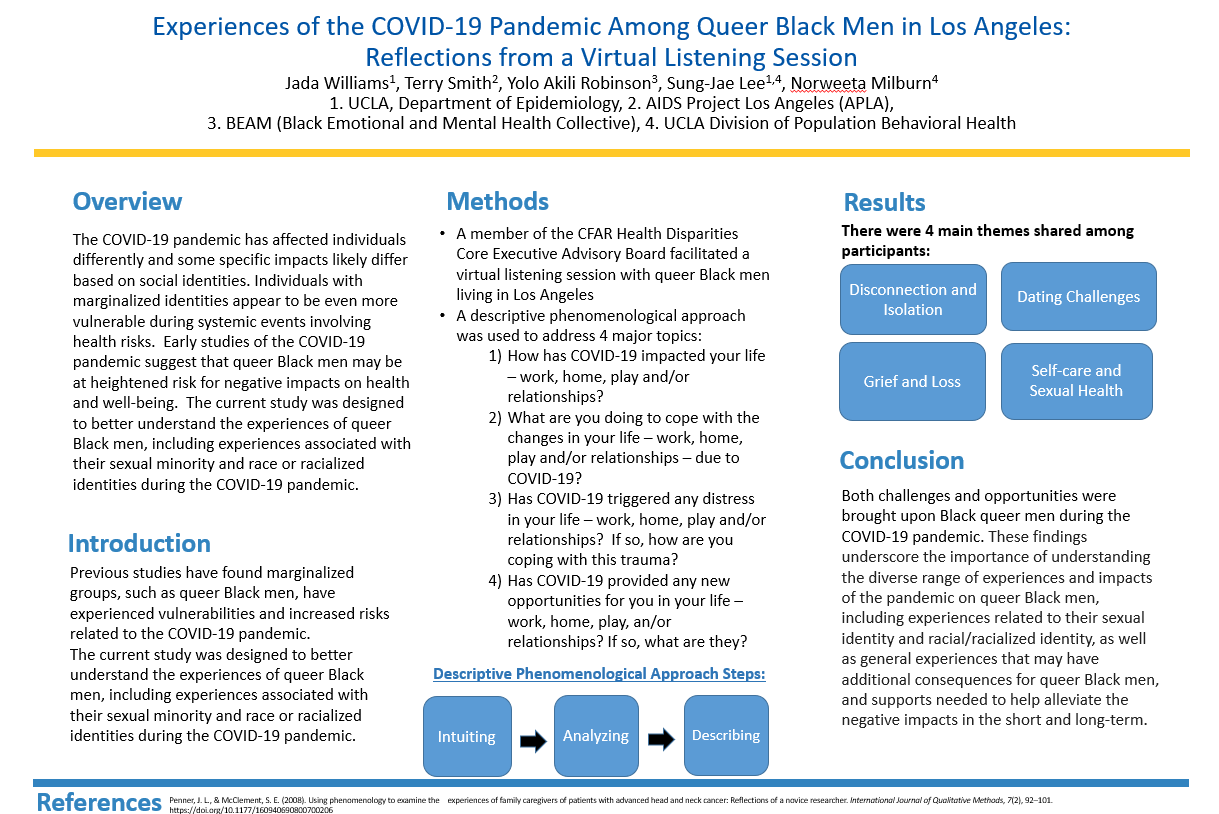
Click on image to expand poster
Poster Presentation #8
Title: Barriers to PrEP initiation among at-risk youth in Los Angeles and New Orleans
Presenter(s): Jocelyn Limas, BSc, Graduate Student Researcher, UCLA Fielding School of Public Health – Epidemiology, UCLA Semel Institute Center for Community Health
Summary: HIV PrEP uptake among adolescents and young adults remains low, prompting research and interventions to address barriers to PrEP initiation with a focus on expanding PrEP awareness and knowledge. In this analysis, data from a study of the Adolescents HIV Medicines Trial Network (ATN 149) was used to identify other underlying and often overlooked barriers to PrEP initiation amongst this population and how these barriers changed over time.
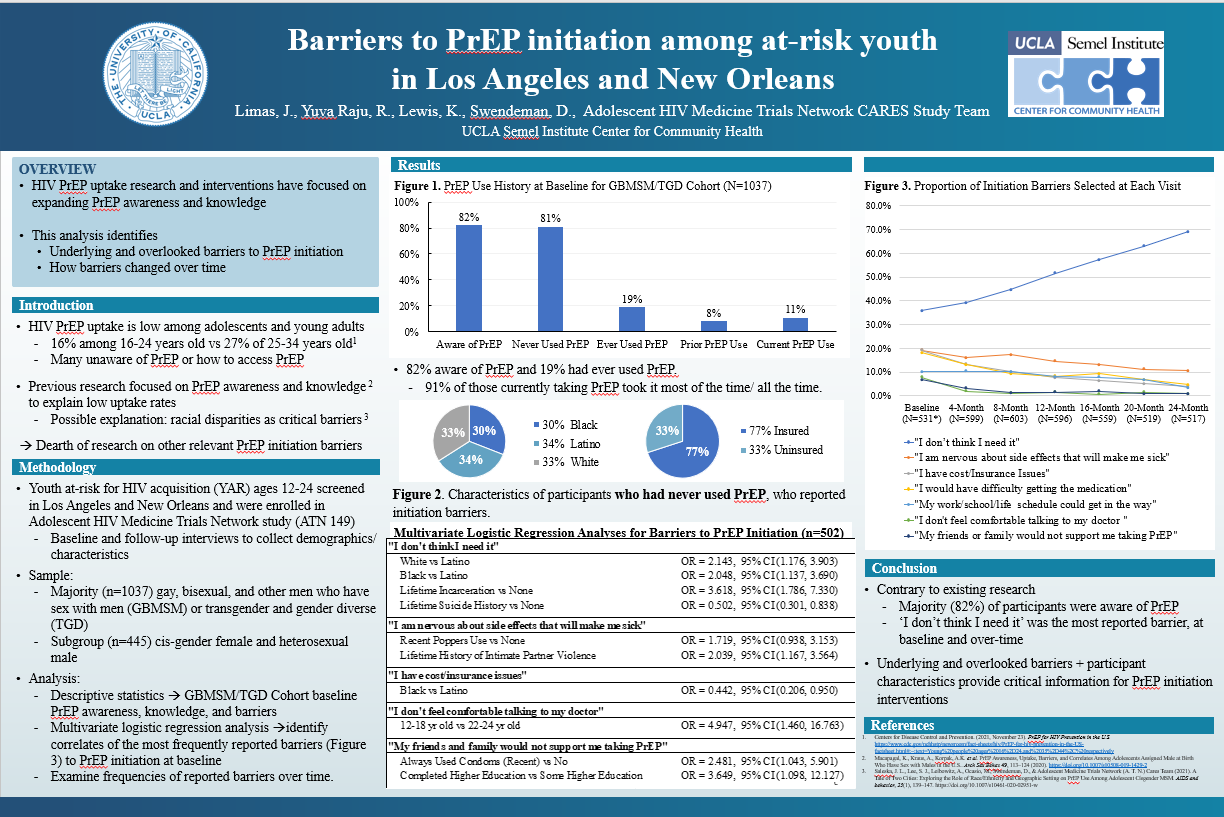
Click on image to expand poster
Poster Presentation #9
Title: Qualitative study of intersectional stigma of HIV and other marginalized identities among women living with HIV in India
Presenter(s): Reshmi Mukerji, MPH, Graduate Student, University College London, Institute for Global Health
Summary: Women living with HIV carry a disproportionate burden of HIV stigma, especially in countries where gender discrimination is rampant. Women who have additional marginalized identities often experience worsened violence as a result of multiple stigmas. The nature of this violence can be temporal in nature, as there is a reduction in enacted and internalized stigma over time.
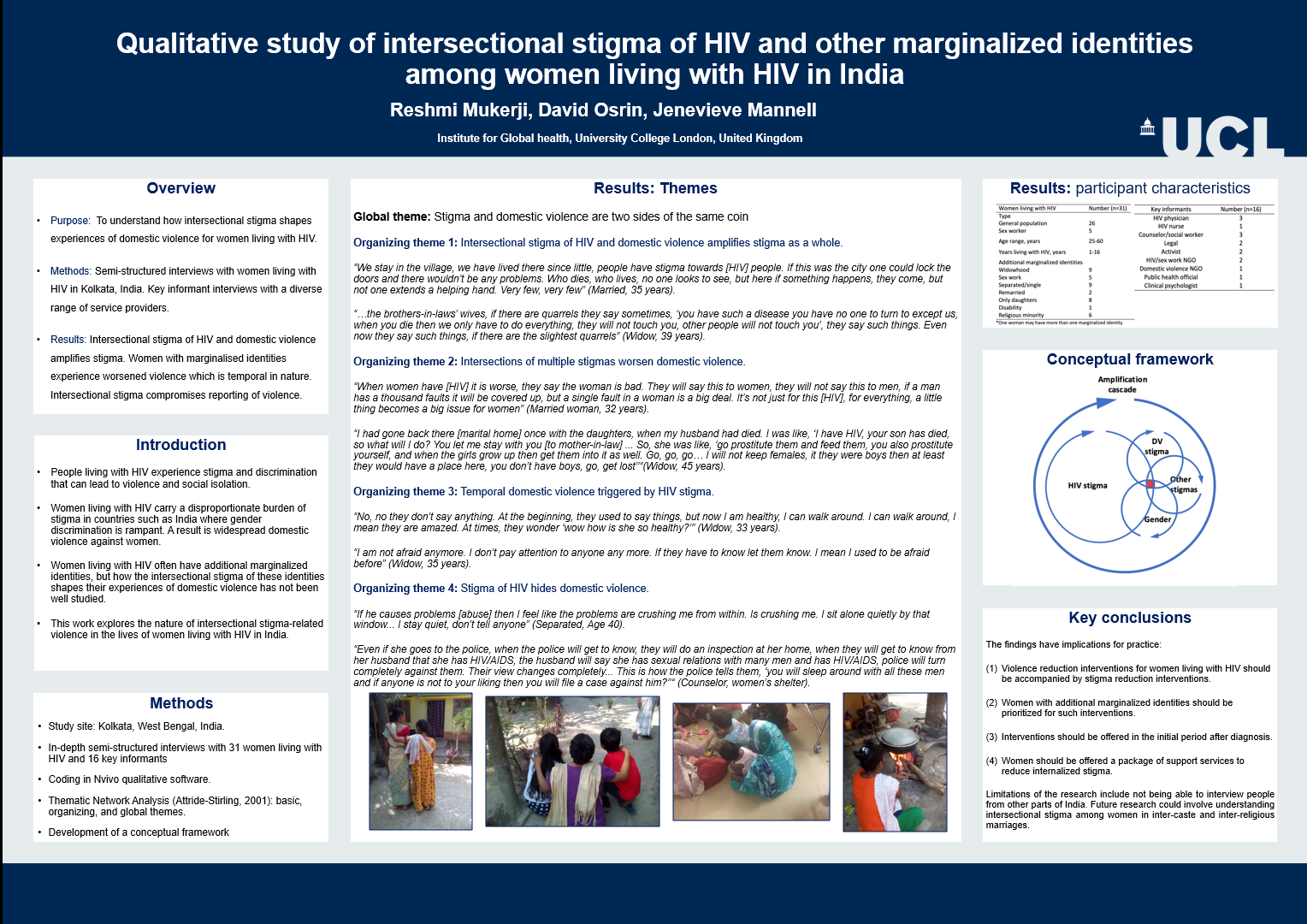
Click on image to expand poster
Poster Presentation #10
Title: Adult Girls and Young Women’s experiences of HIV in the context of patriarchal culture in Murewa, Zimbabwe
Presenter(s): Ali Mhungu, PhD Student, School of Health Sciences University of Dundee
Summary: This presentation presents the personal, relational and social experiences of living with HIV amongst the adolescent girls and young women (AGYW). The results of this study indicated that despite being disfranchised by HIV, AGYW demonstrated agency and resilience.
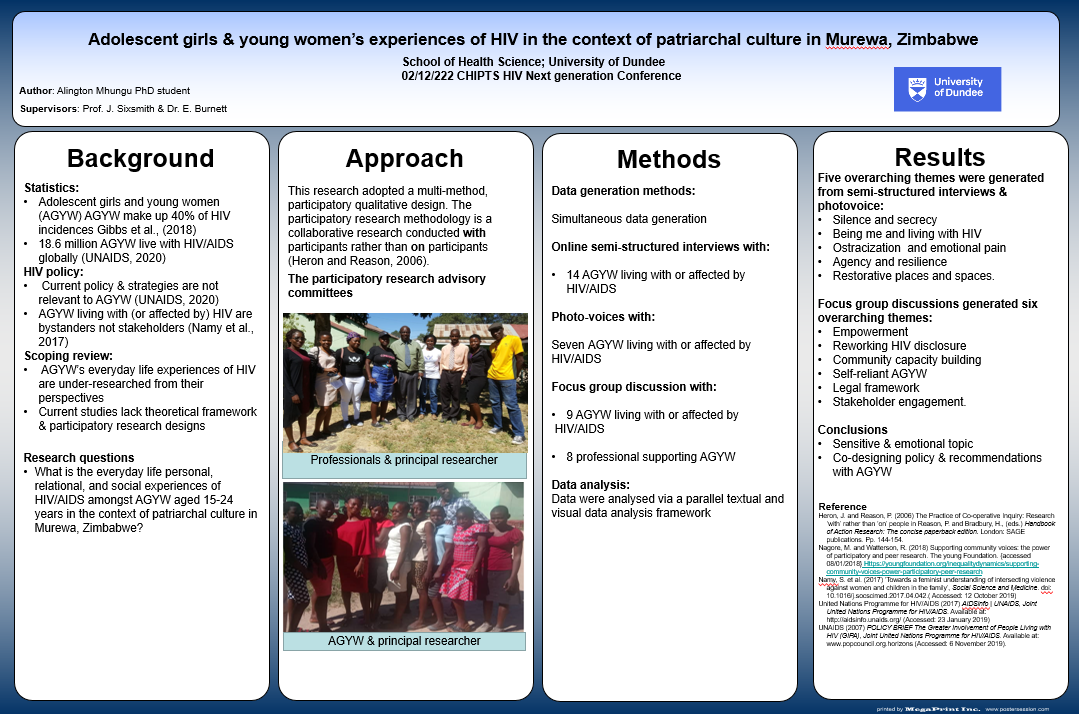
Click on image to expand poster
Poster Presentation #11
Title: Code Tenderloin Empowering Black Youth Program Provides Incentives And Resources to Address Health Disparities in San Francisco, CA.
Presenter(s): Antwan De’Sean Matthews, BSc, Director Of Youth Programs, Code Tenderloin
Summary: Throughout this workshop, the audience will learn how Nonprofits can effectively provide resources and solutions for the communities they serve through program implementation. Through the EBY program process, students are incentivized to participate in the development of the program by providing financial opportunities throughout the 16 weeks. With a diverse funding source, EBY 2022 cohort funded ten interns at $8,000 per student and three fellows at $10,500 per student. Audience members will have learned by the end of the presentation how to develop effective programs through advocacy and program development and implementation to help address health disparities in their communities.
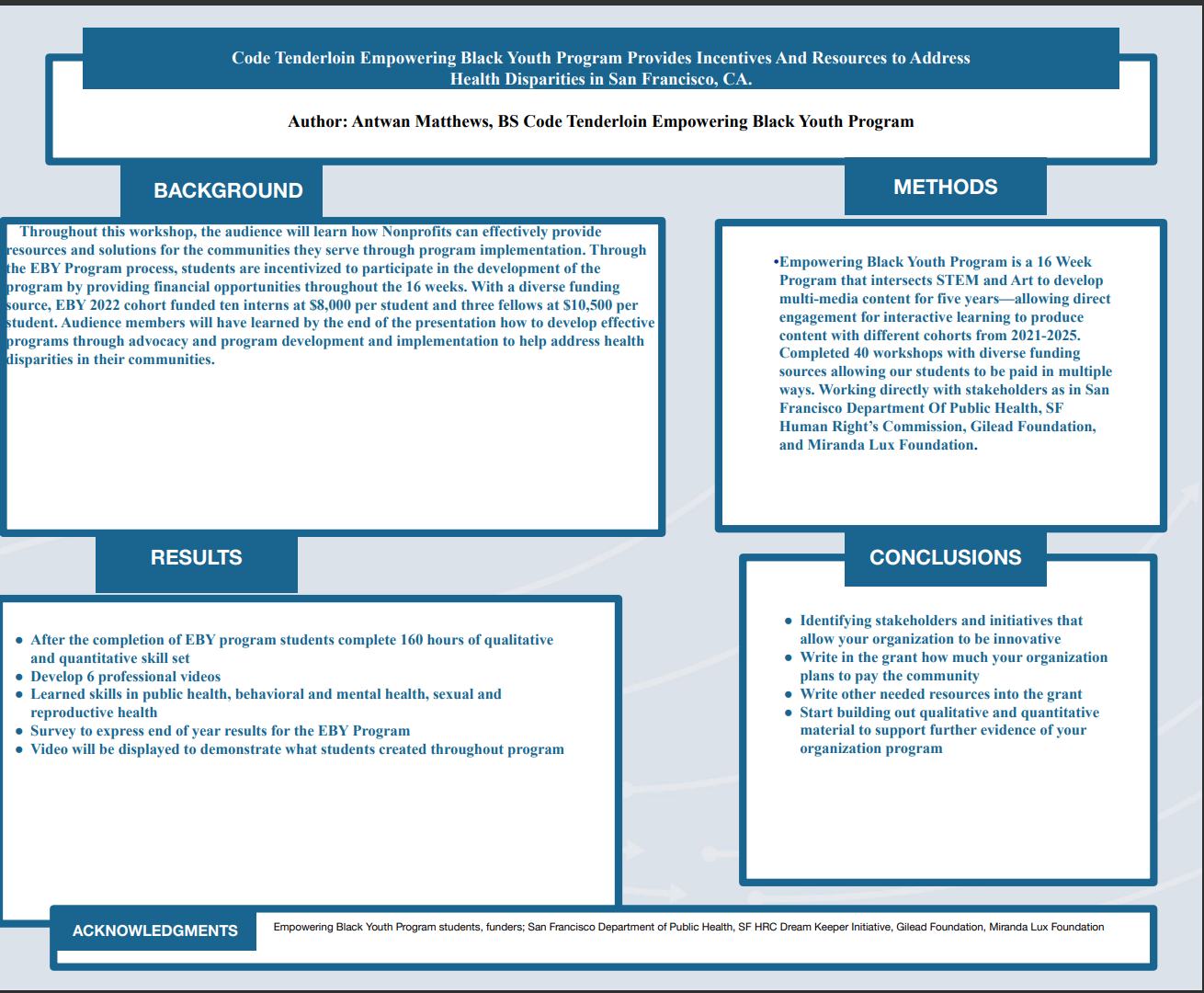
Click on image to expand poster
Poster Presentation #12
Title: Towards Justice-Centered Futures in Transgender Research: Community-Driven Insights for Repairing and Forging Stronger Academic and Community Relations
Presenter(s): Vanessa R. Warri, MSW, PhD Student, UCLA Department of Social Welfare, Luskin School of Public Affairs, Center for the Study of Women
Summary: : Robust safeguards against exploitative or harmful research practices related to transgender, gender-expansive, and intersex (TGI) communities have not yet fully been articulated, much less systematically implemented in institutional settings. This presentation offers reflective insights from phase one qualitative interviews of an ongoing collaboration between research universities and TGI communities in California to examine research priorities, ethical considerations, and opportunities to foster greater relationships among TGI and academic research communities
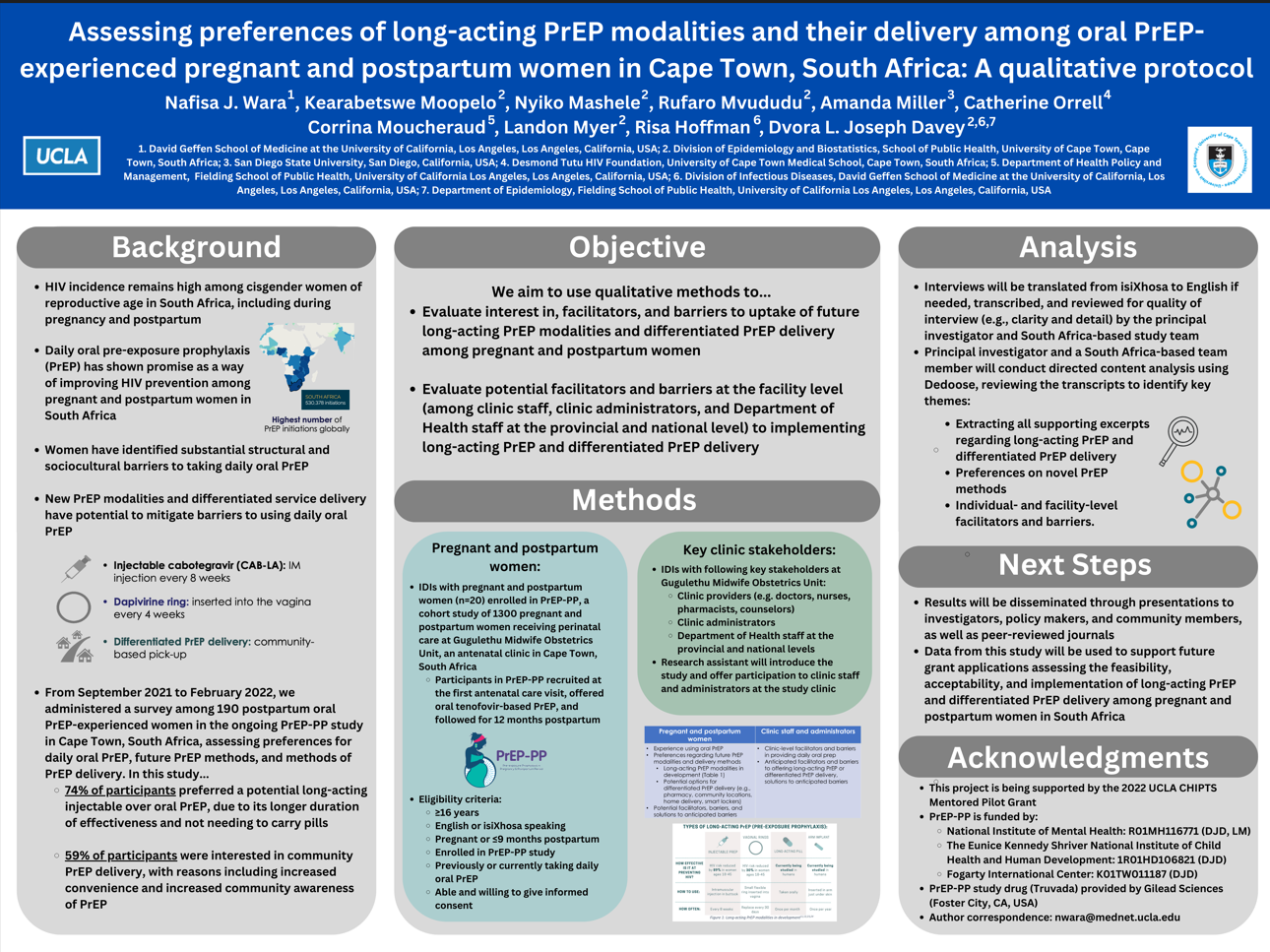
Click on image to expand poster
Event Description
The 2022 CHIPTS HIV Next Generation Virtual Conference occurred on Friday, January 28, 2022 from 9:00 AM – 12:30 PM. The conference was VIRTUAL and FREE to attend. Access the conference recap with opening remarks, open plenary, and panel discussions: https://chipts.ucladev.pendari.com/news/chipts-2022-hiv-next-generation-virtual-conference-recap/
The conference is organized to support the next generation of HIV researchers and service providers who are working towards an end to HIV/AIDS through networking and sharing visions for future priorities. The theme of this year’s conference was “Resilience and Risk: Changing Paradigms.” The conference featured oral and poster presentations by faculty, student and emerging researchers from various institutions.
Access printable resources from the conference:
[download id=”25932″] [download id=”25883″] [download id=”25936″] [download id=”25940″]
Welcome/Opening Plenary
Welcome and Opening Remarks:
Recording: https://www.youtube.com/watch?v=DJENQJSn54g
- Norweeta Milburn, PhD, Director, CHIPTS Development Core
- Steve Shoptaw, PhD, Director, CHIPTS Administrative Core
Conference Facilitator and Announcements:
- Dallas Swendeman, PHD, Co-Director, CHIPTS Development Core
Opening Plenary:
Recording: https://www.youtube.com/watch?v=sseFDnlZ1oo
Gary W. Harper, PhD, MPH, Professor, Health Behavior and Health Education, University of Michigan School of Public Health.
Presentation Title: Promoting resistance and resilience for holistic health: The power of LGBTQIA+ youth
Presentation Summary: N/A
Panel Discussions
Panel 1: PrEP with Gay and Bisexual Men
Recording: https://www.youtube.com/watch?v=sJicMGWEKRw
Panel Presentations:
1. Correlates of sexual contact, COVID testing and comfort attending sexual venues during the COVID-19 pandemic in a global sample of gay, bi-sexual, and other men who have sex with men
- Juan C. Jauregui, MSW, MPH, Doctoral Student
Slides: Download here
Summary: The presentation describes how gay social and sexual venues are important targets for HIV prevention engagement and how GBMSM continued to remain connected through gay geosocial networking apps throughout the pandemic. The presentation examines the impact of COVID-19 on GBMSM’s social and sexual venue attendance.
2. Using PrEP is being part of a larger movement: Additional individual and community level benefits of PrEP use among Latino gay and bi-sexual men
- Martin Santillan Jr.
Slides: Download here
Summary: The presentation examines the additional benefits of using PrEP specifically among Latino GBM PrEP users. Semi-structured interviews were conducted with participants to identify feelings and emotions experienced, plus any additional benefits gained from using PrEP.
Panel 2: HIV and Substance Use
Recording: https://www.youtube.com/watch?v=FwlrEGI83wU
Panel Presentations:
Panel discussant: Pamina M. Gorbach, MHS, DRPH Global HIV Director, CHIPTS Co-Director, UCLA Center for AIDS Research Program on Biobehavioral Epidemiology and Substance Use.
1. Sexual risk among pregnant women at risk of HIV infection in Cape Town, South Africa: What does alcohol have to do with it?
- Amanda P. Miller, PhD, MSc
Slides: Download here
Summary: The presentation focused on alcohol use and HIV describing the interrelated public health issues associated with adverse health outcomes for the mother and fetus. The presentation examined associations between reported alcohol use and HIV risk behaviors among pregnant women in Cape Town, SA
Panel 3: PrEP with Women
Recording: https://www.youtube.com/watch?v=ntneb3UUrJs\
Panel Presentations:
1. Examining interest in HIV pre-exposure prophylaxis delivery modalities among Ghanaian immigrant women in the US
- Gloria Aidoo-Frimpong, MA, MPH, PhD Candidate and David Adzrago, PhD(C), MSW, MPhil, PhD Candidate
Slides: Download here
Summary: The presentation objective was to examine factors associated with willingness to use PrEP delivery methods (i.e., daily oral pill, injectable, microbicide gel, vaginal ring, subdermal implant, vaginal film) among Ghanaians – a subgroup of African immigrants.
2. I want to see what that’s about: Black women’s insights on accessing PrEP via a telehealth app
- Drew Mack, BSc, Medical Student
Slides: Download here
Summary: The presentation discussed the use of qualitative interviews to explore Black women’s’ perception of using telehealth through an app and using telehealth to access Pre-Exposure Prophylaxis.
3. Piloting teleprep information sessions: An implementation strategy to increase PrEP awareness and optimize PrEP uptake among Latina Cisgenders women
- Dilara K. Üsküp, PhD, PhD and Omar Nieto, BS
Slides: Download here
Summary: The presentation discusses a pilot that aims to use an implementation strategy to increase PrEP awareness and optimize PrEP uptake among Latina cisgender women (LCW) through use of PlushCare. PlushCare is a stand-alone telemedicine “app” that exclusively provides virtual/remote delivery of clinical services, including PrEP.
Panel 4: People Living with HIV
Recording: https://www.youtube.com/watch?v=c_4z-wt1J8g
Panel Presentations:
1. Developing an online platform to improve social connections for older adults aging with HIV: Lessons learned from multi-site discussion groups
- Karah Greene, MSW
Slides: Download here
Summary: The presentation discusses the lessons learned regarding the technological barriers encountered during the facilitation of focus groups with older people living with HIV.
2. HIV stigma is associated with patient-reported outcomes and quality of life among Black sexual minority men living with HIV
- Chenglin Hong, MSW, MPH, PhD Candidate
Slides: Download here
Summary: The presentation examines the effect of HIV stigma, which might be pronounced among Black sexual minority men living with HIV due to the Intersectionality and multiple minority stressors. Findings underscore the critical associations between HIV stigma and patient-reported mental health outcomes and quality of life.
3. How does payment shape research participation decisions? Results from a national survey of people living with HIV
- Andrea. N. Polonijo, PhD, MPH
Slides: N/A
Summary: Payment for participation in HIV research is a common practice, yet little is known about how payment affects individuals’ research participation decisions. Using data from a U.S. national survey of people living with HIV (N=292), we examined sociodemographic differences in (a) attitudes toward payment for research participation, (b) perceptions of study risk based on payment amount, and (c) preferred forms of payment. We find payment may influence prospective HIV research participants’ risk–benefit calculus and participation, and that a onesize-fits-all approach to payment could differentially influence participation among distinct sociodemographic groups.
Panel 5: Youth and HIV
Recording: https://www.youtube.com/watch?v=NOJdR_ioWIA
Panel Discussant: Sabrina L. Smiley, PhD, MPH
Panel Presentations:
1. Alcohol misuse during the COVID-19 stay at home orders among youth at risk or living with HIV: A study in Los Angeles and New Orleans
- Roxana Rezai, MPH, Doctoral Student
Slides: Download here
Summary: The presentation discusses marginalized subgroups such as sexual and gender minorities, youth living with HIV, and youth experiencing housing insecurity are particularly susceptible to alcohol use and misuse. The study mentioned examines important factors linked to alcohol misuse during COVID-19 stay-at-home orders in a sample of marginalized youth and young adults at-risk or living with HIV in Los Angeles, CA and New Orleans, LA.
2. Violence experiences are associated with HIV transmission risk over one year among a prospective sample of sexual minority adolescents in the United States
- Joshua A. Rusow, PhD, MSW
Slides: Download here
Summary: The presentation examines mental health symptomology, minority stress experiences, and interpersonal violence as a potential contributing factor to HIV transmission risk behaviors over one year among sexual minority adolescence.
3. Impact of resilience, social support, and healthcare empowerment on HIV care engagement and viral suppression among young Black sexual minority men with HIV in the US
- Erik Storholm, PhD and Wilson Vincent, PHD
Slides: Download here
Summary: The presentation examined the associations of multiple latent predictor variables known to be related to HIV outcomes such as socioeconomic distress, intimate partner violence, depression, resilience, and HIV related social support with HIV care engagement among. The presentation discusses test whether healthcare empowerment mediates the impact of these latent predictor variables have HIV care engagement.
Poster Presentation
Poster Presentation #1
Title: HIV, Methamphetamine Use, and Pulmonary Hypertension: From Blue Skies to an Integrated Research Agenda
Presenter(s): Cherie Blair, MD, PhD, Assistant Professor, Department of Medicine, Department of Medicine, Division of Infectious Diseases, David Geffen School of Medicine at UCLA
Summary: This project was funded by the 2021 CHIPTS Kickstarter Grant. We will present findings from a joint UCLA/CHIPTS and Stanford symposium to develop a collective research agenda to identify and address the overlapping behavioral, biomedical, and social contexts of HIV, methamphetamine use, and pulmonary hypertension
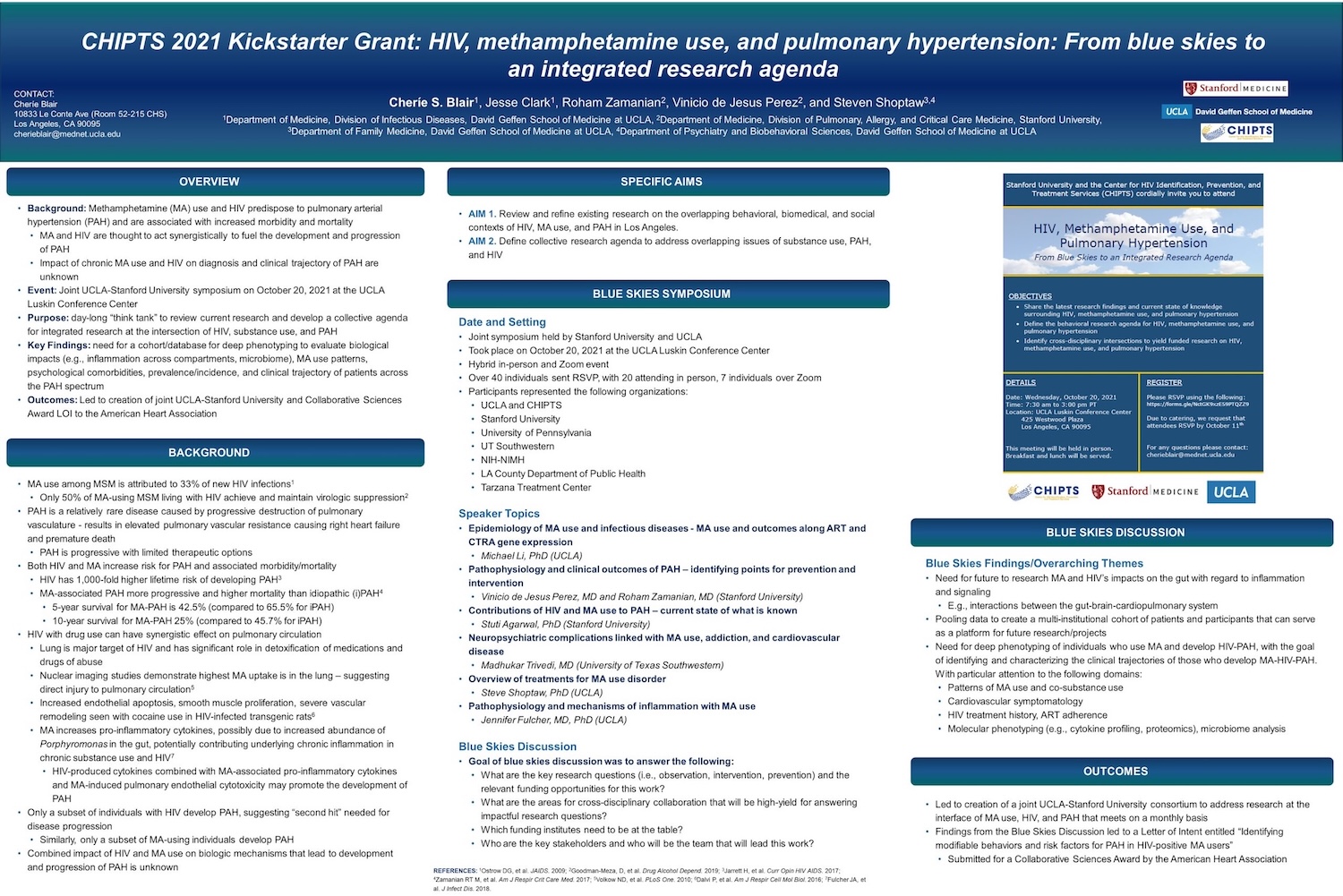
Click on image to expand poster
Poster Presentation #2
Title: Risk Factors for HIV Progression Among Males Ages 18-35 in Essex County, New Jersey: A Literature Review
Presenter(s): Ekrem Cetinkaya, MS, Medical Student, Eshani Choksi, BS, Medical Student, Surayya Miller, MBS, Medical Student, and Nishawn Rahaman, MS, Medical Student, Rowan University School of Osteopathic Medicine
Summary: This presentation summarizes various risk factors that were identified in literature, that affect HIV progression and poor prognosis. We chose the 18-35-year-old male population in Essex County, New Jersey, as we believe that this population specifically faces extensive socioeconomic disadvantages that have contributed to the extremely high prevalence of HIV in this region. We believe that highlighting the risk factors that predispose this population to poorer outcomes is imperative in facilitating change to allocate more resources and attention to individuals in this area.
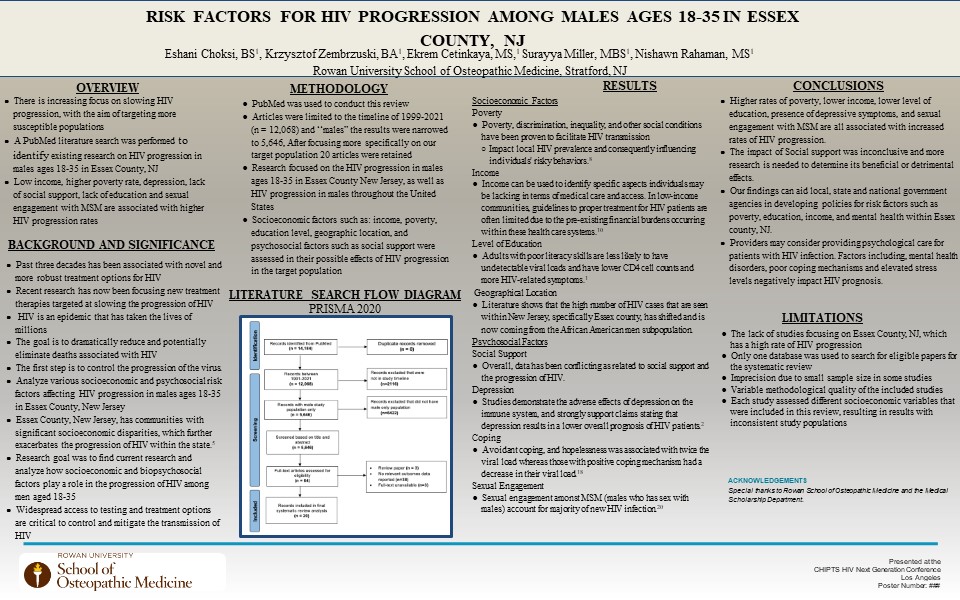
Click on image to expand poster
Poster Presentation #3
Title: Engaging the Siblings of Latinx MSM in Promoting PrEP Use
Presenter(s): Homero E. del Pino, PhD, MS, Associate Professor, Petra Durán, BA, Clinical Coordinator, Angel Martínez, MS, Volunteer, Charles R. Drew University of Medicine and Science and Edwin Rojas, MPH, Research Assistant, St. John’s Well Child and Family Center
Summary: The siblings of Latinx MSM are an overlooked source of social support in HIV prevention strategies. We will share findings from our community-partnered study that aims to engage siblings in the promotion of PrEP.
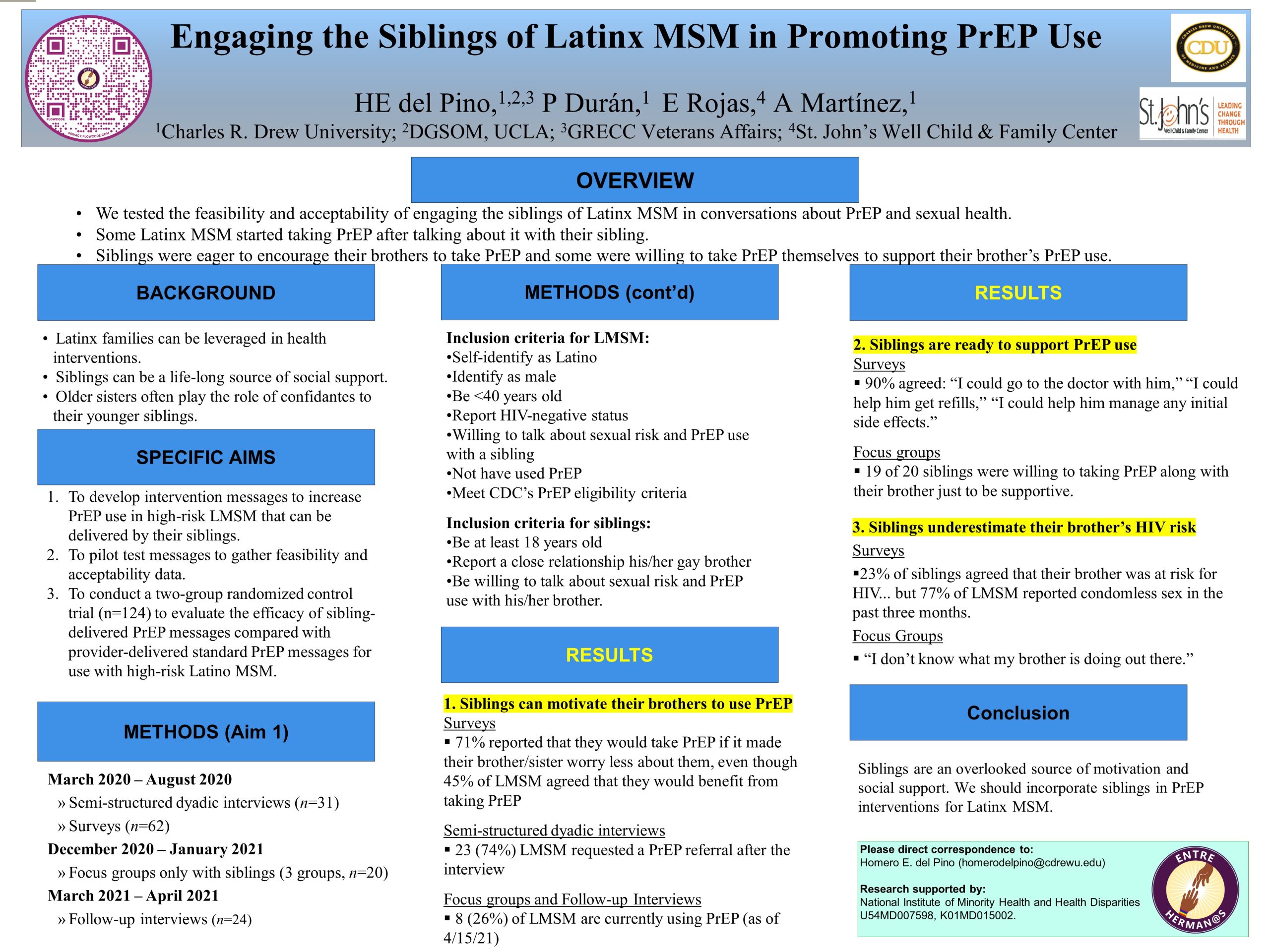
Click on image to expand poster
Poster Presentation #4
Title: Services for Re-Entry Populations: Community-Focused Development of a Policy Brief
Presenter(s): Gabriel G. Edwards, MD, MPH, Assistant Project Scientist, UCLA David Geffen School of Medicine, Division of General Internal Medicine & Health Services Research and Carolyn Belton, MHHS, AIDS Healthcare Foundation
Summary: This presentation describes the process of creating a policy brief on community re-entry services for individuals leaving incarceration. The brief was a collaboration between academics and community members, in response to an ongoing initiative to create policy recommendations around alternatives to incarceration in Los Angeles County.
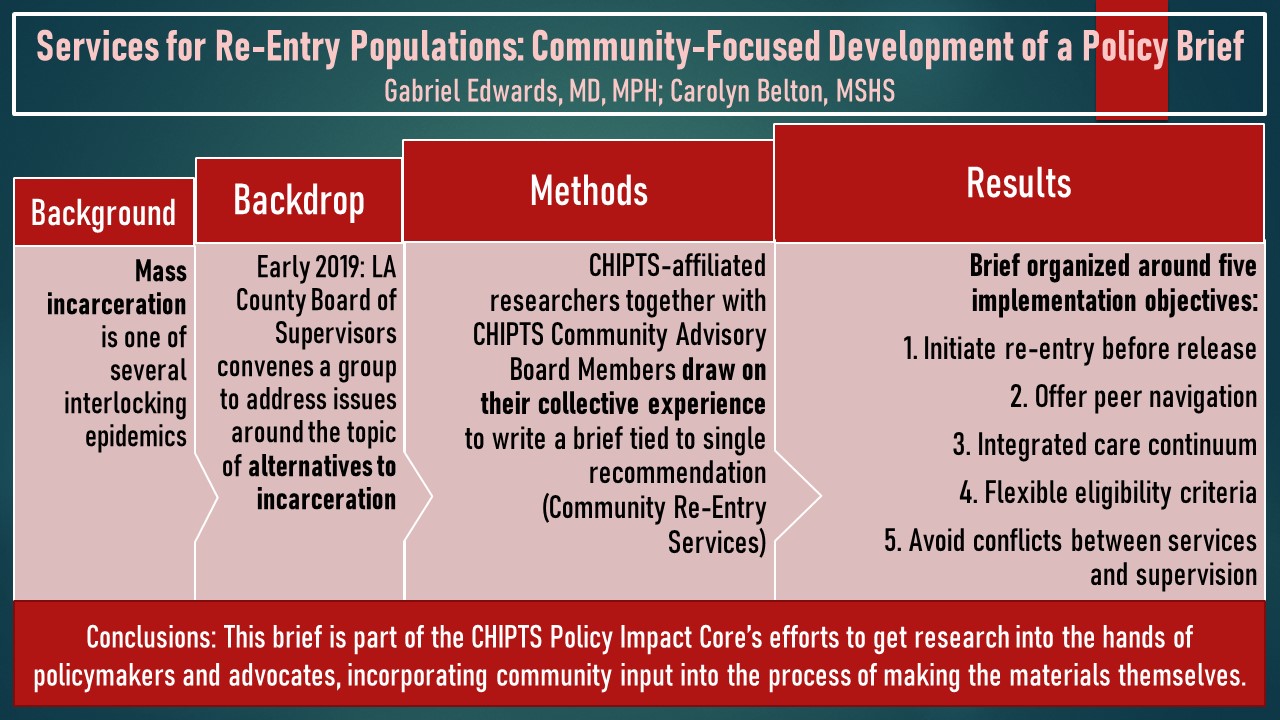
Click on image to expand poster
Poster Presentation #5
Title: 1st Annual Harm Reduction in Clinical Praxis CME Conference
Presenter(s): Kevin Frost, Director of External Affairs, Sid Ganesh, BA, BS, PhD candidate, Cofounder and Codirector, and Tucker Avra, DVM, Medical Student, Cofounder and Codirector at Harm Reduction Los Angeles
Summary: Birthed in the HIV epidemic in the US, Harm Reduction is a social justice movement and a framework for resource allocation that centers intersectional communities most impacted by the racist and anti-immigrant War on Drugs. The 1st Annual Harm Reduction in Clinical Praxis CME Conference was hosted by Harm Reduction Los Angeles in conjunction with the USC CME office at Keck School of Medicine on September 25, 2021, with a focus on offering interventional, institutional, and structural tools specific to improving care and outcomes for people who use drugs.
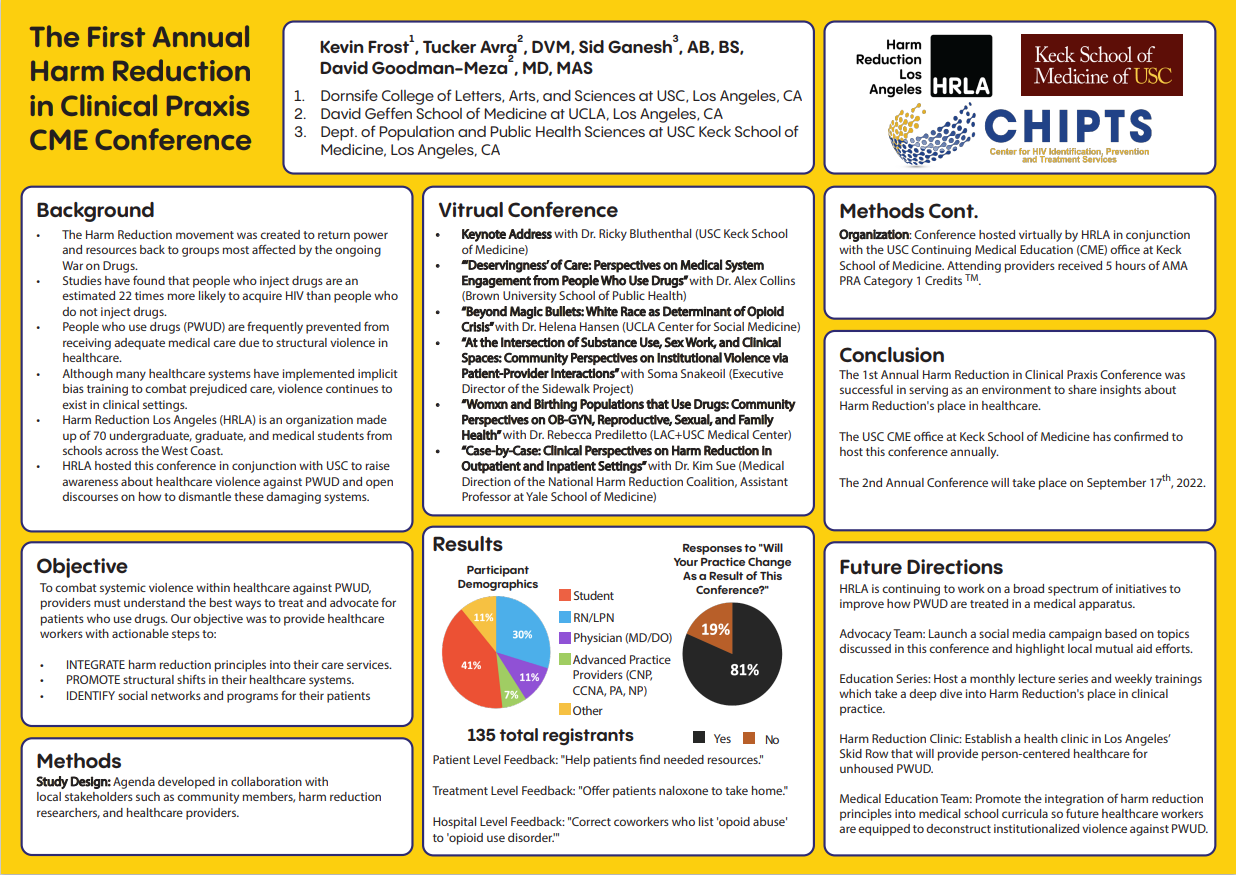 Click on image to expand poster
Poster Presentation #6
Presentation Title: UCLA’s First Annual Sexual Health and Wellness Fair: Building a Healthier, Safer, & More Sex-Positive Campus
Presenter(s): Caleb Garcia, BS Candidate, Undergraduate Student, HIV Counseling and Testing Coalition at UCLA
Summary: With the gracious support of the CHIPTS Kick Start Grant, the student-run HIV Counseling and Testing Coalition held its’ inaugural Sexual Health and Wellness Fair. The primary goal of the Fair was to administer free HIV tests and provide client-specific risk-reduction counseling to students, staff, and faculty. Our organization also utilized the Fair as an opportunity to re-introduce ourselves to the campus community as a free and confidential testing, counseling, and educational resource after a long hiatus due to the COVID-19 pandemic.
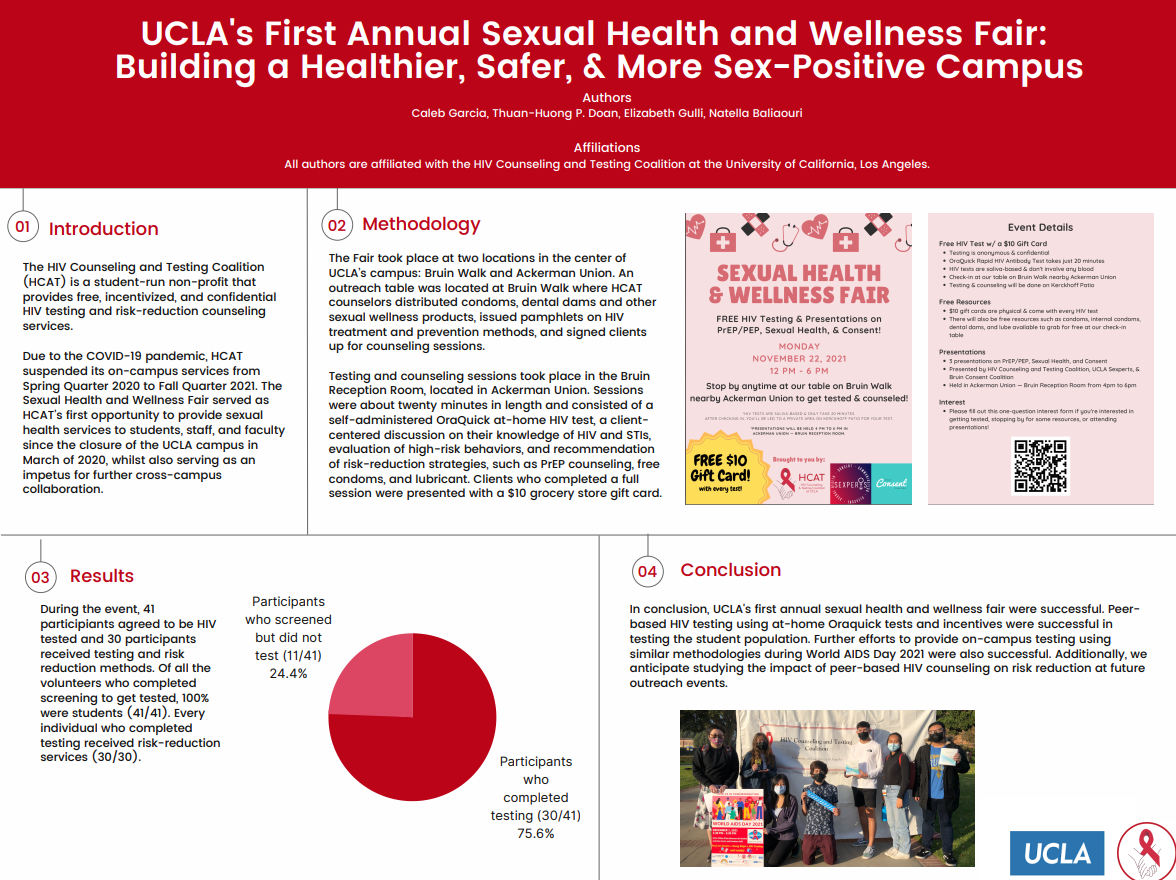 Click on image to expand poster
Poster Presentation #7
Title: Innovative Outreach Strategies for a PrEP study during COVID-19
Presenter(s): Bill Le, BA, PrEP Education Specialist, Ian Klinger, MA, Research Coordinator, Matt Mutchler, PhD, Principal Investigator, APLA Health
Summary: The poster presentation will discuss how to increase strategies for outreach and recruitment during the COVID-19 pandemic to support PrEP uptake between YBMSM and their close friends. As time has progressed and mandated shutdowns and “stay at home orders” in Los Angeles County have been lifted or lessened, in-person events have slowly started reappearing. This has led to us developing a new hybrid strategy which we are currently working to employ to reach our target population during these challenging times.
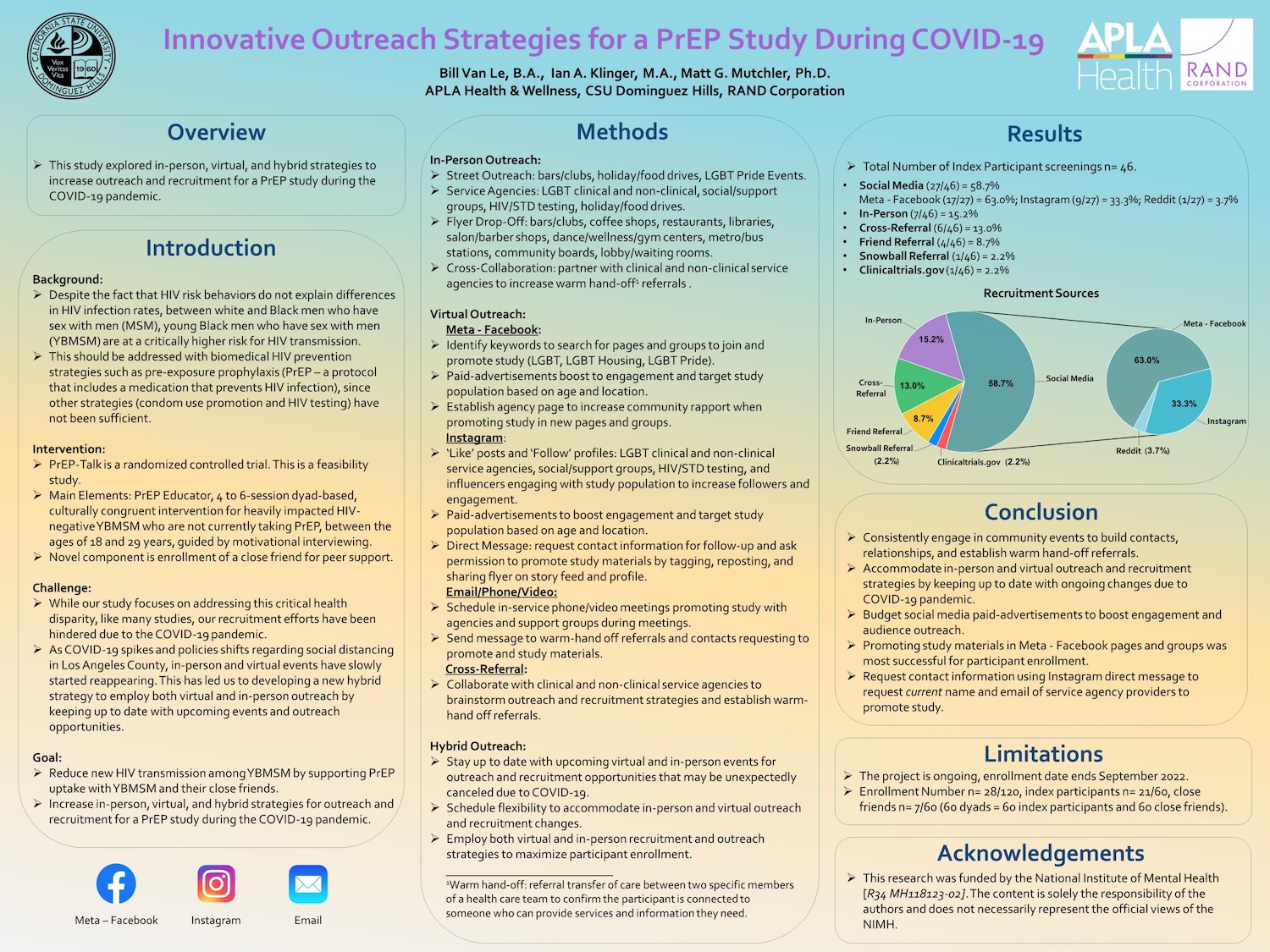
Click on image to expand poster
Poster Presentation #8
Title: Velvet Jesus: An Edu-tainment Model for Behavioral Change Among At-Risk LGBTQ Adults of Color
Presenter(s): Charles McWells, BA, HIV Prevention Services Manager, Los Angeles Centers for Alcohol and Drug Abuse and Instructor, Community Faculty at Charles R. Drew University of Medicine and Science
Summary: “Educational Entertainment” (or “Edu-tainment”) is an evidence-based model that uses film, television, theatre or other forms of performance art to convey health-empowerment messages. In this project, Black and Latinx LGBTQ adults participated in screenings of a motion picture that focused on homophobia, childhood trauma, mental health disorders, and HIV/AIDS. Following the screenings, audience members discussed how their shared experiences mirrored the film plot, and developed alternative plot-lines in which the characters made healthier behavioral choices.
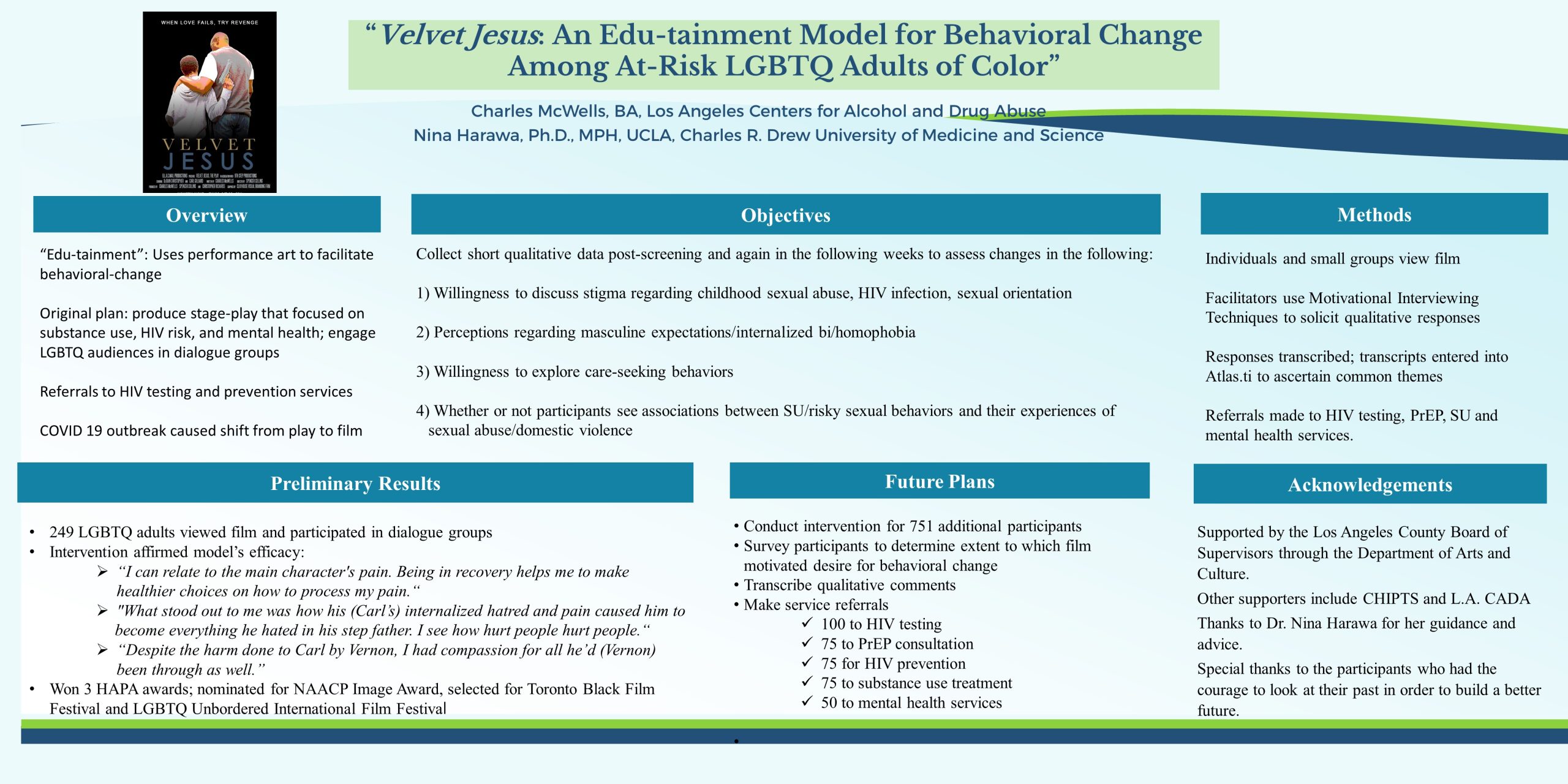
Click on image to expand poster
Poster Presentation #9
Title: Do Chatbots Have a Place in Adolescent HIV Research? A Qualitative Study in Los Angeles and New Orleans
Presenter(s): Dianna Polanco, BA, Research Coordinator, UCLA Semel Institute Center for Community Health
Summary: The purpose of this abstract is to assess usability chatbots in research. Focus groups were held to discuss the pros and cons of using chatbots in research studies.
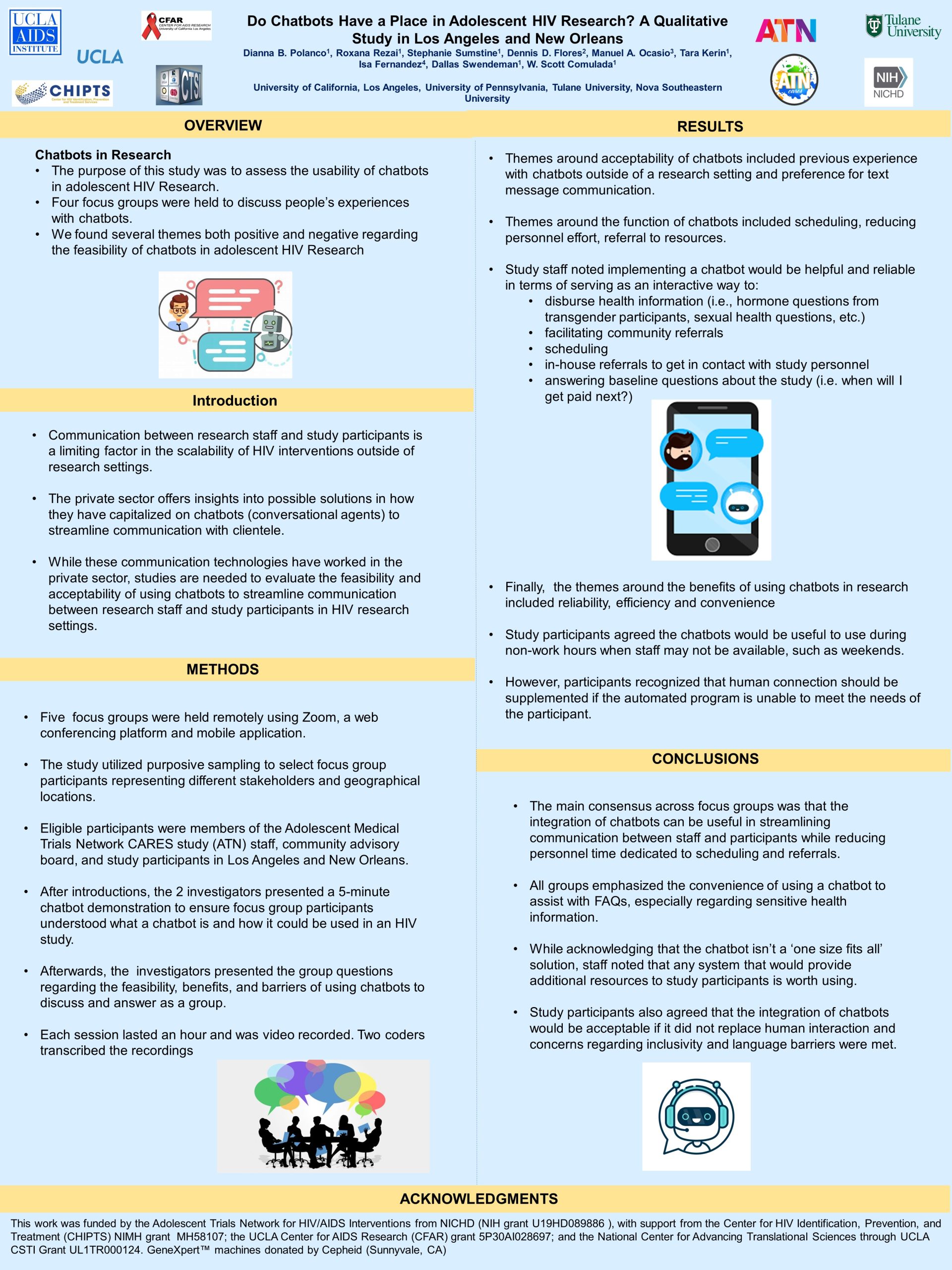
Click on image to expand poster
Poster Presentation #10
Title: Virtual Training Significantly Increases Primary Care Providers’ PrEP Knowledge
Presenter(s): Rebecca Ruiz, BS, HIV Project Empowerment Trainer, AltaMed Health Services
Summary: Several studies have shown that a lack of knowledge among primary care providers (PCPs) about pre-exposure prophylaxis (PrEP) can be a barrier to HIV preventative care; when PCPs increase their knowledge about PrEP, they are more likely to initiate discussions about PrEP and prescribe it to their patients. We developed and conducted trainings among PCPs within a Federally Qualified Health Center (FQHC) to increase provider comfort/willingness with prescribing PrEP.
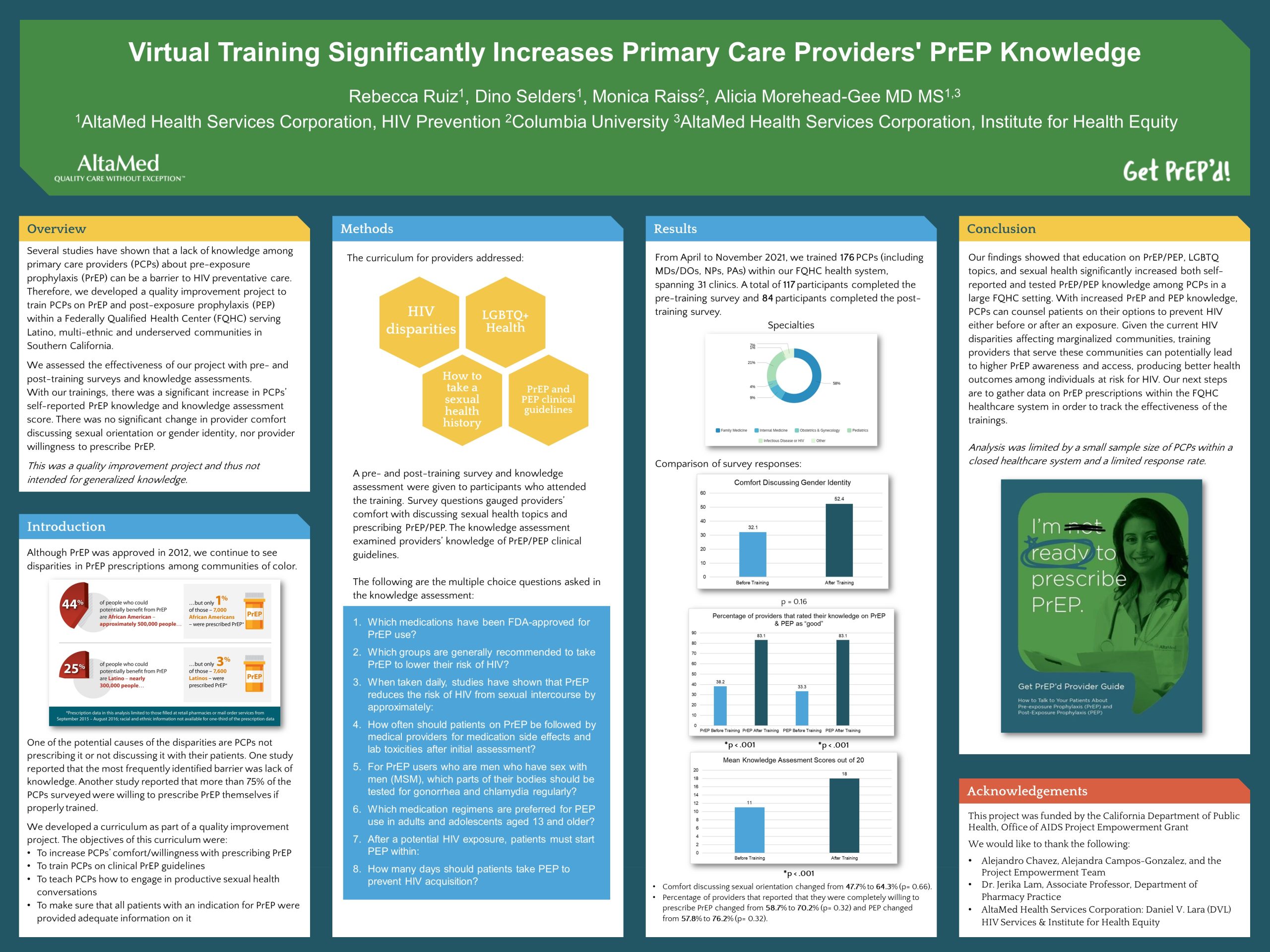
Click on image to expand poster
Poster Presentation #11
Title: Homeless not hopeless: The impact of support systems in improving the quality of life of transgender people of color experiencing homelessness
Presenter(s): Jimena Sandoval, BA, Case Manager, Ricardo Mendoza Lepe, PhD, Field Specialist and Research Coordinator, and Ronald Brooks, PhD, Director of Research and Evaluation, Bienestar Human Services, Inc.
Summary: Identifying the impact that social support connections, specifically from family members, have on trans people of color in facing risk situations and preventing future risk factors.
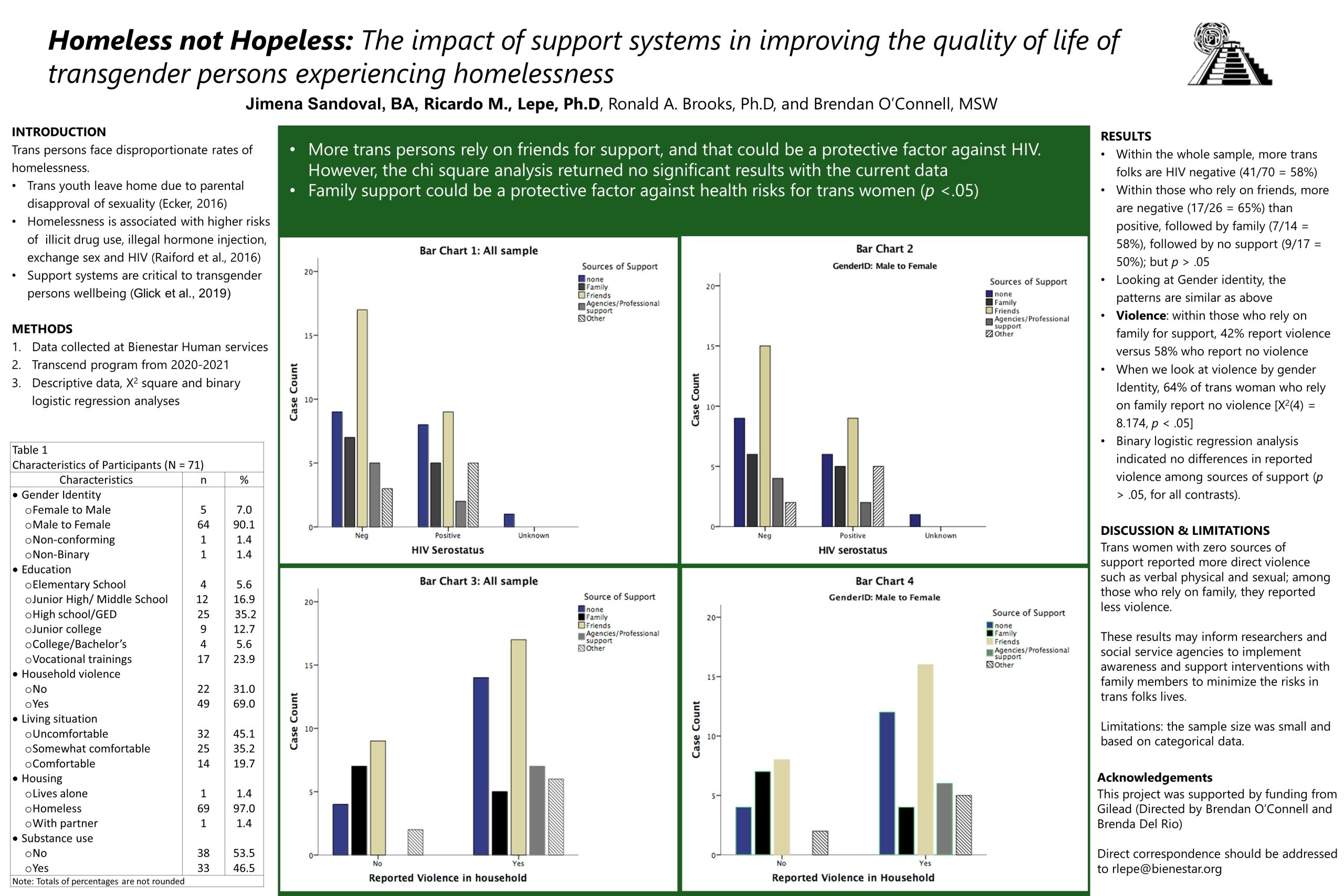 Click on image to expand poster
Event Description
The 2021 CHIPTS HIV Next Generation Virtual Conference is this upcoming Friday, January 22, 2021 from 9:00 AM – 1:30 PM. The conference is VIRTUAL and FREE to attend. Access the conference recap with opening remarks, open plenary, and panel discussions: https://chipts.ucladev.pendari.com/features/chipts-2021-hiv-next-generation-virtual-conference-recap/
The conference is organized to support the next generation of HIV researchers and service providers who are working towards an end to HIV/AIDS through networking and sharing visions for future priorities. The theme of this year’s conference is “Living with Pandemics: Challenges and Opportunities for HIV Prevention and Treatment.” The conference featured oral and poster presentations by faculty, student and emerging researchers from various institutions.
Welcome/ Opening Plenary
Welcome and Opening Remarks:
Recording: https://www.youtube.com/watch?v=p8ppSD7iTFI
- Norweeta Milburn, PhD, Director, CHIPTS Development Core
- Steve Shoptaw, PhD, Director, CHIPTS Administrative Core
Conference Facilitator and Announcements:
- Dallas Swendeman, PHD, Co-Director, CHIPTS Development Core
Opening Plenary:
Recording: https://www.youtube.com/watch?v=mejrcPhf6_o
Judith S. Currier, MD, MSc, Chief, UCLA Division of Infectious Disease
Presentation Title: Lessons learned from COVID-19
Presentation Summary: N/A
Plenary Discussions
Panel 1: COVID-19 and HIV
Panel Presentations:
1. Leveraging telehealth to promote access to HIV primary care among persons living with HIV in LAC during COVID-19
- Angela Castillo, MA
Slides: Download here
Recording: https://www.youtube.com/watch?v=acLV1j-4850
2. Joteria mentality: A social media strategy to clap back at COVID 19
- Alejandro Chavez and Charlie De Lira-Zepeda
Slides: Download here
Recording: https://www.youtube.com/watch?v=fxpjCB8zkyA
3. Testing an educational visual aid to increase knowledge and adherence to pre-exposure prophylaxis (PrEP) among at-risk youth during the COVID-19 pandemic
- Joan Christodoulou, PhD, Disha Nangia, and Elizabeth Shaw
Slides: Download here
Recording: https://www.youtube.com/watch?v=6U9Dqq4N-ao
Panel 2: HIV Prevention and Treatment Among MSM
Panel Presentations:
1. Examining geographical differences in the HIV care cascade among men who have sex with men in Mexico
- Angel Algarin, MPH, PhD
Slides: Download here
Recording: https://www.youtube.com/watch?v=tHl1GD-oF3Y
2. “That’s kind of like the big struggle right now is can we get PrEP?” Facilitators and barriers to PrEP uptake among active duty gay and bisexual males
- <l